Fleet Insurance Explained: How to Manage It in 2026 & Beyond
Fleet insurance covers multiple business-owned vehicles under one commercial policy. Choosing it well takes an honest read of your risk. Managing it well comes down to how good your driver, vehicle and maintenance records are between renewals.
Jan 13, 2020 | Updated: Oct 2, 2026
21 min read
What you need to know
- Fleet insurance is one commercial auto policy covering multiple business-owned vehicles. Liability, physical damage and any specialized coverage you need all attach to a single schedule of assets.
- A fleet policy pools risk. One severe loss or one unsafe driver can change pricing and terms for every vehicle on the schedule.
- Most of what moves your premium is operational. Driver records, inspection completion, maintenance discipline and claims history carry more weight at renewal than how many trucks you run.
- Renewal runs on documentation. A current vehicle schedule, an accurate driver list and complete service history let you defend your risk profile instead of accepting the carrier's read of it.
Fleet insurance is a commercial auto policy that covers multiple business-owned vehicles under one contract. It exists for organizations that put drivers on the road as a normal part of doing business, so the assets, the drivers and the coverages all sit on one schedule instead of in a drawer full of separate policies.
The mechanics have not changed much since 2020. The cost has. Commercial vehicle insurance premiums have reached record highs in Bureau of Labor Statistics producer price data, and a Risk Strategies market outlook cited in the same report put recent physical damage increases at 20% to 25% and auto liability at 10% to 20%. Renewals that used to be a formality now carry real budget risk.
Litigation has pushed in the same direction. Larger settlements and severe verdicts in commercial auto cases have made carriers stingier with capacity and far more selective about who they write. For fleet managers, that shows up as questions. Underwriters want driver behavior trends, inspection completion rates, maintenance records and some proof that your safety program exists in practice. How well you run the operation has become a pricing input.
This guide covers what fleet insurance is, how a fleet policy differs from individual ones, which coverage types matter and why, the cost factors you can actually influence, how to evaluate a policy before you sign it and how to manage the program during the months nobody is thinking about insurance.
What Is Fleet Insurance?
Fleet insurance is commercial auto coverage written for a group of vehicles owned or operated by one business, consolidated into a single policy with one renewal date and shared limits. It protects the organization against liability for injury and property damage, and it can extend to physical damage, cargo and whatever else your operation puts at risk.
If your frame of reference is personal auto insurance, start with what a fleet policy does that a personal one cannot. Personal policies assume one named individual driving a specific car for personal reasons. They are not built for commercial use, they do not anticipate four employees sharing a van and they generally exclude business liability outright. Insure a delivery vehicle on a personal policy and you have bought a denied claim, which costs far more than the premium you saved.
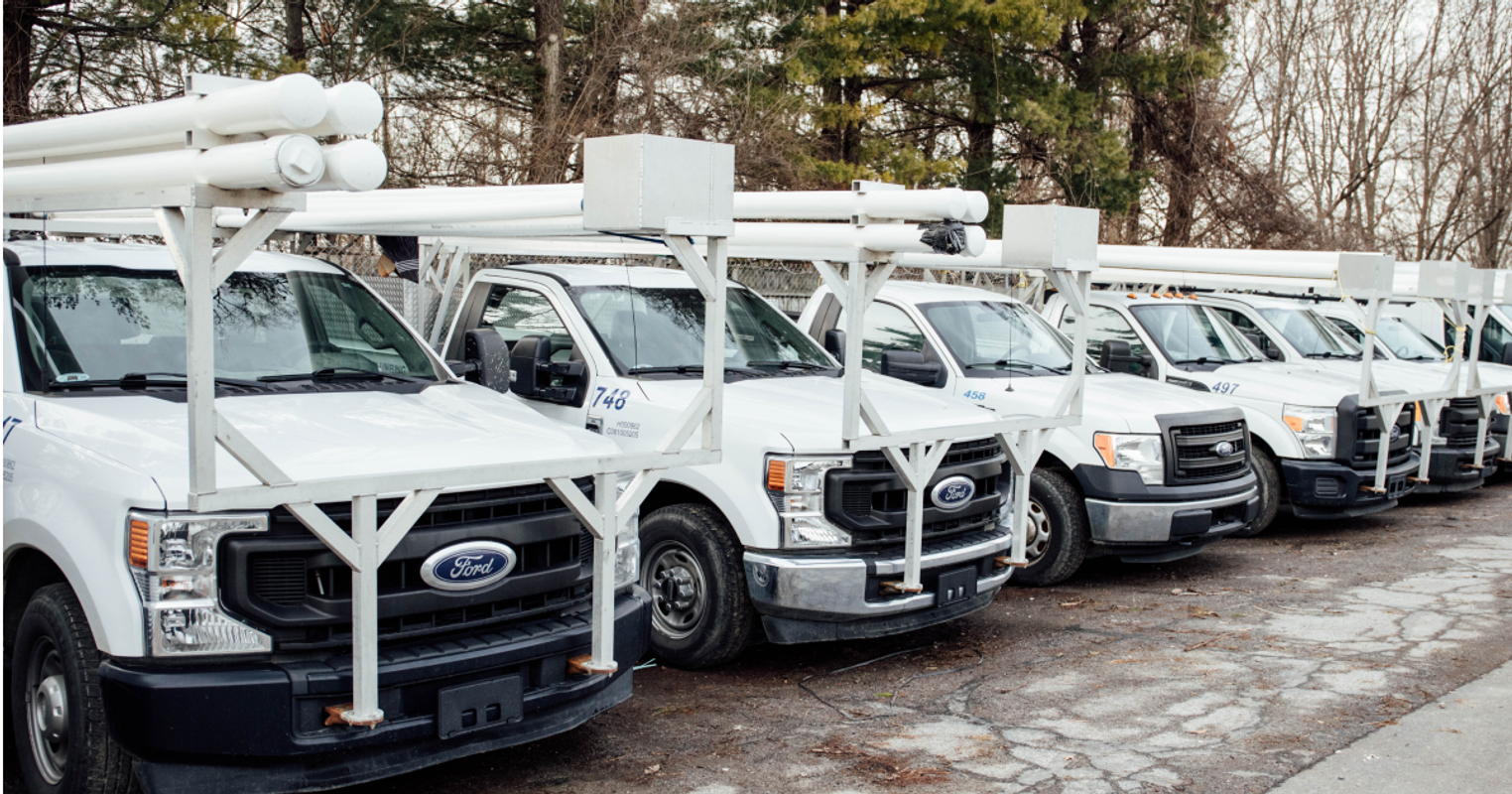
"Fleet" also covers more ground than most people assume. Service vans on scheduled routes count. So do delivery vehicles, heavy-duty trucks, tractor-trailers and mixed fleets that put passenger cars, light trucks and specialty equipment on the same policy. Municipalities, contractors, utilities and food and beverage distributors all run fleets in the insurance sense, even when their vehicles have nothing in common.
Two things shape every policy. Coverage is customized, priced against vehicle class, operating territory, usage patterns and the overall risk profile of the business, which is why two fleets of the same size can get wildly different quotes. And requirements are set mostly at the state level, with federal requirements layered on for certain commercial operations and vehicle classes. Interstate operation, gross vehicle weight and what you haul all change the minimums you have to carry.
How Fleet Insurance Works, and How It Differs From Individual Policies
The most common misconception is that a fleet policy behaves like a stack of individual policies that happen to arrive on one invoice. It does not. Coverage is centralized and risk is pooled, and that single difference changes how driver changes, loss history and limits all work.
Take a 40-vehicle service fleet where one driver causes a serious at-fault collision. On individual policies, the consequence would mostly follow that vehicle. On a fleet policy, the loss enters the account's experience and shapes pricing and terms for all 40 assets at renewal. The upside works the same way. A clean three-year record belongs to the whole program.
One policy, multiple vehicles
Insurers group your vehicles onto a schedule attached to the policy. You add units mid-term as you buy them and drop them when they are sold or retired, usually through an endorsement rather than a new policy. That cuts a lot of administrative work and turns renewals and audits into one coordinated process instead of dozens of staggered ones.
The tradeoff is reconciliation. Because the schedule moves throughout the year, most fleet policies are subject to audit, where the carrier compares what was insured against what actually ran. Mileage figures, vehicle lists, driver lists and classification changes all get reviewed. A fleet that added six trucks in March and never reported them is exposed twice over: potentially uninsured assets, plus a premium adjustment at audit that nobody budgeted for.
Driver structures and eligibility
Fleet policies handle drivers one of two ways. Named driver coverage lists each authorized operator individually, which gives the carrier a precise view of who is behind the wheel and prices accordingly. Blanket driver coverage extends to any employee operating a covered vehicle with permission, trading some pricing precision for flexibility.
Which one fits depends on how much your roster moves. A fleet with 12 long-tenured technicians can keep a named driver list current without much effort. A fleet running seasonal staffing, high turnover or a mix of employees and contractors will burn real administrative hours trying, and blanket coverage usually wins even at a higher rate.
Either way, driver records are not filing busywork. Bad records create compliance exposure, stall claims while the carrier works out whether the operator was authorized and invite harder questions at underwriting review. An MVR pulled at hire and never checked again tells you about a driver three years ago, which is exactly the gap renewal questionnaires are designed to find.
Coverage limits and shared risk
Shared risk is what separates fleet underwriting from individual policies. Your limits apply across the program and your loss experience gets read as a whole. One major claim can move premiums and change terms for every asset. Unsafe behavior in one vehicle becomes a fact about your operation instead of a fact about one driver.
Size buys some insulation. A 200-vehicle fleet absorbs a single bad claim more easily than an eight-vehicle fleet, because the loss spreads across a larger premium base and a longer record. Size is not a substitute for discipline, though. Consistent safety performance and documented maintenance matter more to underwriters than vehicle count, and a small fleet with clean records and a working fleet safety program often prices better than a large one without either.
Types of Fleet Insurance Coverage
Coverage decisions get easier when you test each type against a specific scenario instead of a definition. For every coverage below, ask what risk it handles, which fleets need it most and what the exposure looks like without it.
Liability coverage (legally required)
Federal and state law both require commercial fleet vehicles to carry liability coverage. It responds when your driver is at fault and splits into two parts.
- Bodily injury liability pays for injuries or death from an accident your business is responsible for, and it typically includes legal defense costs. That defense provision gets overlooked constantly and is often the part of the policy you actually use, since defending a claim costs money whether or not you end up liable.
- Property damage liability covers damage your vehicle does to someone else's property, from another car to a loading dock to a storefront.
Every state sets its own minimum liability requirements, and they vary by jurisdiction and vehicle type. Heavier vehicles and certain commercial operations carry higher federal floors. Look up the requirements for your asset classes and operating territory, because that is the baseline for staying compliant and avoiding fines.
Whether minimums are adequate is a different question, and often the answer is no. A severe injury event with extended medical treatment, or a multi-vehicle collision at highway speed, can blow through a state minimum limit quickly. Everything above the limit is your problem. Carriers will happily quote to the minimum if that is what you ask for, so price your limits against realistic severity instead.
Combined single limit (CSL) coverage
A CSL policy gives you one limit that applies to all covered claims from an incident, instead of separate caps for bodily injury and property damage. The benefit shows up during claims handling.
Say a single severe accident produces $700,000 in medical costs and $150,000 in vehicle and property damage. Under split limits, each category draws only on its own cap, and a shortfall in one cannot borrow from unused room in the other. A $1 million CSL absorbs the full $850,000 without that constraint. Broader, more flexible protection costs more, which is the tradeoff.
Physical damage coverage
Physical damage covers your own vehicles and breaks into two pieces people mix up constantly. Collision responds when your vehicle hits another vehicle or object. Comprehensive handles everything else: theft, vandalism, fire, falling objects and weather.
Both have gotten more relevant. Severe weather produces exactly the kind of loss liability coverage ignores, so the hail storm that cracks three windshields overnight is a comprehensive claim. Vehicle and cargo theft trends point the same way, which makes comprehensive worth a hard look if you park assets in unsecured lots.
When it is optional is a fair question. On older low-value units where premium plus deductible approaches the actual cash value, physical damage may not pay for itself. On newer units, anything financed or leased where the lender requires it, and any asset whose downtime stops revenue, it is effectively mandatory.
Uninsured and underinsured motorist coverage
This is the one fleets misunderstand most. Your liability coverage protects other people when your driver is at fault. It does nothing for you when someone else causes the wreck and cannot pay. Uninsured and underinsured motorist coverage fills that gap.
The exposure is real. Insurance Research Council data reported by the Insurance Information Institute found that 15.4% of motorists were uninsured in 2023, more than one in seven drivers, and roughly one in three was either uninsured or underinsured. Run vehicles all day and you will meet one eventually.
The costs land in a few places. Medical expenses for your driver and any passengers become yours when the at-fault party has no coverage. Repairs stall while subrogation plays out, and subrogation against an uninsured individual often recovers nothing. Meanwhile the asset sits. A vehicle out of service for six weeks is a scheduling problem that spreads across the rest of the fleet.
Optional and specialized coverage types
Beyond the core coverages, a few additions matter depending on how you operate:
- Cargo or goods-in-transit coverage protects customer property or high-value materials while you are hauling them. Delivery and distribution fleets generally need it. Service fleets carrying their own tools usually handle that exposure elsewhere.
- Hired and non-owned auto coverage extends liability to rented vehicles and to employee-owned vehicles used for work. Any fleet that rents during peak season or reimburses mileage for staff errands has this exposure, covered or not.
- Rental reimbursement or downtime coverage, where available, funds a replacement asset after a covered loss so work keeps moving during the repair.
- Gap coverage pays the difference between a loan or lease balance and the actual cash value paid out after a total loss. It matters most in the early years of a financed asset, when depreciation runs ahead of the payoff schedule.
6 strategies to reduce insurance expenses
From leveraging telematics to optimizing maintenance schedules, learn how to make your fleet more cost-efficient.
Check it out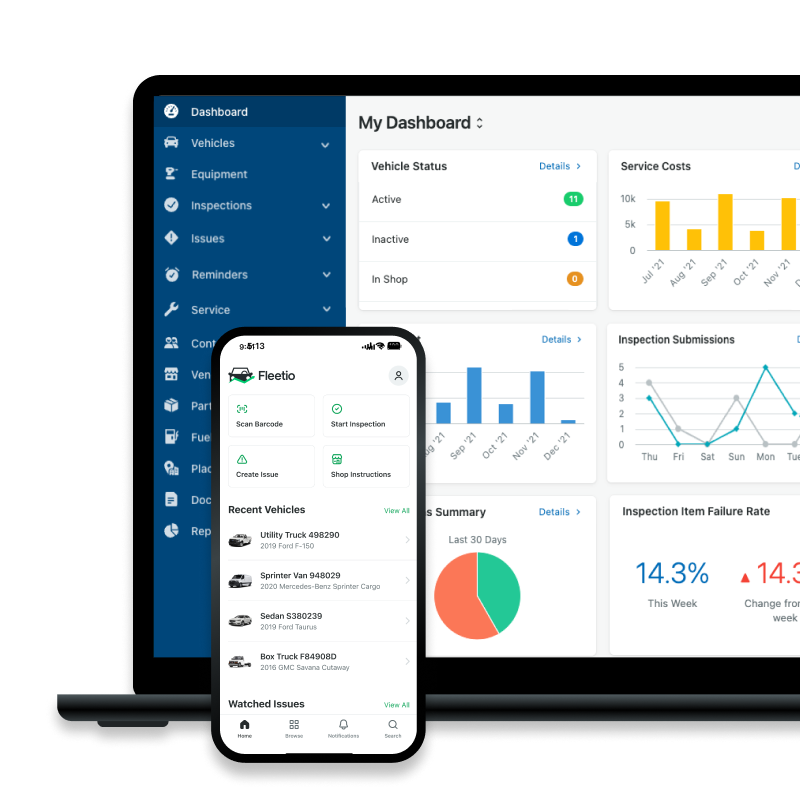
What Determines the Cost of Fleet Insurance?
Fleet insurance pricing looks like a black box from the outside, and some of it genuinely is out of your hands. Sorting the factors into levers you can pull and conditions you have to plan around tells you where the effort pays off.
Fleet size, vehicle type and usage
Vehicle class drives a big share of the premium. Heavy-duty assets cost more to insure than light-duty ones because they do more damage in a collision, cost more to repair and often operate under higher regulatory minimums. A fleet of half-ton pickups and a fleet of Class 8 tractors are different underwriting problems entirely.
Annual mileage and utilization follow from there. More road time means more exposure and carriers price it that way. Two fleets with identical vehicle counts will diverge if one runs 15,000 miles per unit per year and the other runs 60,000.
Operating environment counts as much as distance. Dense urban routes with frequent stops, pedestrian traffic and tight delivery windows generate more small claims than rural highway work, while rural routes carry higher severity when something does go wrong. Neither is uniformly cheaper. Your actual mix is what gets rated.
Driver risk and safety history
Driver data is where fleets have the most influence. Motor vehicle records are the starting point, and carriers look at both what is on them and how often you bother to check. Past claims and violations attached to your operation weigh heavily, and recent ones weigh more than old ones.
Behavior indicators have become a direct pricing input wherever telematics data exists. Speeding, harsh braking, rapid acceleration and distracted driving signals give underwriters a forward-looking read on risk instead of a backward-looking claims count. That cuts both ways. The data can confirm a safe operation or document a pattern you would rather not have in writing, so the coaching process attached to the data matters as much as the data.
Industry and operating environment
What the fleet does shapes the rate. Service fleets generally price better than delivery fleets, because delivery work combines higher stop density, tighter schedules and often cargo exposure. Operations with frequent backing maneuvers, residential streets, congested job sites or time-sensitive dispatch carry elevated risk no matter what sector they sit in.
Regional factors stack on top. Weather patterns affect comprehensive exposure, local theft trends affect physical damage and cargo pricing, and the litigation environment in your operating states affects liability pricing in ways no amount of operational discipline will fully offset.
Claims trends and litigation climate
The market-wide picture explains pricing pressure that has nothing to do with your record. Rising settlement values and severe verdicts in commercial auto litigation have pushed carriers to reprice risk and, in some segments, pull back capacity. A fleet with a spotless record can still get an increase.
What that climate changes for you is scrutiny. Carriers now dig into documentation quality, program maturity and day-to-day discipline before they quote. Renewal requirements have tightened to match: more data requests, pointed questions about what changed since the last term and stricter underwriting on accounts that cannot produce records. Being able to answer quickly puts you in a much better negotiating position than the fleet across town that cannot.
How to Choose the Right Fleet Insurance Policy
Choosing coverage starts with a risk assessment, not a quote request. Lead with quotes and you let carriers define your risk profile for you.
A workable fleet risk assessment answers four questions. What assets do we operate, by class, value and financing status? Who drives them and what do their records look like? Where and how do they run, in terms of territory, mileage and job type? What has gone wrong in the last three to five years, including near-misses and small claims you absorbed without reporting?
Accurate asset and driver data is what makes those answers worth anything. A vehicle list that still includes two units you sold last year and misses three you bought in spring describes a fleet you do not operate. Carriers find those discrepancies at audit. Finding them yourself first is considerably cheaper.
With a real picture in hand, configuring coverage becomes straightforward reasoning. A delivery fleet with financed late-model vans and customer cargo needs comprehensive, gap and cargo coverage in a way that a service fleet of fully depreciated pickups does not. A fleet operating in a high-verdict jurisdiction should think hard about limits well above the state minimum.
Then there is placement. A broker shops across carriers, which helps when your risk profile is unusual or when you want market comparison, and a good one advocates for you during claims and helps assemble the renewal submission. Going direct to a carrier can simplify the relationship and sometimes costs less, though you take on more of the preparation and negotiation. Fleets with complex exposures or thin administrative capacity usually get more out of a broker.
Questions to ask before binding coverage
- What are the limits for each coverage, and how do they respond in a severe event with multiple claimants?
- What exclusions apply, specifically around personal use, unlisted drivers and cargo?
- What are the deductibles by coverage type, and do they apply per vehicle or per occurrence?
- What has to be reported during the term, and what is the deadline for adding or removing vehicles?
- How does the claims process actually work, including who we contact, expected timelines and what documentation you will ask for?
- Is this policy subject to audit, and which records get reviewed?
Managing Fleet Insurance Over Time
Buying coverage is the smaller half of the job. Most unpleasant insurance surprises trace back to records that quietly went stale between renewals, not to a bad policy decision.
Tracking drivers, vehicles and policy changes
Three breakdowns cause most of the trouble. Out-of-date vehicle schedules leave new assets unreported and retired ones still rated, which creates coverage gaps and audit adjustments at the same time. Missing or stale driver records slow claims and raise flags during underwriting review, especially on named driver policies. Inconsistent maintenance documentation strips you of any way to show an asset was roadworthy when something went wrong.
None of these are diligence problems. They are process problems. They happen when the record lives in a spreadsheet one person maintains or a folder someone updates when they remember. Centralized records cut renewal friction for a dull reason: the information is already current, because it gets captured as the work happens instead of reconstructed in a panic.
Renewals, audits and mid-term adjustments
Start renewal prep 90 to 120 days out. That window leaves time to reconcile the vehicle schedule, refresh MVRs, pull inspection completion and preventive maintenance compliance figures and put together a submission that presents your risk the way you would describe it.
Mid-term endorsements are the normal mechanism for adding and dropping vehicles, and the discipline is reporting them as they happen instead of batching them up. Audit and reconciliation then compares reported mileage, vehicle lists, driver lists and classifications against reality. Fleets that keep records current year-round treat the audit as paperwork. Everyone else treats it as an annual emergency and occasionally as an unbudgeted premium adjustment.
Claims management and documentation
What you can document at the time of an incident determines how the claim resolves. Documentation that holds up includes incident details captured while they are fresh, photos of the scene and every vehicle involved, witness information, the condition of the vehicle, its inspection history and the repair records leading up to the event.
That last pair is the one fleets usually cannot produce, and it is frequently decisive. A service history showing brakes inspected and repaired on schedule is a direct answer to a claim that mechanical neglect contributed to a collision. No record, no answer.
Faster, cleaner claims also reduce the costs that never appear on the claim itself: downtime while the asset waits, rental expense to cover the gap and the administrative hours spent rebuilding information that should have been recorded once. Across several claims, consistency earns credibility with your carrier, and credibility cuts the back-and-forth at both claim time and renewal.
How Technology Helps Fleets Reduce Insurance Risk and Costs
Fleet software does not get you a discount. What it does is let you demonstrate control, and insurance pricing increasingly rewards fleets that can.
Telematics and driver behavior data
Fleet telematics produces the behavior metrics underwriters care about: speeding, harsh braking, rapid acceleration and idling. One event means almost nothing, since a single hard stop is usually situational. Read as trends, those same events identify risk patterns, whether that is one driver generating repeated incidents or an entire route producing them regardless of who drives it.
Insurers may use these signals during underwriting or renewal, and some carriers run formal telematics programs with defined credits. Promising a premium reduction for installing devices would be overselling it. What the data reliably gives you is evidence for your side of the conversation and a basis for coaching the specific driver who needs it.
That coaching loop is where the operational value sits. Behavior trends tell you who needs a conversation and what it should cover, and documented improvement over time is exactly what strengthens a renewal submission. A telematics integration that feeds behavior data into the same system holding your maintenance and assignment records makes those connections visible instead of theoretical.
Maintenance records and vehicle condition
Preventive maintenance is risk protection with a paper trail. Assets serviced on schedule fail less often, and a documented preventive maintenance program shows the kind of operational discipline underwriters look for when they assess how mature your program is.
It matters after a crash too. Mechanical condition and inspection records can influence fault determination and claim outcomes directly. A brake defect reported, triaged and repaired with a record attached is a very different fact pattern than a defect reported and ignored, and the difference shows up in liability exposure and DOT compliance reviews alike.

Pro-tip
When inspections happen in a mobile app, failed items can route straight into a maintenance queue with a timestamp and a named reporter attached. That chain is what turns an inspection into evidence instead of a note in a glovebox.
Centralized fleet data for insurance readiness
Insurance readiness is mostly a retrieval problem. Everything a carrier asks for at renewal or audit already exists in most fleets. It is just scattered across a vehicle spreadsheet, an HR file, a shop's work orders, a telematics portal and a stack of paper inspection forms.
Fleetio holds those pieces against one record per asset: vehicle inventory with current status, driver assignment history, maintenance and work order history, inspection submissions and how they were resolved, plus the documents attached to each. A renewal questionnaire turns into a reporting task. An audit request gets answered from one place. A claim gets supported with the service history of the specific unit involved.
None of that changes what your carrier charges. It changes what you can prove, and over a few renewal cycles the fleet that can prove its discipline manages risk exposure on its own terms. Connecting that record to your fleet safety processes is what makes the whole picture visible from one screen.
Fleet Insurance as a Strategic Advantage
Fleet insurance does three jobs at once. It protects assets and people, it satisfies state and federal requirements and it represents a cost line that responds to how well you run the operation. The first two are non-negotiable. The third is where fleet managers have leverage.
The levers are consistent and unexciting. Safer driving, backed by behavior data and actual coaching. Maintenance completed on schedule and recorded. Inspections completed, reviewed and closed out. Driver and vehicle records that stay current because somebody maintains them continuously instead of annually. Market conditions will do what they do, and none of this guarantees a lower renewal. It does ensure your pricing reflects your operation instead of a carrier's assumptions about it.
Treat insurance as a program, not an annual purchase. The fleet changes, the risks change and the documentation that supported last year's submission will not automatically support the next one. Data-driven fleet management reduces risk exposure over time because it compounds. Three years of clean, complete records is a far stronger position than three years of good intentions.
A reasonable next step is an honest look at how well you handle insurance-related data today. Could you produce a current vehicle schedule, an accurate driver list, inspection completion rates and preventive maintenance compliance figures this week without assembling them from four places? If not, that gap is worth closing before your next renewal instead of during it.
See what connected fleet data makes visible
When vehicle records, driver assignments, inspections and maintenance history sit against one record per asset, renewal questions and audit requests get answered from a single view. Explore how that changes day-to-day decisions.
Explore fleet safety visibility
Fleet Insurance FAQs

Content Marketing Specialist
Laura Flowers is the Content Marketing Specialist at Fleetio. When she’s not blogging, you can find her reading on the couch with her cat or in the studio tap dancing.
LinkedIn
Senior Copywriter
Tyler Freeland is a Senior Copywriter at Fleetio. A former creative writer for Freightliner and Western Star, he now transforms complex (and sometimes common) fleet management topics into practical, engaging insights that fleet professionals can apply every day.
LinkedIn|View articles by Tyler FreelandReady to get started?
Join thousands of satisfied customers using Fleetio
Questions? Call us at 1-800-975-5304