Motor Pool Management: How to Schedule and Assign Assets
Every motor pool reservation should answer more than who has the asset and when it comes back. It should also capture the mileage and cost data behind chargebacks, maintenance schedules and right-sizing decisions. Here’s how to build that workflow from request to return.
Nov 9, 2017 | Updated: Sep 18, 2026
7 min read

What you need to know
- Motor pool management is reservation management. Requests, approvals, checkout, mileage and cost capture all attach to a single record, which is why fixing the workflow matters more than adding tools around it.
- Flexible billing rates bring structure to cost tracking. Predefined rates set by group or by asset capture reservation costs as reservations close, rather than leaving an admin to enter a rate after every trip.
- Mileage captured at check-in feeds everything downstream. Cost per mile, preventive maintenance intervals and utilization all depend on a meter reading someone has to collect while the employee is still standing at the asset.
- Utilization data sets your pool size. Removing one underused light-duty vehicle saves an organization roughly $5,000 to $8,000 a year, and a pool nobody reviews has no defensible answer at budget time.
A motor pool is a group of shared assets that employees reserve as needed rather than a set of permanently assigned units. Agencies, universities, utilities and construction operations run them because demand is uneven. Forty employees might each need an asset a few days a month, and buying forty assets to cover that is hard to defend in a budget review.

Motor pool management covers two jobs. The first is logistics: who has which asset, when it comes back and whether anyone inspected it on return. The second is accounting: what each reservation cost and which department absorbs it. A whiteboard and a key pegboard can handle the logistics for a while. They rarely survive the accounting.
The Reservation Workflow
A pool is easier to fix when you look at it as three stages rather than one process. Employees make a reservation, admins manage it, then someone reports on the activity. Most of the friction sits in the handoffs.
Make the reservation
Employees need a way to request an asset that doesn't depend on catching an admin at their desk. A request that captures dates, purpose and asset class gives the admin something to approve or deny with context, and it leaves a record of demand you can review later. Routine bookings can clear through auto approvals. Specialized equipment, anything with a CDL requirement or a unit already due for service is worth holding for manual review.
Manage the reservation
An assignment record should make three things visible: who had the asset before, who has it now and who is scheduled next, with start and end times for each. That history matters the moment a defect surfaces. When inspections or DVIRs are tied to assignments, you know who was behind the wheel and who signed off on the condition report.
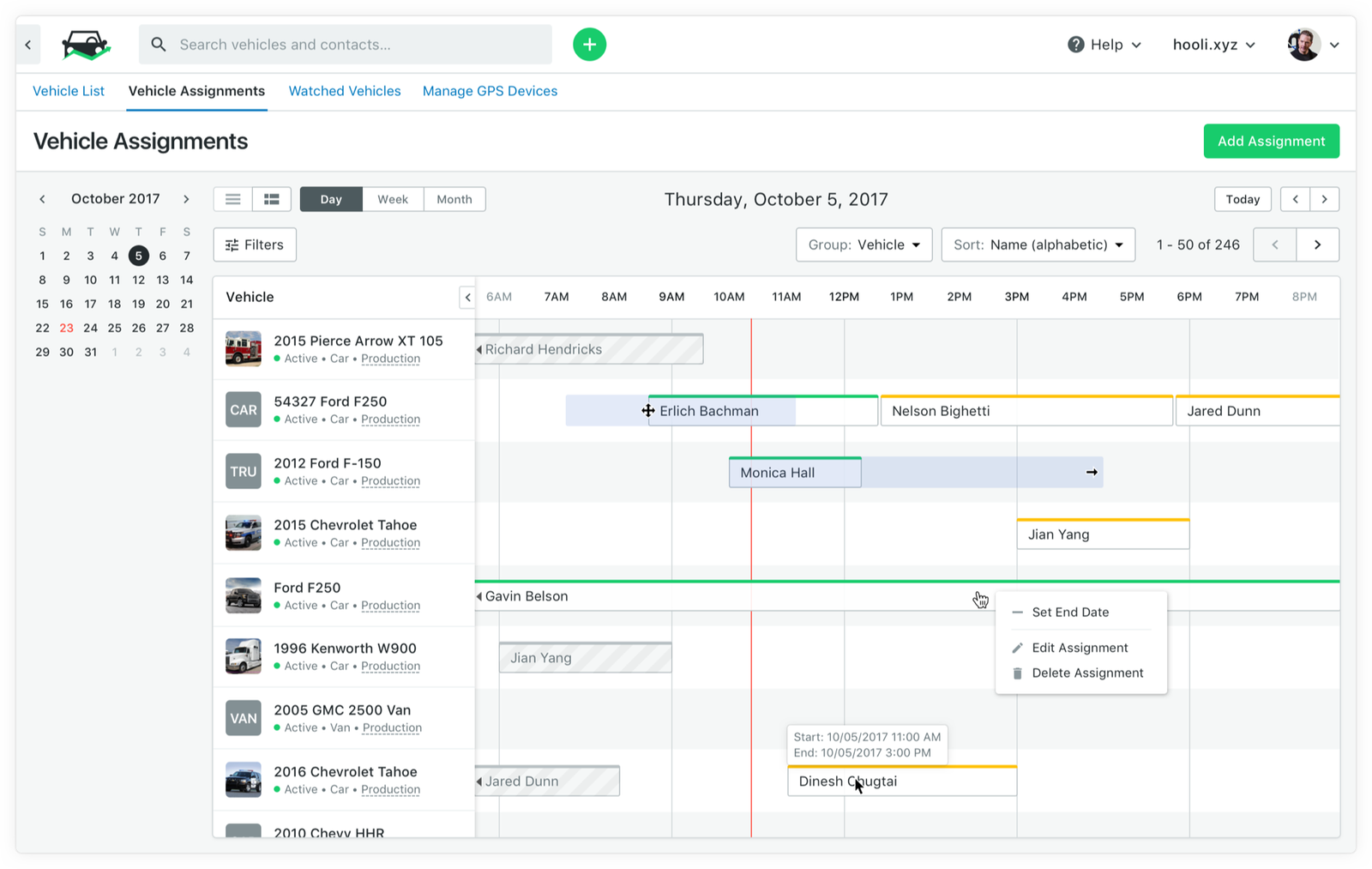
Scheduling ahead also lets you stage assets where demand is heaviest. If one location runs short every Monday while another sits on idle units, reallocation becomes a scheduling decision rather than a purchase request.
Report on the activity
The return is where most pools lose data. A mileage entry at check-in keeps meter readings current, which feeds cost per mile, preventive maintenance intervals and utilization at once. Ask for it while the employee is still standing at the asset and you get it. Ask three days later and you won't.
Bringing Structure to Motor Pool Costs
Cost tracking is where motor pools get vague. If an admin has to open every closed reservation and type in a rate, the numbers are only as good as that habit, and one busy week leaves a hole in the month.
Flexible billing rates change the shape of that work. Set a rate for a group of assets, or at the individual asset level when a specific unit costs more to operate, and the reservation captures the cost when it closes. Manual entry could always produce accurate figures. What predefined rates add is structure, which is what you need when finance asks for a chargeback by department or a sedan-versus-pickup comparison covering two quarters.
Once rates and mileage land on their own, the reporting questions get more useful. You can see which departments are the heaviest users, which assets cost the most per mile to keep available and whether your chargebacks cover what the pool actually costs to run.
Using Utilization to Right-Size the Pool
Consistent scheduling exposes the assets nobody books. That is uncomfortable information and also the most valuable output of a motor pool program, because fleet size is the largest cost lever most organizations have. Eliminating a single light-duty vehicle can save $5,000 to $8,000 per year. Ten of them adds up to real budget.
Heavy equipment deserves the same scrutiny even though it moves less often. The City of Santa Barbara saved almost $19,000 by cutting one 10-wheel dump truck.
Track utilization as a running percentage rather than an annual exercise. Fleet management experts like John Dolce say fleets should strive for a 90% utilization rate. Compare that figure across locations before approving a new purchase, since a shortage in one yard is often a surplus in another.
Keeping the Pool Usable for Employees
A scheduled assignment answers the question employees ask most often, which is simply what they are driving today. That alone removes a standing interruption from an admin's morning. It also cuts the time spent hunting for keys, leaving more room for a thorough inspection before the asset leaves the lot.
Key handoff is worth deciding deliberately. Invers recommends basing the approach on fleet size and geographic distribution. A pegboard and one key admin works for a small pool in a single building. Larger pools in a central location benefit from an automated key box, and organizations with assets spread across sites often need keyless access so nobody drives to dispatch before every shift.
Where to Start
If your pool runs on a shared calendar today, work through it in this order:
- Move every reservation into one system so requests, approvals and returns share a record.
- Turn on auto approvals for routine bookings and route specialized assets to an admin.
- Set billing rates by group, then override at the asset level where a unit costs more to operate.
- Require a mileage entry at check-in and tie inspections to the assignment.
- Review utilization by asset and by location monthly instead of at budget time.
Is your motor pool more like a whirlpool?
Put a stop to swirling spreadsheets and wishy-washy whiteboards. And take control with real-time assignments and availability tracking — all at your fingertips.
Digitize your driver schedule
Motor Pool FAQs
What is motor pool management?
It is the practice of scheduling shared assets, assigning them to employees for defined periods and accounting for what each reservation cost. The scheduling side keeps assets available. The accounting side tells you whether the pool is the right size.
How do employees request an asset from the motor pool?
Through a request that records the dates, the purpose and the class of asset needed. Routine requests can clear on auto approval while specialized equipment routes to an admin for review.
How do you bill departments for motor pool use?
Most organizations charge by day, by hour or by mile. Rates set ahead of time by group or by asset keep chargebacks consistent across departments and remove the guesswork that comes with entering a rate after each reservation closes.
Why does mileage capture at check-in matter?
Meter readings collected at return keep cost per mile and preventive maintenance schedules accurate for assets that pass between many hands. Without that entry, a pooled asset can drift well past a service interval before anyone notices.
What utilization rate should a motor pool aim for?
A 90% target is a common benchmark for fleets overall. Read it per asset as well as in aggregate, since sustained high use on one unit points to heavier maintenance spend and a shorter service life.

Marketing Director
Lori is the Director of Marketing at Fleetio and a seasoned B2B marketing and automotive advertising expert. When she's not nerding out on marketing metrics or podcasts, she is binge-watching Netflix crime dramas with her dog, Fitzgerald.
LinkedIn
Senior Copywriter
Tyler Freeland is a Senior Copywriter at Fleetio. A former creative writer for Freightliner and Western Star, he now transforms complex (and sometimes common) fleet topics into practical, engaging insights that fleet leaders can apply every day.
LinkedIn|View articles by Tyler FreelandReady to get started?
Join thousands of satisfied customers using Fleetio
Questions? Call us at 1-800-975-5304