Lost in the Repair Queue: How AI Fleet Management Brings Focus
Fleet managers have more maintenance data than they know what to do with. But that doesn't mean maintenance decisions are getting easier. As repair orders, inspections and telematics alerts pile up, the real challenge becomes knowing what deserves attention first. Learn how AI can help fleet teams cut through the noise, prioritize critical repairs and spend less time managing the queue.
Jun 24, 2026
10 min read

What you need to know about AI fleet management
-
AI creates value with speed and certainty: The biggest opportunity isn't predicting future failures — it's helping fleet managers act faster on the repair orders already sitting in their approval queues.
-
More fleet data can make maintenance harder: Telematics, digital inspections and connected shop networks generate more signals than ever before, but they don't help managers determine which issues require immediate attention.
-
The best AI works inside the workflow: When AI is embedded directly into the repair approval process, routine repair orders can move forward faster while managers focus their attention on the issues that require human judgment.
-
Faster decisions lead to less downtime: Fleets using AI-driven repair order triage have reduced the time assets spend in the shop by 16%, helping assets return to service sooner and reducing delays between shops and fleet teams.
-
The biggest return is strategic time: By spending less time reviewing routine approvals, fleet managers can focus on total cost of ownership analysis, repair-versus-replace decisions and the initiatives that have the greatest impact on fleet performance.
Fleet managers make hundreds of maintenance-spend decisions every week. Most of those decisions happen inside a queue where a routine oil change and a suspect $3,200 transmission repair receive the same level of manual review.
The Technology & Maintenance Council's (TMC) most recent member survey found that cost containment and technician staffing are top priorities for fleet managers, which means the pressure on every approval decision is already high before the queue ever gets opened.
The requests arrive undifferentiated. A repair order flagged as urgent sits beside a scheduled preventive maintenance order with no clear distinction between the two. A line item priced 40% above market rate looks identical to one priced correctly.
The manager's job is to find the anomaly.
The system offers little help.
As fleets add more assets, more telematics devices and more connected maintenance systems, this workflow problem compounds. That's where AI fleet management solutions create the most value.
More Data Didn't Fix the Problem, It Buried It
Sure, the last decade of fleet technology delivered on its promise of more fleet data. Telematics systems now automatically log odometer readings. Digital inspections generate issue records the moment a driver submits a form. Connected shop networks route repair orders directly into the platform. Each of these is a genuine improvement over the so-called “spreadsheet era” but each one also adds more items to the queue.
A 2023 CerebrumX survey of more than 2,000 fleet professionals found that nearly two-thirds were already collecting connected vehicle data. Of those using a telematics service provider, nearly a third reported not getting optimal ROI — with the most common barrier being the inability to make the data actionable for their organization.
Every inspection, fault code, service reminder and telematics alert competes for the same finite resource: your attention. As the volume grows, the ability to quickly identify what matters most becomes increasingly important. Fleets don't need more alerts, they need a way to separate critical issues from routine noise so the right work gets done at the right time.
Where AI Belongs in Fleet Maintenance and Where It Doesn't
Some companies tout AI, but it’s just a chatbot that relies on human input, so what you get out of it is inconsistent depending on who’s doing the prompt. Think: standalone dashboards, conversational query tools and predictive analytics reports. These are all genuinely useful tools for trend analysis and long-range planning.
Standalone AI query tools, for example, let managers ask questions in plain language, but the manager still has to leave their operational context, open a separate tool and interpret results before returning to make a decision.
These tools may inform the queue, but they don't always reduce it.
Other AI tools sit within the workflow, performing repair-order triage, cost-anomaly detection, risk-based issue prioritization and guided approvals. This category actually acts on the data as soon as a decision is required. Rather than requiring managers to review every item with the same level of scrutiny, it helps surface the issues and repair orders most likely to require attention.
When a shop estimate arrives, the system evaluates it against the service history and flags any line items that appear incorrect before the manager even opens the order. When a new issue is created from a failed inspection or a DTC fault, the system automatically assigns it a priority rating based on asset criticality and operational risk. That way, the most critical issues are already at the top when the manager opens the queue.
Predictive maintenance belongs in the first category and deserves its reputation. Knowing four weeks in advance that a component is likely to fail is operationally valuable. But catching a $2,000 cost anomaly in a repair order that needs approval in the next two hours is urgent in a way that long-range prediction just can't match. The second use case is where the gap is.
How Embedded AI Cuts Repair Review Volume by 60%
When AI is embedded into the repair approval workflow, the math changes. Roughly 60% of what lands in a manager's queue is routine: the cost is in range, the service matches the PM schedule and the history is clean. That 60% can typically be evaluated much faster because the system provides additional context, highlights potential concerns and helps managers focus their attention where it's most needed. The remaining 40% is where human judgment matters.
That's exactly where a manager's attention should go.
Our AI Service Advisor is built to support that review process by helping managers quickly distinguish routine work from the repair orders that warrant a closer look. It operates across two core functions:
- Smart Priorities: which scans new issues and assigns risk-based priority the moment they're created.
- Smart Assessments: which evaluates incoming repair orders through the Maintenance Shop Network, assigns acceptability ratings and warns managers about cost overruns and duplicate services at the line-item level.
The result is a queue that's already queued up — organized by priority before the manager opens it.
| Workflow Stage | What Happens | Fleetio Capability |
|---|---|---|
| Issue creation | A failed inspection item, telematics fault or shop estimate generates a new issue | Fleetio Inspections, Fleetio Go, telematics integrations |
| Automatic prioritization | Scans new issues and assigns risk-based priority the moment they're created | AI Service Advisor (Smart Priorities) |
| Repair order review | Evaluates incoming repair orders in real-time, instantly flagging cost discrepancies, out-of-policy pricing and potential duplicate work | AI Service Advisor (Smart Assessments) via Maintenance Shop Network |
| Manager action | Assigns acceptability ratings and warns managers about cost overruns and duplicate services at the line-item level | AI Service Advisor guardrails and manager approval |
Our early-access data puts a number on the outcome: fleets using Smart Assessments have cut the time their assets spend in the shop by 16%. That figure reflects faster decisions and fewer back-and-forth calls with shops.
Less time stalled on approvals that should have been straightforward. The page-three repair order with the duplicate brake service and the $400 part markup no longer stays buried. Smart Assessments flags it. And Smart Priorities moves it to the top so the manager sees it first.
It’s worth noting that the 60% figure assumes a fleet with sufficient repair-order history in the platform. Fleets at rollout with limited historical data will see a different split and should expect the system to improve as it learns their patterns.
Why Fleet Managers Hesitate to Trust AI and What Earns It
The most common objection to AI in the approval workflow is a practical one: "I don't want AI approving work without me." That concern is totally rational, and the fleet managers who raise it are being accountable.
A bad approval decision has real consequences. An overcharged invoice damages the fleet's budget. A missed repair can create downtime later on down the road. Even a strained shop relationship can create friction that affects future service. Approval decisions carry operational, financial and vendor-management consequences, which is exactly why most fleet managers want to stay involved.
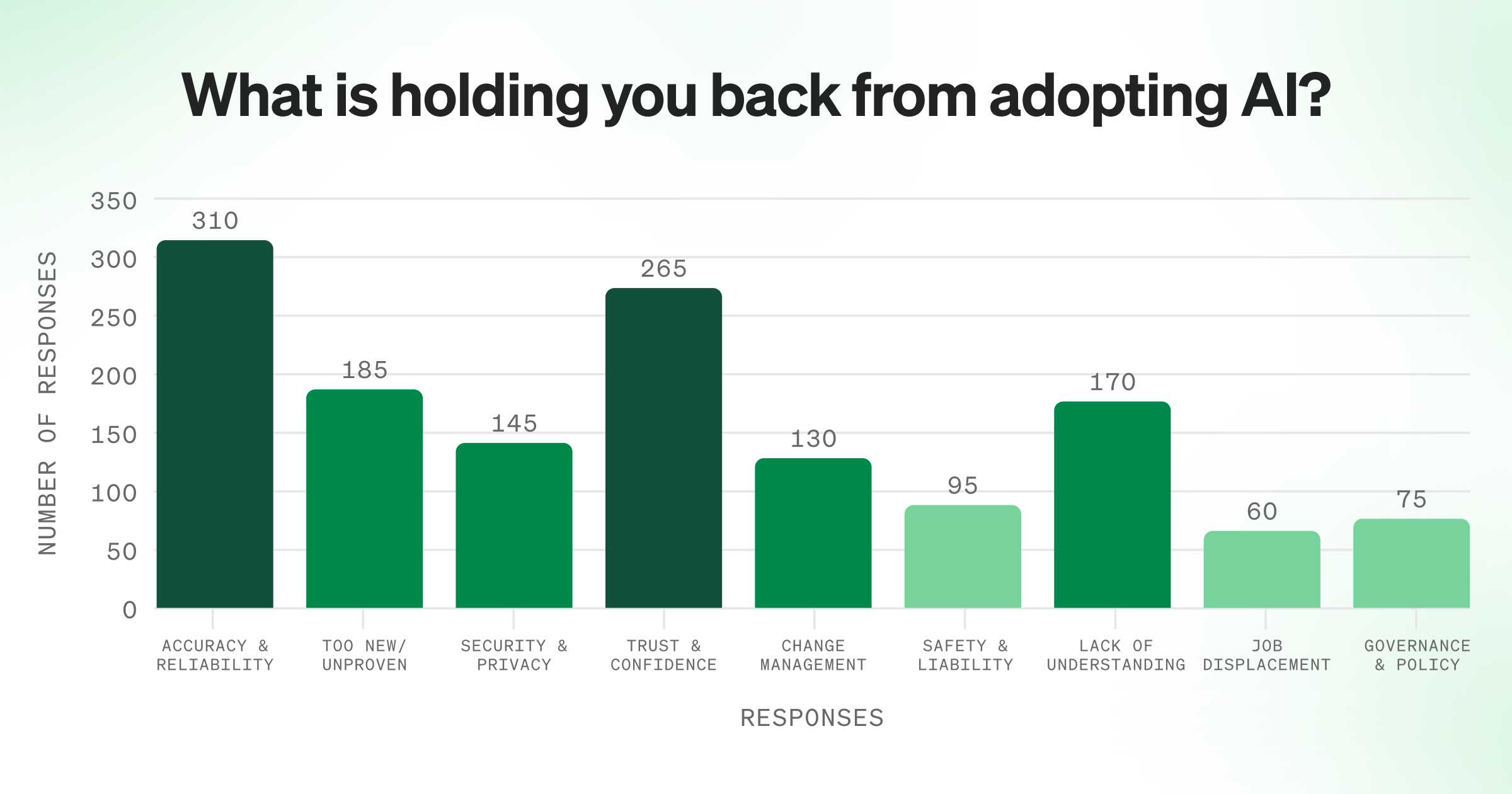
50% of fleet professionals cite accuracy and reliability as their primary hesitation with AI, according to our 2026 Fleet Benchmark Report. Geotab's responsible AI framework addresses the underlying concern directly, stating that "the user is the ultimate decision maker" in any AI-assisted workflow. That principle is the right starting point, and it shapes how we built AI Service Advisor from the ground up.
AI narrows the field by reducing the number of items that require the manager's direct judgment, while providing additional context and guidance for the decisions that remain. When the system lacks enough historical data to make a reliable assessment on a repair order, it delegates to the manager rather than fabricating a recommendation. The manager gets to set the approval threshold for various request types and the AI operates within them. That way, every assessment is visible and auditable, so there are no black-box decisions.
For fleets that want to go further, we're currently piloting auto-approval within manager-defined limits. In this mode, low-risk, routine work can be automatically approved within manager-defined thresholds, while anything outside those parameters is flagged for human review. It only activates when the manager has explicitly set the boundaries and stays off by default.
That's how trust gets built. The system narrows what requires the manager's judgment. It signals when there isn't enough history to make a reliable call, rather than fabricating a recommendation to fill the gap.
What Fleet Managers Do When the Queue Stops Running Them
AI-driven triage delivers faster approvals, fewer missed anomalies and less time playing phone tag with shops. That operational payoff matters, but the real change is what fleet managers do with their time once the queue stops running them. Did someone say pickleball? Maybe later.
TMC's survey data makes the strategic stakes clear: cost containment is a top concern, not because managers don't care about it, but because they rarely have time to work on it systematically.
TCO analysis and repair-versus-replace decisions require sustained attention. So does building the case that the fleet is a strategic asset, not a cost center. These are the conversations that change how a fleet is funded and resourced.
They both require time and data, and most managers have the data but not the time. AI Service Advisor gives it back.
Faster approvals go beyond getting assets back on the road sooner. It means the manager who used to spend Monday morning working through 40 undifferentiated repair orders now has capacity for the work that actually moves the needle. That's also when investing in a serious preventive maintenance program becomes possible — the kind that reduces reactive queue volume over time, not just manages it more efficiently.
The approval queue will always exist, and fleet managers will always be responsible for spending decisions and some will always require human judgment. What changes with AI is whether the decision that matters most is the first one you see, and whether the thirty routine items behind it are already handled.
See What AI Service Advisor Catches in Your Repair Queue
AI Service Advisor works inside the maintenance workflow where repair orders already land. Because it runs within the Fleetio platform, it can analyze repair orders alongside your maintenance records, inspection history and service data to surface potential cost overruns, duplicate services and other items that may warrant a closer look. The result is decision support that's grounded in your fleet's actual maintenance history rather than generic recommendations.
Rather than asking managers to review every repair order with the same level of scrutiny, AI Service Advisor helps provide additional context where it matters most. That means less time sorting through routine approvals and more time evaluating the work that could have a larger operational or financial impact.
Fleets in early access have reduced asset shop time by 16% and cut service entry time by up to 90%. If your approval queue has a page-three problem, AI Service Advisor helps surface the right repair orders with decision support that integrates directly into your existing workflow.
Because the challenge was never about collecting more information. The challenge was making sure the right information gets the attention and action it needs before it becomes a larger problem.
Bring context to every repair decision
AI Service Advisor helps surface cost overruns, duplicate services and high-priority issues, giving your team the context they need to make faster, more confident maintenance decisions.
Explore AI Service Advisor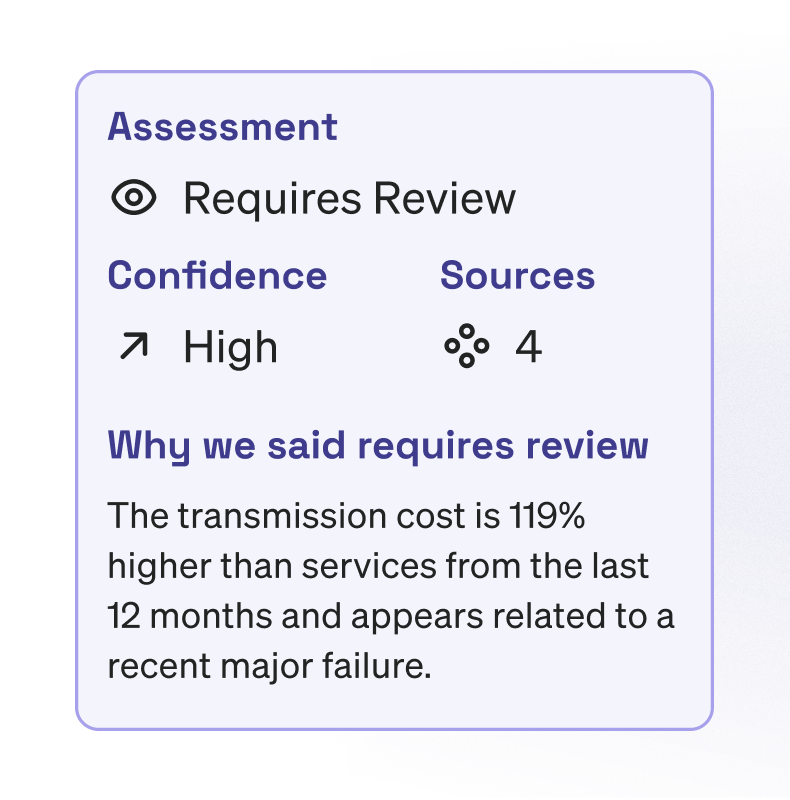

Senior Copywriter
Tyler Freeland is a Senior Copywriter at Fleetio. A former creative writer for Freightliner and Western Star, he now transforms complex (and sometimes common) fleet management topics into practical, engaging insights that fleet professionals can apply every day.
LinkedIn|View articles by Tyler FreelandReady to get started?
Join thousands of satisfied customers using Fleetio
Questions? Call us at 1-800-975-5304