Fleet Automation Should Eliminate Busywork, Not Jobs
“Automation” is an understandably scary word for lots of folks. But, at least when it comes to fleet operations, the best uses of automation can help people focus on the most-fulfilling aspects of their jobs.
Oct 6, 2025
5 min read
Now, with artificial intelligence becoming more and more present in our daily lives, the possibilities and ramifications of automation have become mainstays of conferences and kitchen tables. People are curious about the capabilities of automation, but, more practically, they’re also concerned about the security of their jobs.
The fleet industry has been no exception to this trend. So, to address the concern head-on, Fleetio recently teamed up with Automotive Fleet to host a webinar on fleet automations and AI. Fleetio’s Dan Simpson and Trantham Services’ Abby Brunner discussed how the industry is already using AI, its possibilities and its pitfalls.
Here are three takeaways from their conversation:
1. Concerns about AI are legitimate
Before we dig into the merits of AI in relation to fleets, it’d be best to address the elephant in the room—people are worried about automation eliminating their jobs. To have an evenhanded discussion of the topic, it’s worth acknowledging that the majority of these folks aren’t doomsayers or worrywarts. History has repeatedly shown us how advancements in automation can have profound impacts on workforces across industries. In other words, the concerns of people who feel uneasy about automation are well-founded.
At the same time, to have a fair examination of AI, it’s important to recognize that just because AI is applicable to a job doesn’t mean AI is capable of eliminating it. Especially with regards to the fleet industry, while automation is poised to impact some responsibilities of certain fleet jobs, ChatGPT won’t be performing an oil change anytime soon. This limitation may or may not be of much comfort to you (depending on your line of work), but it helps to remind us that, even if AI is a world-changing force, it won’t reinvent many fixtures of our lives.
2. There is a need to eliminate data entry
In a survey conducted last year, we asked fleet professionals to estimate how much time their teams spend on manual data entry. A staggering 18.4% of respondents indicated that they and/or their co-workers dedicate more than eight hours per week to punching in work orders, inspections, fuel receipts and the like. What’s more, a follow-up question revealed that much of that data entry was being performed by fleet managers and technicians.
Fleets should find this dynamic unacceptable for two main reasons:
Busywork reduces employee satisfaction
For starters, fleet professionals didn’t enter their line of work to be typists. I’ve interviewed quite a few fleet managers and technicians over the years, and nearly all of them told me that a passion for working on vehicles is what kickstarted their careers.
So, given that wrenching makes technicians happy, fleets ought to have a good reason when they ask their personnel to set their tools down. Huddling up to discuss shop safety? That’s a very valid use of a technician’s time. Transposing paper records into a spreadsheet? That’s just busywork.
And with how difficult it is to find technicians these days, fleets can’t afford to torpedo their employee retention efforts with unforced errors. If you want a technician to stick around for the long haul, let them wrench to their heart’s content.
Skilled labor is valuable, data entry isn’t
By minimizing vehicle and equipment breakdowns through the upkeep they perform, technicians save fleets thousands of dollars each year. Fleet managers improve their organizations’ bottom lines by eliminating inefficiencies (that squander resources and hamper productivity) and preventing accidents (through the safety initiatives they lead). In other words, the work that these roles specialize in is quantifiably valuable.
Unfortunately, tasks not usually listed as a primary responsibility on a technician or fleet manager’s job description pale in comparison. Data entry is a classic example of this. In terms of financial impact, the bread-and-butter work of technicians and fleet managers contributes far more to an organization’s success than keying in data ever could.
During the webinar, Dan encapsulated this dynamic by retelling the experience of a Fleetio customer.
A customer said to me recently, by automating our collaboration and communication, you’re able to stop your techs from focusing on $20/hr data entry… They can pick up a wrench and really focus on $60/hr preventive maintenance activities. Dan Simpson, Product Marketing Manager at Fleetio
If it ain’t broke, fix it
Spreadsheets and paper logs work — until they don’t. Automating your fleet isn’t about fixing what’s broken. It’s about upgrading what’s holding you back.
Don’t hesitate, automate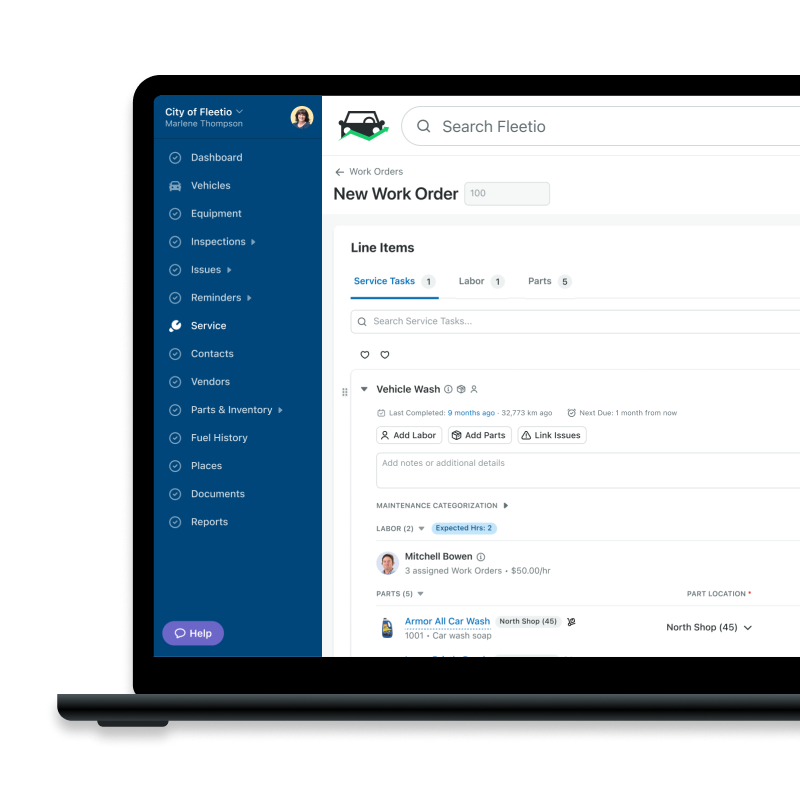
3. How Fleetio's automations help fleets focus on meaningful work
Back in the day, Trantham Services, an Alabama-based trucking company specializing in bulk feed and live poultry hauling, was up to its neck in paperwork. According to Operations Manager Abby Bruner, across eight shops, his team was spending around 80 hours per week handling all the forms involved in scheduling preventive maintenance (PM) work and repairs for the company’s trucks.
Fortunately, since adopting Fleetio, Abby’s had a lot more time to focus on meaningful work.
With Fleetio, I spend about 10 minutes every morning scheduling our trucks. All 80 hours worth of paperwork is now cut down to one person… Our service compliance has [gone] from about 60% to about 90% now… [And] we’re keeping up with probably four or five times more service reminders than we were. Abby Brunner, Operations Manager at Trantham Services
By digitizing how technicians record and relay information, every phase of Trantham Services’ PM workflows has become more efficient. When a driver submits a failed DVIR in Fleetio, an issue is automatically created, enabling technicians to get to work more quickly. Via tablet, those technicians can look up vehicle service histories, communicate with their co-workers through comments and provide status updates right from the service bay. And less time leaving the shop (to look something up or drop off a shop ticket) means more time for wrenching.
Finally, it’s worth noting that Abby’s technicians were a bit hesitant about switching from paper to software at first. But, after about a month of getting used to Fleetio and experiencing how much smoother it made their day-to-day, their opinion has done a 180°.
After that month, I don’t think I could talk them into going back to paper now. The change was tough, but, even with some of my older techs, they’re that way too. They’re just like 'Don’t hand me a piece of paper and a pen. Let me pull out my tablet.' Abby Brunner, Operations Manager at Trantham Services
What’s the worst that could happen?
It’s just a demo — no pressure, no commitment. Just the first step to saving hours each week and running a smoother, more efficient fleet.
Take the step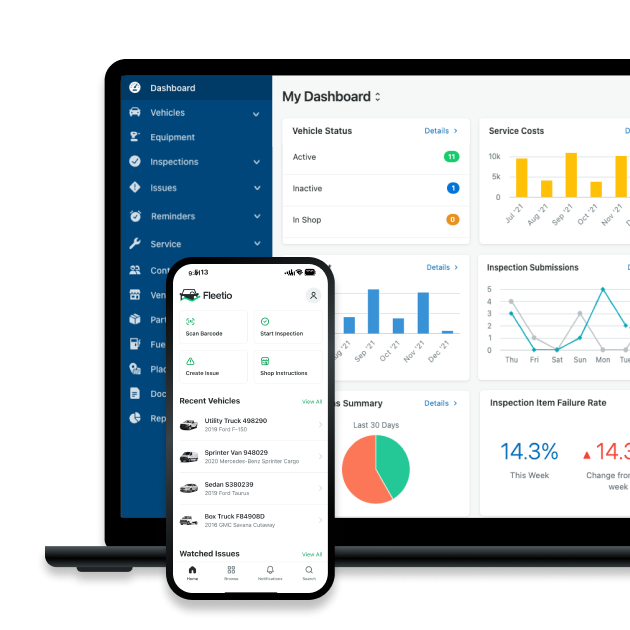

Fleet Content Specialist
Through interviews, blog posts and webinars, Alex covers the tactics and technologies exceptional fleet managers use to achieve results. By sharing their success stories, his work aims to inform and inspire fleet professionals of all stripes.
LinkedIn|View articles by Alex BorgReady to get started?
Join thousands of satisfied customers using Fleetio
Questions? Call us at 1-800-975-5304