Spare Parts Management for Fleets: What to Know and Where to Start
Spare parts management shapes nearly every aspect of fleet maintenance: repair speed, technician productivity, downtime and cost control. Many fleets invest heavily in maintenance scheduling but lose efficiency when parts are unavailable, misplaced or overstocked. This guide covers what spare parts management is, the challenges fleets commonly face and how digital inventory tools connect parts with the maintenance workflows that depend on them.
Feb 7, 2019 | Updated: Aug 28, 2026
11 min read
What you need to know
- Spare parts management directly affects maintenance efficiency: Keeping the right parts available helps fleets reduce repair delays, technician downtime, emergency purchases and unnecessary inventory costs.
- Effective stocking requires more than keeping extra parts on the shelf: Usage history, supplier lead times, fleet composition and the operational impact of a stockout all help determine what to stock and how much to keep on hand.
- Accurate inventory data gives fleets greater control: Connecting parts with purchasing, work orders and maintenance history helps fleets improve inventory accuracy, control costs and make more informed stocking decisions.
Spare parts management affects nearly every aspect of fleet maintenance: repair speed, technician productivity, downtime and cost control. Many fleets invest heavily in maintenance scheduling but lose efficiency when the right parts aren't available at the right time. A part that's stocked in the wrong location, never logged into the system or simply missing from the shelf can turn a routine repair into an unplanned vehicle-out-of-service event.
Modern fleet operations increasingly rely on digital tracking to connect parts usage with work orders, purchasing and maintenance history. This guide covers what spare parts management is, the challenges fleets commonly face and how software helps connect parts inventory with the workflows that depend on it.
What is spare parts management?
Spare parts management is the process of tracking, storing, replenishing and using the replacement parts required for vehicle maintenance and repairs. It covers consumables like filters, fluids and belts as well as critical replacement components like brake parts, electrical assemblies, tires and sensors.
Poor spare parts management creates predictable problems: delayed repairs when parts are missing, emergency purchasing at premium prices, excess inventory carrying costs when parts are overstocked and longer vehicle downtime overall. Parts availability connects directly to maintenance turnaround. A technician who has to stop work and wait for a part isn't just idle; the vehicle they're working on stays out of service longer.
Fleet spare parts demand is also less predictable than retail inventory. Usage is driven by maintenance intervals, failures and inspection findings rather than steady consumption patterns. That unpredictability makes both overstocking and understocking common problems, often at the same time across different parts of the same inventory.
Common spare parts management challenges
Most spare parts problems don't come from a shortage of inventory. They come from weak visibility and inconsistent control over inventory that already exists.
Overstocking slow-moving parts
Overstocking often happens when fleets buy extra parts "just in case" without reviewing actual usage history. It can feel like protection against downtime, but it creates hidden costs: cash tied up in parts that may sit unused for long periods, shelf space consumed by low-demand inventory and aging parts that deteriorate before use. As vehicles are replaced or specifications change, stocked parts can become obsolete. Older fleets are especially vulnerable because parts purchased for one asset may no longer fit future replacements.
Take control of your parts inventory
Get a ready-to-use spreadsheet to organize parts inventory, improve visibility and build a more consistent approach to tracking stock.
Get the template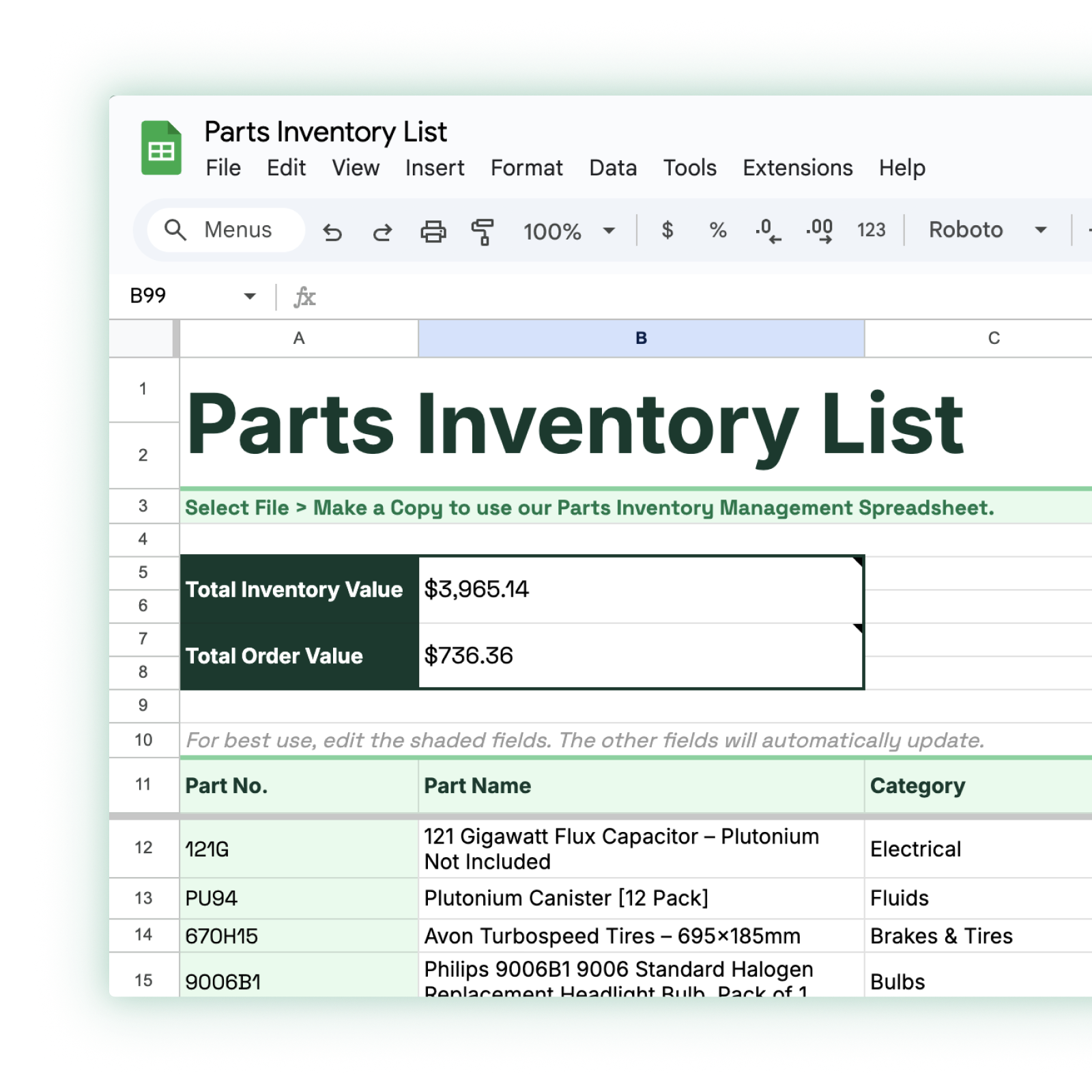
Stockouts of critical parts
Shortages become most disruptive when common repair items are missing during planned service or active repairs. When a technician doesn't have the filter, brake component or belt they need, work stops and the vehicle stays out of service longer. Emergency purchases often cost more and may take longer to arrive. Even inexpensive parts can create major service delays if they're the reason a repair can't be completed.
Duplicate purchases caused by poor visibility
Fleets often buy parts they already own because available stock can't be located quickly or inventory records are incomplete. This is especially common when storage spans multiple shelves or locations, naming conventions differ across sites or technicians store parts informally near active work areas. Duplicate purchasing looks small transaction by transaction but grows costly over time as inventory expands without improving actual availability.
Inventory inaccuracies between physical stock and digital records
Mismatches between what's physically on the shelf and what the system shows are one of the most persistent long-term inventory problems. Common causes include unlogged technician use, receiving mistakes when deliveries arrive, quantity errors during manual entry and inconsistent cycle counts or delayed audits. Even a well-organized inventory system loses value when part withdrawals aren't recorded consistently.
Spare parts categories fleets should manage differently
Not all spare parts create the same operational risk. Fleets typically manage them differently based on usage frequency, cost, lead time and maintenance impact. A single stocking strategy rarely works across an entire parts inventory.
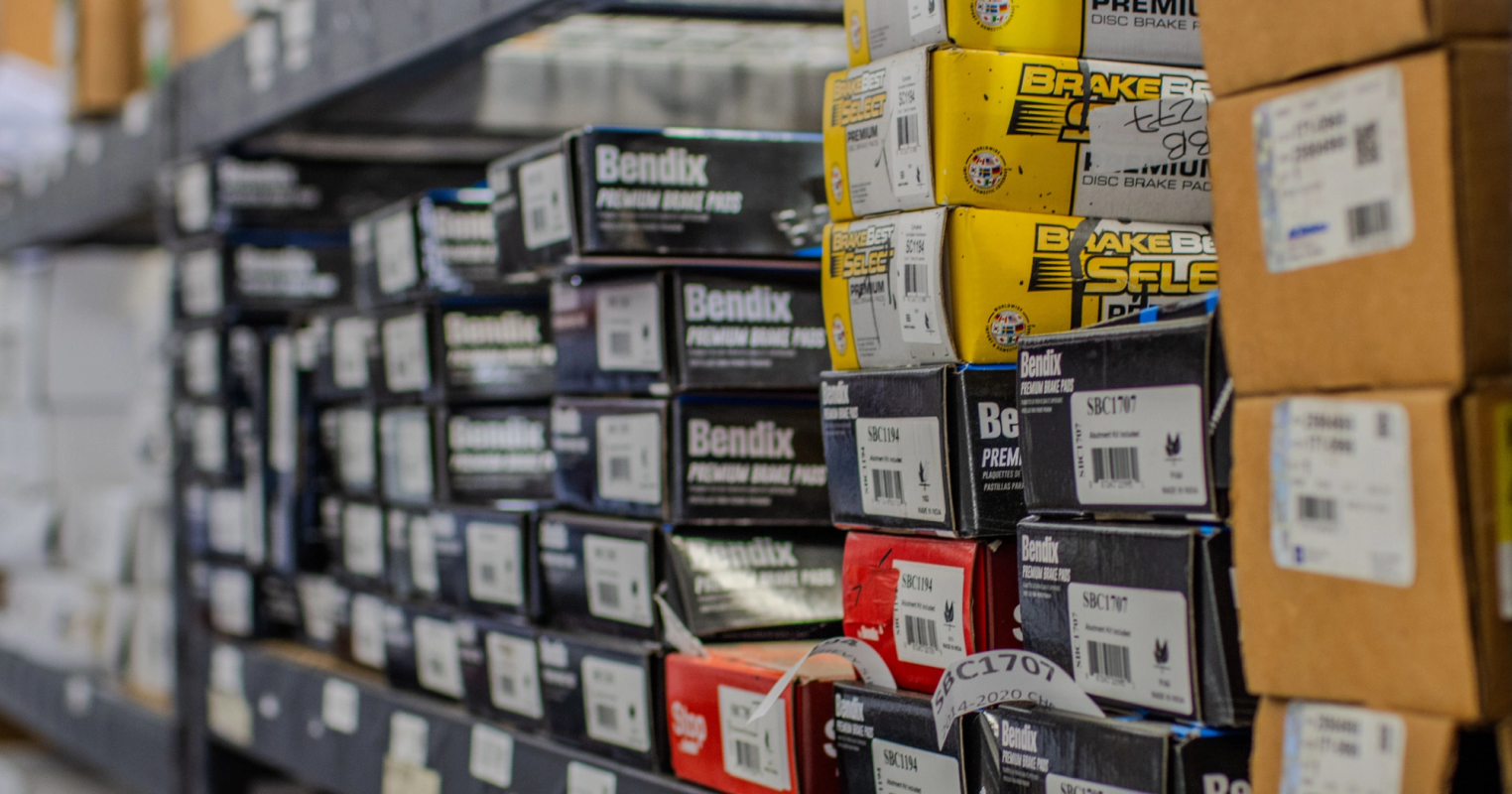
Fast-moving maintenance parts are the parts technicians use most often during scheduled maintenance and recurring repairs: filters, bulbs, fluids, brake pads, belts and common fittings. Because these items move frequently, shortages immediately disrupt planned service work. They usually justify clearly defined minimum stock levels, frequent cycle counts and easy technician access. Usage is predictable, making this the easiest category to manage accurately.
Critical high-value parts include expensive or operationally sensitive components like sensors, control modules, alternators, injectors and specialty electrical assemblies. Fleets often can't justify holding large quantities because capital cost is high, but availability matters when failures occur. These parts benefit from tighter issuance controls and stronger documentation around warranty status, vendor source and compatibility. A single incorrect purchase in this category can tie up budget significantly longer than consumable inventory.
Rare emergency parts are used infrequently but associated with severe downtime when needed: uncommon hydraulic components, specialized electrical connectors, emergency replacement hoses or vehicle-specific assemblies. Demand is difficult to predict because failures are irregular. Fleets often stock a limited quantity when replacement lead time is long or roadside downtime is costly. Low usage does not always mean low importance.
How fleets decide what parts to keep in stock
Stocking decisions are usually based on a mix of historical data, operational risk and purchasing realities rather than technician preference alone. The goal is to balance availability with cost control, and the right calculation looks different for each part.
A filter with high usage, a reliable supplier and low unit cost justifies a simple min/max rule. An expensive sensor with long lead times and unpredictable failure requires a different calculation entirely. The interaction between these factors matters as much as any individual factor on its own.
Manage parts and maintenance in one place
See how Fleetio connects parts inventory with work orders, purchasing and maintenance history to give your team greater visibility and control.
Book a demo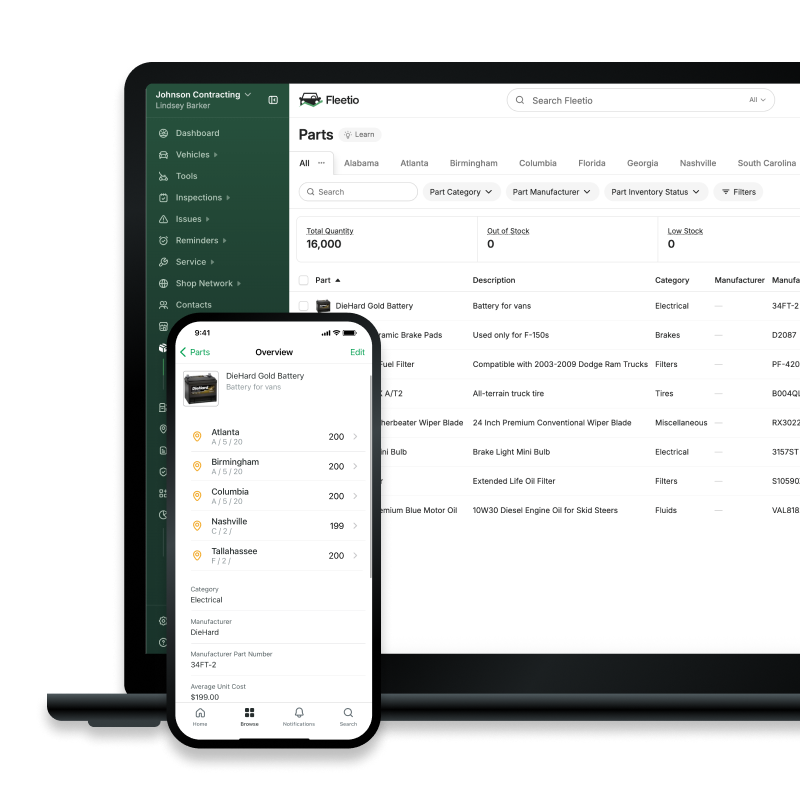
Usage history and maintenance frequency
Historical parts usage helps fleets identify what gets consumed consistently over time. Recurring preventive maintenance schedules often make certain demand patterns highly visible. Parts tied to repeat service intervals usually justify permanent stock because usage is predictable. Historical data also helps prevent over-ordering based on isolated repair events rather than real consumption trends.
Supplier lead times
Delivery speed directly affects stocking strategy. Parts with long lead times often justify holding additional stock even when usage is moderate. Vendor reliability matters as much as the official lead time on paper. A supplier that frequently delays deliveries may justify more safety stock than a fast local vendor with a similar catalog.
Asset age and fleet composition
Older fleets often require broader parts coverage because failures become less predictable and replacement demand expands across more systems. Mixed fleets add complexity because different makes and models may require different filters, sensors, belts or electrical parts. Standardization across future asset purchases can simplify inventory planning over time.
Criticality to uptime
Some parts justify shelf space even when usage is low because the downtime consequences of not having them are expensive. A missed route, a delayed service call or the cost of renting a replacement vehicle can quickly exceed the carrying cost of a spare part held in reserve. Stocking decisions for these items should be framed around downtime exposure rather than usage frequency alone.
How Fleetio supports spare parts management
Fleetio is an all-in-one fleet management platform that connects parts inventory with the maintenance workflows that depend on it. Rather than managing parts in a separate system or spreadsheet, fleets can track parts, usage and purchasing alongside vehicle records, work orders and maintenance history.
Centralized part records
When part information is scattered across spreadsheets, purchase orders and technician knowledge, it's hard to know what's on hand, what it costs and where it came from. Fleetio keeps one consistent record for each part, including quantity, cost, vendor details and compatibility. That reduces duplicate purchases, speeds up parts lookup during active repairs and gives fleet managers cleaner data for strategic stocking decisions over time.
Mobile inventory updates
When technicians pull parts without logging them, records drift from physical stock. The problem isn't technician carelessness; it's a workflow gap. Fleetio Go, the mobile app for technicians and operators in the field, lets them issue parts in real time, update counts immediately and reduce delayed record entry. Inventory records stay accurate without adding administrative steps to the repair workflow.
Build a better parts inventory strategy
Learn more about managing fleet parts inventory and how better visibility can help keep maintenance operations running efficiently.
Read the guide
Purchase and usage tracking
Without connecting what was purchased to what was actually used, it's difficult to see which parts are consuming budget or whether spending patterns match actual maintenance needs. Linking purchases and usage in Fleetio creates stronger cost visibility over time, supports better budgeting and identifies patterns like recurring high-cost repairs on specific assets.
Location-based inventory control
Multi-location fleets often can't see what's available at other sites, which leads to unnecessary purchases when stock already exists elsewhere. Fleetio shows inventory by location so fleet managers can check what's on hand at other facilities before placing a new order. That reduces redundant purchases across locations and helps fleets make better use of existing stock.
Spare parts management is a maintenance control strategy
Spare parts inventory management reaches further than storage and purchasing. When parts are tracked accurately and connected to maintenance workflows, repairs move faster, technicians work more efficiently, emergency purchases become less frequent and maintenance budgets are easier to plan and defend.
Better visibility allows fleets to shift from reactive parts buying to planned inventory decisions that support uptime. To see how Fleetio brings that visibility to spare parts management, book a demo.
Frequently asked questions
What's the difference between spare parts management and inventory management?
Inventory management is a broad discipline covering how any organization tracks and controls physical stock across its operations. Spare parts management is a specific application of that discipline focused on the parts required to maintain and repair assets. For fleet operations, it means managing parts within the context of vehicle maintenance schedules, repair workflows and uptime requirements rather than as general stock. The key difference is that spare parts demand is driven by asset condition and maintenance intervals rather than sales or production cycles, which makes fleet parts inventory harder to predict and more operationally sensitive when shortages occur.
How often should fleets audit spare parts inventory?
Most fleets benefit from a combination of cycle counts and periodic full audits. Cycle counts involve counting a rotating subset of parts on a regular schedule, which helps catch discrepancies before they compound. Fast-moving parts should be counted more frequently, such as monthly or quarterly, while slower-moving items may only need an annual count. Full physical audits once or twice a year help validate overall system accuracy. Industry guidance on stocking best practices consistently points to regular audits as one of the most reliable ways to keep spare parts records aligned with physical reality.
How does spare parts management affect fleet maintenance costs?
Parts management affects maintenance costs in several direct ways. Stockouts lead to emergency purchasing at premium prices and extend vehicle downtime. Overstocking ties up capital in parts that may never be used. Duplicate purchasing adds unnecessary spend without improving availability. Poor warranty tracking means replacements that should be covered at no cost get paid for out of pocket. When parts are tracked accurately and connected to work orders, fleets gain visibility into where parts spending is going and can make more informed decisions about stocking, purchasing and vendor relationships.
What tools do fleets use to track spare parts inventory?
Fleet parts tracking ranges from spreadsheets to dedicated inventory modules within fleet management software. Spreadsheets can work for small operations with a limited parts catalog but become difficult to maintain as inventory grows or spans multiple locations. Barcode and QR code scanning, available in platforms like Fleetio, speeds up receiving and issuance while reducing manual entry errors. Fleet maintenance software that connects parts records to work orders and purchase history gives fleet managers the most complete visibility into how inventory connects to maintenance activity and cost. The Fleetio parts inventory overview shows how that workflow comes together in practice.
When should a fleet switch from manual parts tracking to software?
The clearest signals are stockouts on common parts, growing discrepancies between physical stock and records, difficulty knowing what's available across multiple locations or technicians spending time searching for parts during active repairs. Paper and spreadsheet tracking tend to break down when a fleet's parts catalog expands, when inventory spans more than one site or when parts usage outpaces the team's ability to log it manually. At that point, the cost of poor visibility often exceeds the cost of the software that would replace it.

Articles written by "Fleetio Staff" are created by our editorial team through a blend of in-depth research, customer interviews, and analysis of industry studies and statistics. These collaborative pieces bring together multiple perspectives – internal and external – to provide fleet professionals with accurate, practical, and actionable insights.
View articles by Fleetio Staff
Senior Copywriter
Tyler Freeland is a Senior Copywriter at Fleetio. A former creative writer for Freightliner and Western Star, he now transforms complex (and sometimes common) fleet management topics into practical, engaging insights that fleet professionals can apply every day.
LinkedIn|View articles by Tyler FreelandReady to get started?
Join thousands of satisfied customers using Fleetio
Questions? Call us at 1-800-975-5304