State of Fleet Management 2026: Challenges, Gaps and Trends
In our 2026 Fleet Management survey, we doubled our survey outreach and heard from over 600 fleet professionals who shared their biggest challenges, evolving strategies and tech priorities. Here's what the data reveals and what you can do about it.
May 13, 2025 | Updated: Feb 17, 2026
4 min read

Quick Stats
- 54.4% of fleet managers say rising costs are their top concern
- 30.8% still rely on spreadsheets for tracking
- 53.7% of maintenance is scheduled — 40.1% is unscheduled
- 12% of miles from vehicles 10+ years old account for 34% of service spend
- 35.1% are researching AI — only 5.6% use it broadly
Based on data from over 1 million vehicles, 17.5 billion miles and $7 billion in service spend, plus survey responses from 600+ fleet professionals, Fleetio's 2026 Fleet Benchmark Report reveals a clear pattern: the fleets that succeed aren't the ones with the newest technology or the biggest budgets. They're the ones with the most disciplined processes.
The performance gap is widening
The data shows an industry stuck in the middle of a bell curve. Most fleets are doing okay, but they're absorbing a steady tax of reactive work, coordination delays and administrative drag that top performers have learned to avoid.
What separates high performers from everyone else?
- They convert surprises into planned work more effectively
- They use clear triage rules instead of treating everything as urgent
- They track true total cost of ownership, not just acquisition price
- They make replacement decisions based on data, not breakdowns
The gap isn't about resources. It's about repeatable process and data discipline.
Key findings from the 2026 report
Cost pressure is the new normal
Cost pressure topped the list of fleet manager concerns at 54.4%, followed closely by regulations and emissions mandates (46.1%). But here's what's interesting: the fleets handling these pressures best aren't avoiding them — they're just absorbing them more efficiently.
Most fleets are stuck between planned and reactive
- Only 6.7% of fleets describe their maintenance environment as "fully scheduled"
- 48% operate in a "half scheduled, half unscheduled" reality
- Platform data confirms this: 53.7% scheduled, 40.1% unscheduled, 6.2% emergency
The opportunity? Every percentage point shifted from unplanned to planned maintenance improves staffing efficiency, parts readiness, and uptime predictability.
Why work orders take days (when they should take minutes)
- Median time to start work: 31 minutes
- Average time to start work: 6.7 days
That gap tells the story: most work starts fast, but exceptions cost fleets days. The culprits? Communication gaps (31.5%), technician availability (27.4%), and unscheduled service volume (25.2%).
The costs and benefits of running older assets
Fleets are running older assets than ever:
- Average vehicle age: 6.4 years
- Vehicles 10+ years old account for ~12% of miles but ~34% of service spend
- Cost per mile jumps dramatically: from $0.06 (0-5 years) to $0.15 (6-10 years) and $1.10 (10+ years)
Running older vehicles isn't the problem. Running them without disciplined maintenance is.
AI adoption is stuck in neutral
- 35% of fleets are researching AI
- Only 5.6% are using it broadly
- Top hesitation: accuracy and reliability (50.8%)
- What fleets want AI to fix most: Automated PM scheduling and predictive maintenance
EVs still don't make sense for most fleets
Despite sustainability goals:
- 81% of fleets have no EVs
- 70% have no hybrid or alternative fuel vehicles
- Top barriers: range limitations (63%), charging infrastructure (63%), and vehicle costs (40%)
So what is working? Case-by-case strategies that balance ROI with sustainability targets, rather than one-size-fits-all mandates.
What this means for your fleet
The 2026 data reveals three truths about fleet performance:
- The fundamentals still matter most: High compliance rates, clear triage protocols, and speed-to-start execution beat expensive technology every time.
- Process gaps compound quickly: Small execution differences create real downtime and real cost. The median fleet and the top-performing fleet face the same problems — they just handle them differently.
- Data discipline is the competitive advantage: Fleets that track true TCO, monitor compliance rigorously, and use lifecycle planning for replacement decisions consistently outperform those that react to problems as they arise.
What's inside the full report
The complete 2026 Fleet Benchmark Report includes:
Part 1: State of Fleet Management
- Survey insights from 600+ fleet professionals
- Top challenges, barriers to performance, and AI adoption trends
- Industry-specific breakdowns and sentiment analysis
Part 2: Assets Data
- Fleet composition, age distribution, and ownership strategies
- Mileage analysis and utilization benchmarks
- Cost-per-mile breakdowns by vehicle age and industry
Part 3: Maintenance Data
- Service category analysis and work order metrics
- Compliance benchmarks and time-to-start distribution
- Maintenance task costs and labor time standards
The best fleets aren't perfect. They're disciplined, and that discipline is learnable.
Download the full report
Whether you're managing 10 vehicles or 1,000+, the 2026 Fleet Benchmark Report gives you the data you need to see your gaps and take the steps to close them.
Book a demo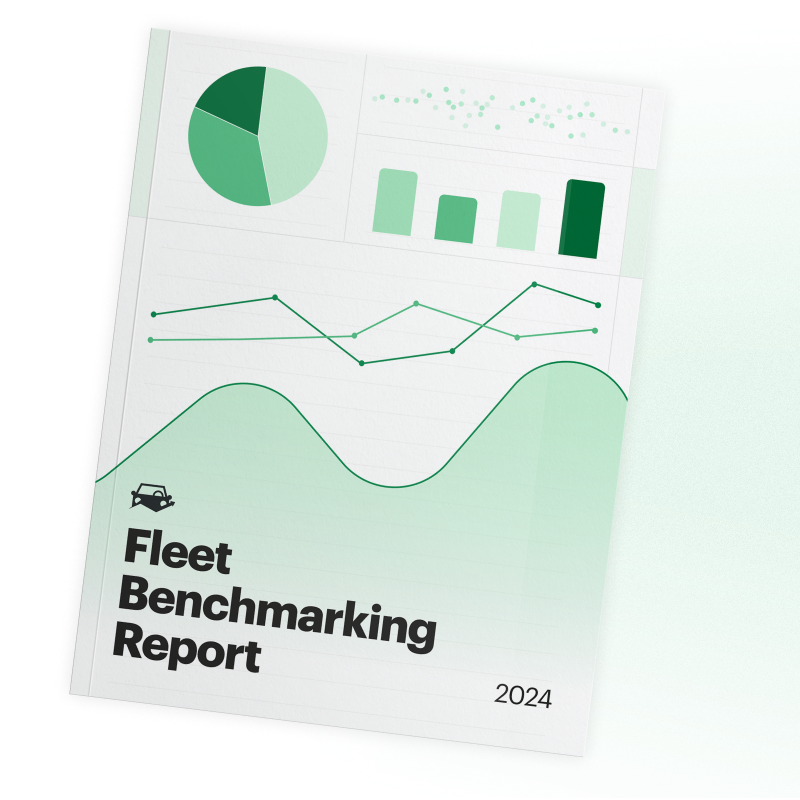
About this report
The State of Fleet Management 2025 report is based on a survey conducted by Fleetio between December 2025 and January 2026. Responses were collected from over 600 fleet professionals across North America, representing a wide range of sectors including government, trucking, construction, utilities and telecommunications. Participants ranged from small fleets with 5–14 assets to enterprise operations managing over 1,000 assets. Surveyed fleets were made up of both Fleetio customers and non-customers. As a trusted leader in fleet maintenance and asset management, Fleetio publishes this report to help fleet leaders benchmark their performance and stay ahead of industry trends.

Senior Fleet Content Specialist
As a Senior Fleet Content Specialist at Fleetio, Peyton explores the voices and experiences that shape fleet operations. She focuses on how fleet professionals adopt technology, improve efficiency and lead their teams to bring clarity and context to the challenges happening across the industry.
View articles by Peyton Panik
Director of Fleet Content, Fleetio
Zach Searcy is the Director of Content at Fleetio with more than 5 years of experience in the automotive and fleet industries. His content creation days started in middle school when he and his friends began filming lightsaber battles to upload to a new website: 'YouTube.'
LinkedIn|View articles by Zach SearcyReady to get started?
Join thousands of satisfied customers using Fleetio
Questions? Call us at 1-800-975-5304