How a Municipal Fleet Manager Took Charge from Day One
Starting a new fleet manager position can feel like attempting to drink from a firehose. But, by getting your bearings early on, you can become an effective leader for your organization in little time.
Sep 29, 2025
4 min read
Every job has a learning curve, but starting as a fleet manager can be especially demanding. From workflows and administrative tools to vendors and regulations, you have to learn countless subjects before you can even think about improving anything. And the more time you take to become an expert in those areas, the longer avoidable inefficiencies will continue to drag down your operations.
Due to that pressure, it’s vital that your first days as a fleet manager get off on the right foot. And the best way of setting yourself up for success is to learn from those who came before you.
As the fleet manager of the fast-growing town of Apex, North Carolina, Bill Spare has had to chart his own path. But, by taking initiative from day one of the job, he’s managed to achieve a ton for his fleet organization in a small amount of time.
1. Getting up to speed via employee insights
As Apex's first fleet manager, Bill couldn't look to the work of predecessors for guidance on how to succeed in his new role. Despite that, he recognized there was still plenty of institutional knowledge he could tap into during his first days on the job. By sitting down with Apex's drivers and technicians, Bill learned a great deal about the town's assets and fleet operations in little time.
One of the first things I did was I conducted one-on-one interviews with my staff and some of the end users of our vehicles. They work on and operate our vehicles on a daily basis, so it was really important to take their concerns into consideration as well. Bill Spare, Fleet Manager at Town of Apex
From opinions on Apex's vehicles to suggestions on how processes could be improved, the personnel Bill spoke with were eager to share their perspectives. And based on their observations, Bill was able to come up with a list of topics to dig into further, the perfect thing for an enthusiastic new fleet manager. Plus, simply interacting with his team one-on-one provided a good opportunity for Bill to begin establishing a rapport with the folks he'd be counting on in the months and years to come.
This town cut fleet costs by 17%
They didn’t need to reduce staff, sell off assets or slash services. What they needed was visibility — something their outdated system just didn’t provide.
Check it out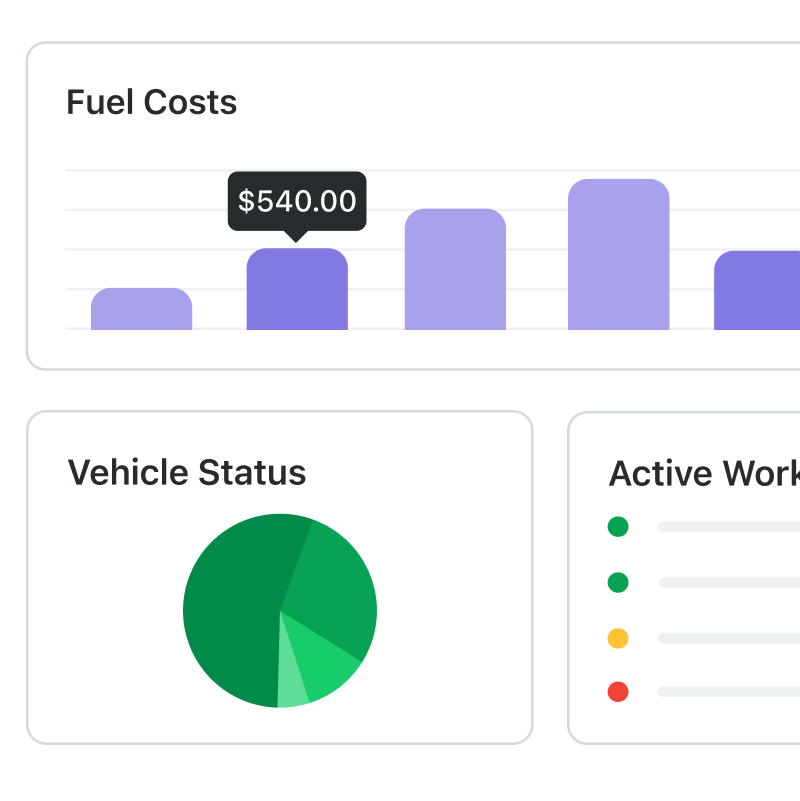
2. Identifying performance benchmarks via data
Once Bill was done gathering on-the-ground intel from his drivers and technicians, he proceeded to round out his research by diving into Apex's fleet data via Fleetio. In past roles, Bill's encounters with fleet management software were often underwhelming, but he was pleasantly surprised by Fleetio. In no time at all, he was familiar enough with the system to use it to conduct an initial audit of Apex's data.
At that point, Bill was still too green to scrutinize every data point Apex had, so instead he kept his eyes peeled for missing records, nonsensical numbers and repetitive data (possibly indicative of pencil whipping). Eventually, he discovered that data related to Apex's older vehicles was never entered into Fleetio. After a quick mass import to correct that issue, Bill determined that Apex's records were reliable.
From there, he was able to pull up metrics that answered some of the most-pressing questions he had about his new fleet.
How often are vehicles being replaced? Are there set replacement schedules? Has the fleet been following those replacement schedules? And, if not, how much money is it going to take us to catch back up? Bill Spare, Fleet Manager at Town of Apex
Those metrics provided Bill with a clear picture of Apex's maintenance goals and where they needed to step up their game in order to fully achieve them.
3. Realized goals and future ambitions
When we first spoke to Bill, he had been leading Apex's fleet operations for three months. And, from the way he spoke about fulfilling his duties as a fleet manager, it was clear that he was serious about taking Apex's fleet operations to the next level.
Case in point, during our first conversation, he shared how improving Apex's preventive maintenance was a top priority for him.
One of our big goals is a minimum of 80% PM on-time compliance. You know, the better that we can service these vehicles and maintain them, ideally, there will be less breakdown time in the field. Bill Spare, Fleet Manager at Town of Apex
By the time our team visited Apex in-person about nine months later, that target had been reached.
As for future aspirations, Bill shared how, as a frequent attendee of fleet trade shows and conferences, he'd like for Apex to be recognized as an exceptional fleet at such an event someday. Compared to on-time PM compliance, measuring progress towards that goal is a lot more abstract. But, with the people, processes and tools Apex has in place, they're well-positioned to realize that ambition.
What’s your municipal fleet missing?
Spreadsheets and siloed systems don’t show the full picture. Get the the visibility you’ve been looking for — all in one platform.
Catch a demo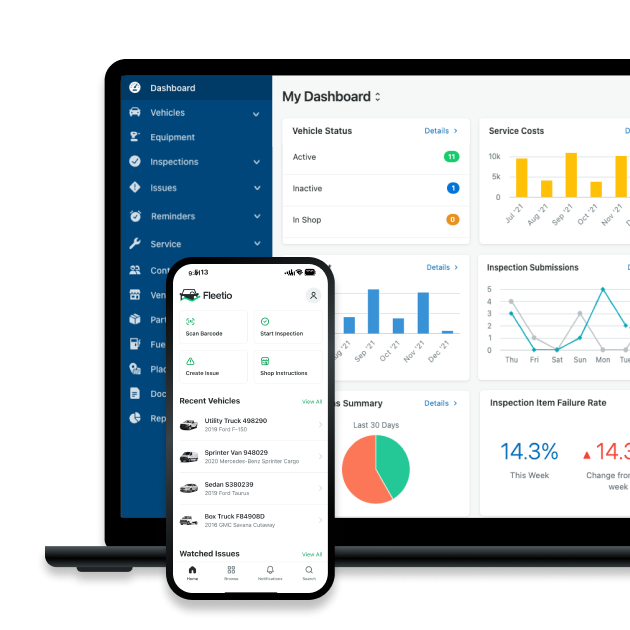

Fleet Content Specialist
Through interviews, blog posts and webinars, Alex covers the tactics and technologies exceptional fleet managers use to achieve results. By sharing their success stories, his work aims to inform and inspire fleet professionals of all stripes.
LinkedIn|View articles by Alex BorgReady to get started?
Join thousands of satisfied customers using Fleetio
Questions? Call us at 1-800-975-5304