Case Studies
St. Johns County School District Transportation Department
Industry: Public Education
Location: Northeast Florida
By the numbers:
- 50% fewer staff and up to 75% faster inventory audits
- ~$20K+ in avoided costs
- 90% of maintenance + inspections managed in Fleetio
- Smart Uploads reduced invoice entry time by nearly 70%
When St. Johns County School District Transportation Department needed a better way to manage inspections, inventory, maintenance, reporting, and compliance across more than 600 assets, the transportation department turned to Fleetio to replace fragmented spreadsheets and paper-heavy workflows.
For Debra Maynard, Commodities Manager, and her team, the impact went far beyond replacing spreadsheets. Fleetio gave the transportation department a scalable operational framework that improved visibility, reduced administrative burden and made it easier to support safe, reliable student transportation across the district.
Replacing a “Glorified Spreadsheet” Across a 600+ Asset Operation
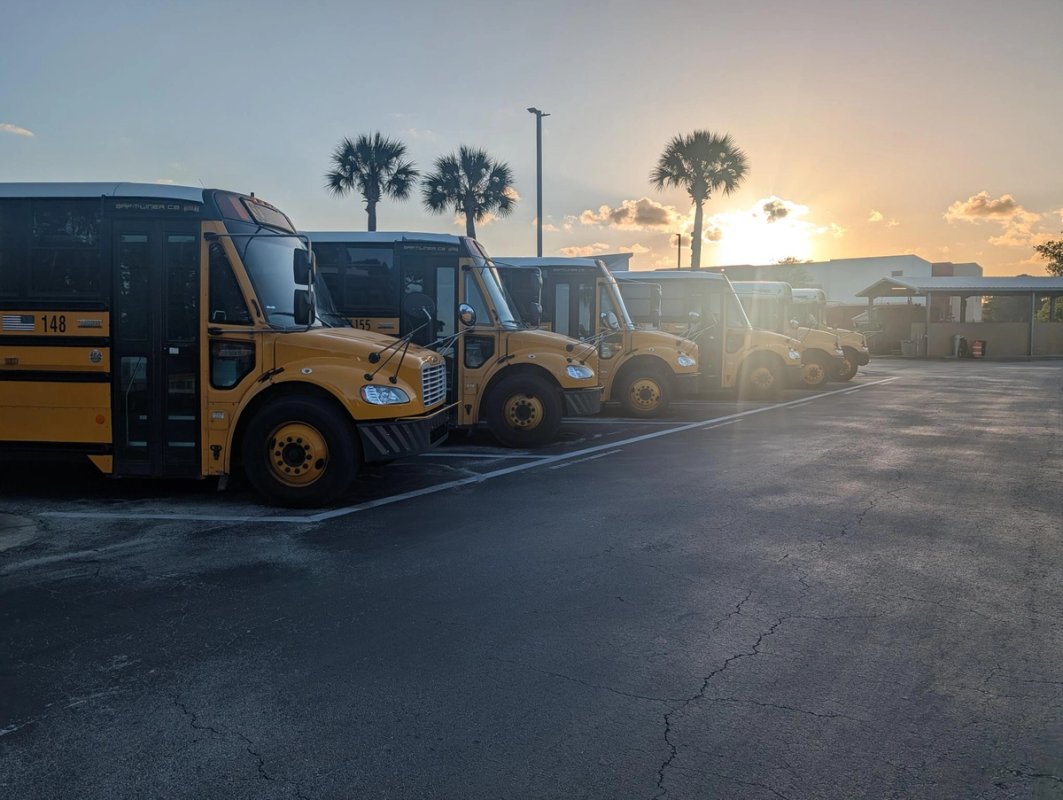
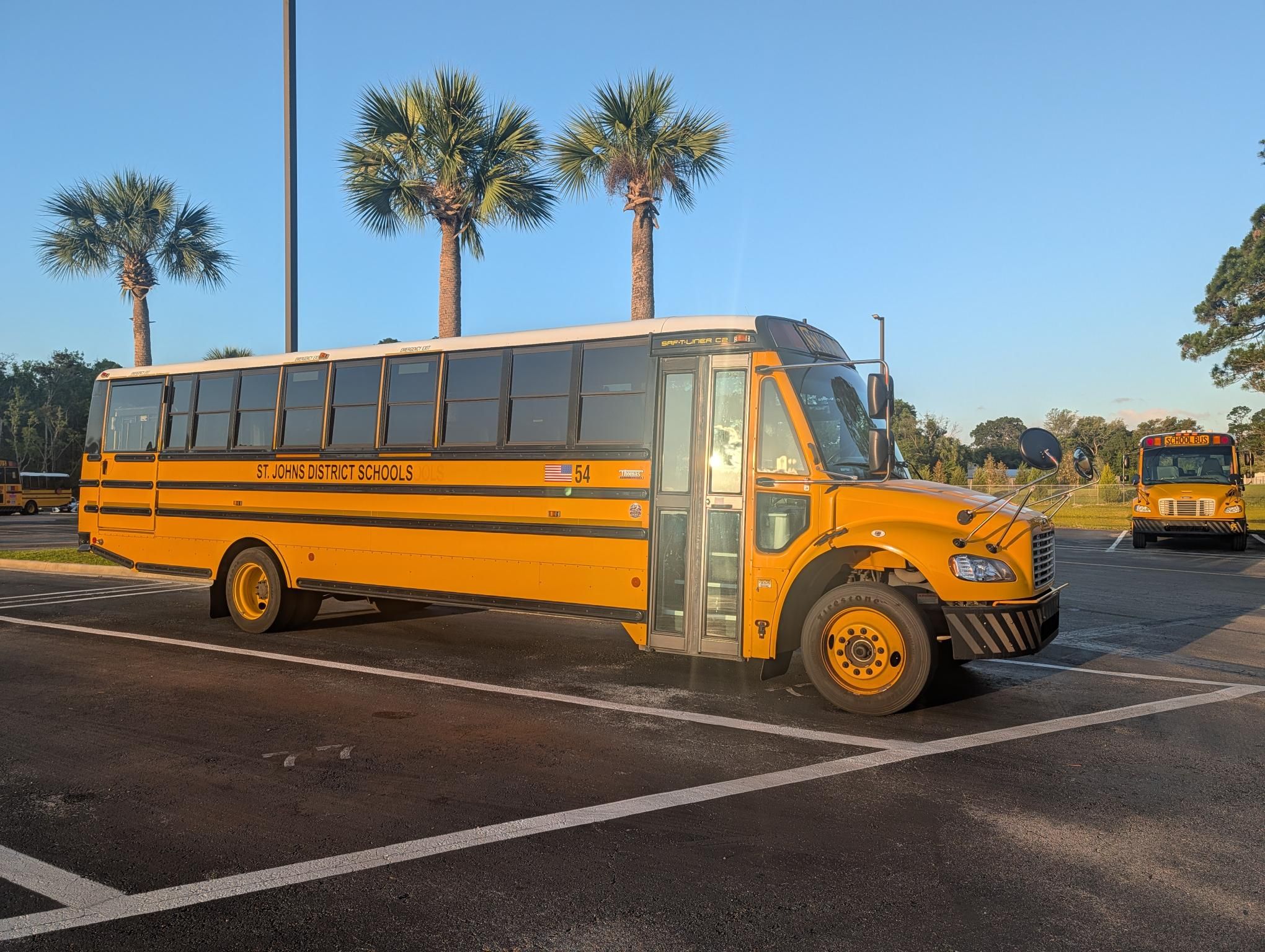
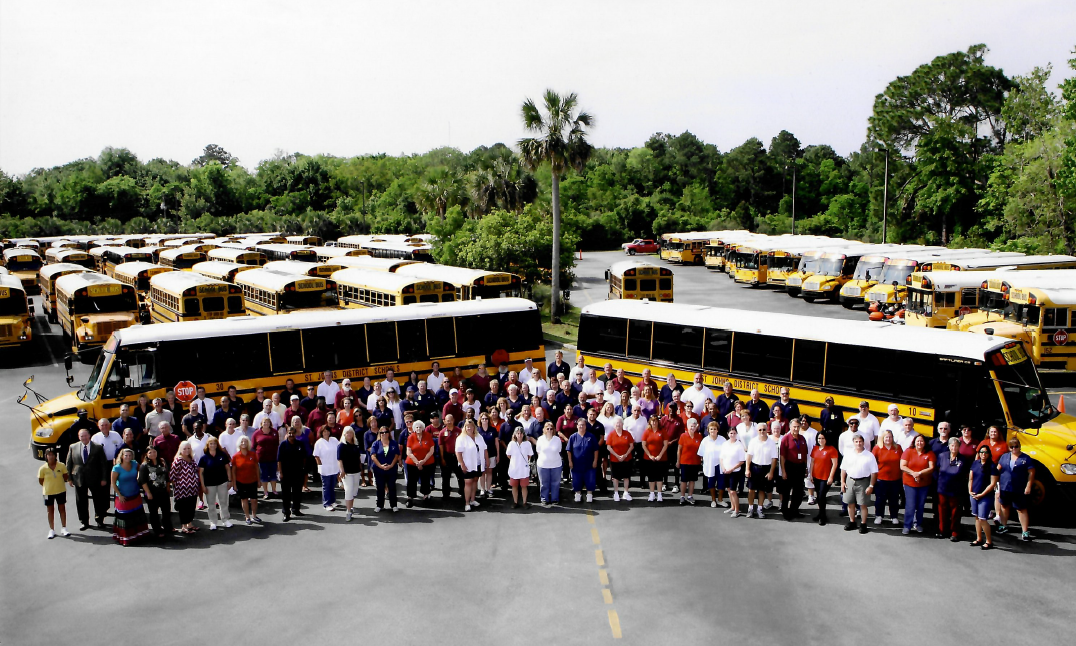
St. Johns County School District Transportation Department operates a large public-sector transportation fleet responsible for safely transporting students throughout the district each day. Managing that scale requires accurate maintenance records, reliable reporting, structured inspection workflows and strong operational visibility across departments.
When Debra joined the transportation department, many of those processes still depended heavily on spreadsheets, tally marks, paper documentation and manual reconciliation. Inventory tracking existed, but only “to an extent,” according to Debra. Annual reporting consumed enormous amounts of time, and critical operational information often lived across disconnected systems, emails or handwritten records.
The transportation department had built workarounds to keep operations moving, but the organization had clearly outgrown the tools supporting it.
“When I came in here, the program we were using truly was nothing more than a glorified spreadsheet. Every year we did inventory, it was tally marks, paper, and having a whole bunch of people come in to count every drawer and every shelf. I was like, this is not working for me.” — Debra Maynard, Commodities Manager
At the same time, the district faced growing expectations around accountability, reporting and compliance. Leadership needed cleaner operational visibility, risk-management teams needed faster access to documentation, technicians needed workflows that were easier to manage consistently and the transportation department needed a system that could support long-term operational maturity across hundreds of assets.
When Audits, Compliance and Reporting Start Slowing the Entire Operation
Each June, the transportation department completes fiscal-year inventory counts across nearly $1 million worth of stocked parts and materials. Under the previous process, approximately six people spent three to four weeks manually counting inventory, reconciling spreadsheets, verifying duplicate entries and preparing documentation packages for district leadership.
The reporting process itself created another layer of complexity. Inventory exports often generated hundreds of pages of repetitive information, including duplicate or superseded part numbers that had to be manually reviewed and connected line by line. That meant Debra and her team spent substantial time organizing information before leadership could even review it, meaning the operational impact extended well beyond inventory.
Compliance documentation and inspection records lived across spreadsheets, emails, paper files and disconnected systems. Risk-management teams frequently depended on manual requests for invoices, photos, repair records and service documentation whenever incidents occurred. Leadership reporting often required staff to manually gather information from multiple sources before answers could be delivered. In the end, this fragmentation slowed decision-making and increased administrative overhead throughout the organization.
“I used to export spreadsheets that ended up being almost 400 pages of documentation. Now I can build my columns, run the report, turn it into a PDF, and send something leadership can actually read and understand.” — Debra Maynard, Commodities Manager
The transportation department also faced a major change-management challenge. Like many maintenance organizations, technicians were accustomed to established workflows and resistant to changing processes that had existed for years. Debra understood that successfully modernizing operations would require more than implementing software. The team needed broad operational adoption across technicians, parts staff, supervisors and leadership.
Why the Transportation Team Bet on Fleetio
St. Johns County School District Transportation Department needed a system capable of supporting the operational realities of large public-sector fleet management. The transportation department was not simply searching for digital recordkeeping; rather, they needed a platform that could centralize maintenance operations, support compliance-heavy inspection workflows, improve reporting visibility and scale across multiple operational teams.
Fleetio stood out because it could support the district’s in-house maintenance operations while remaining flexible enough to adapt to evolving workflows and reporting needs.
“It was a hard sell. We had to prove this would work before anyone else in Florida schools had really done it. But once we started showing what Fleetio could do compared to what we had before, it became obvious we needed to move forward.” — Debra Maynard, Commodities Manager
Just as important, the platform was approachable enough for technicians and operational staff to use consistently.
The district initially launched Fleetio as a pilot deployment in early 2023. Early improvements in inventory visibility, reporting and documentation quickly demonstrated broader operational potential. What started as an effort to improve audits and inventory management expanded into a much larger operational system supporting maintenance, inspections, service history, reporting and risk-management workflows across the district.
For Debra and her team, Fleetio became more than a fleet software platform. It became the operational backbone connecting maintenance operations, compliance documentation, leadership reporting and daily fleet visibility.
Turning Inventory, Maintenance and Reporting Into One Connected Workflow
St. Johns County School District Transportation Department needed a single, reliable source of truth instead of disconnected spreadsheets and manual processes spread across multiple teams, and consolidating operational data inside Fleetio allowed the department to streamline inventory records, connect superseded part numbers together, standardize reporting fields and reduce repetitive administrative work. Instead of manually reconciling spreadsheets and searching through files, staff could generate configurable reports directly from the system.
Keith Cordero, Parts Assistant, is also a Bus Operator who has had the opportunity to come off the bus and work in the parts room. He became instrumental in helping the transportation department operationalize those workflows. He supported mechanics and technicians with work order processes, parts scanning, inventory tracking and service-entry workflows. That consistency mattered because better documentation at the technician level improves inventory accuracy, service history reliability, warranty tracking and operational reporting throughout the organization.
Over time, operational adoption increased across the shop. Mechanics who initially resisted the transition gradually became more comfortable with digital workflows as they saw the operational benefits firsthand.
“We were looking for something easy and simple to learn because mechanics don’t like change. It had to be something people could actually use day to day, not another complicated system.” — Debra Maynard, Commodities Manager
The transportation department also implemented Smart Uploads to reduce manual service-entry work. Before Fleetio, Keith manually entered invoice information field by field. With Smart Uploads, invoices and PDFs could be dragged directly into Fleetio, automatically capturing technician notes, service details and warranty information.
That change improved both efficiency and documentation quality. Richer service history now gives technicians and leadership more visibility into previous repairs, warranty work and recurring issues. It also dramatically reduced the administrative workload for the team.
Building DOE-ready Documentation Without the Paper Chase
One of the most significant operational improvements for St. Johns County School District Transportation Department came through inspections, compliance documentation and audit readiness. Fleetio became the centralized location for inspection records, supervisor approvals, invoices, photos, repair documentation, technician labor records and service history. That mattered because public-sector transportation operations require structured, defensible documentation that can support audits, claims processing and regulatory oversight.
The district worked closely to align Fleetio workflows with Florida Department of Education (DOE) requirements. Instead of relying on large volumes of paper documentation, supervisors could review and approve inspection records digitally inside Fleetio. According to Debra, those workflows eventually became accepted as approved DOE documentation processes.
The impact extended beyond transportation operations. Risk-management teams now access invoices, repair records, photos, work orders and labor documentation directly inside Fleetio instead of depending on emails, scans or manual requests. That centralized visibility significantly accelerated claims and documentation workflows.
“[Fleetio is] so much more than what we expected. I wanted something that really helped with what I do — which is money, inventory, audits, and all that side of it—but now it’s spread wider than just us here. Risk management is using it. Leadership is using it. We’re watching it grow.” — Debra Maynard, Commodities Manager
In one recent incident involving a rear-ended school bus, Debra estimated the documentation process improved from potentially taking a couple of weeks to approximately three days because all details were already centralized within the system. That visibility also improved operational continuity. Instead of documentation living with one individual, the information remained accessible to authorized teams across departments whenever it was needed.
What Changed Inside the Shop Every Day
| What Changed | Before Fleetio | After Fleetio |
|---|---|---|
| Inventory audits | Inventory audits consumed weeks of manual counting and reconciliation. | Inventory audits that once required six people over several weeks can now be completed by three people in about one week. |
| Reporting processes | Reporting required manual cleanup across spreadsheets and paper files. | Leadership can quickly access cleaner, audit-ready reports directly in Fleetio. |
| Risk management documentation | Documentation moved through emails, phone calls and scanned attachments. | Claims documentation, repair records, photos and invoices are centralized and easier to retrieve. |
| Repair documentation | Technicians often documented repairs after work was completed. | Work orders, parts usage and repair details are captured during repairs for better visibility and accuracy. |
| Service-entry processing | Service-entry processing involved repetitive manual data entry. | Smart Uploads reduced service-entry work from roughly one full day per week to about 30 minutes per day. |
| Record accessibility | Operational records were spread across disconnected systems and paper files. | Teams can quickly access maintenance, inspection and purchasing history in one centralized system. |
From Pilot Program to Operational Backbone
St. Johns County School District Transportation Department did not just modernize maintenance records. The district modernized how fleet operations, compliance, inspections, inventory, reporting and risk documentation work together across a large public-sector transportation organization. What began as a pilot implementation quickly expanded into a centralized operational platform supporting technicians, parts staff, leadership and risk-management teams alike.
Today, Fleetio helps the transportation department spend less time chasing paperwork and more time supporting safe, reliable transportation for students across the district. For a transportation department responsible for keeping hundreds of assets operating safely, compliantly and efficiently every day, that operational confidence matters.
Ready to get started?
Join thousands of satisfied customers using Fleetio
Questions? Call us at 1-800-975-5304