How Fleet Fuel Cards Connect to Your TCO Tracking
Whether you're spending $40,000, $400,000 or $4 million a year on fuel, your fuel card is what gets you the best discounts at the pump and an in-depth transaction report at the end of the month. But can you accurately report your fuel cost per mile to your CFO for each asset in your fleet?
Sep 1, 2026
13 min read
What you need to know
- Prioritize data quality over discounts: A modest fuel card rebate paired with clean, automatically reconciled transaction data can deliver more long-term value than a deeper discount that requires manual CSV reconciliation.
- Understand open- vs. closed-loop cards: Open-loop cards offer broader acceptance, while closed-loop cards can provide deeper per-gallon discounts and tighter controls within a specific network.
- Match the card to your fleet: Consider your geographic footprint, monthly fuel volume and fleet management software integrations when choosing the best fuel card for your operation.
- Connect fuel spend to asset costs: Fleetio integrations can automatically import fuel transactions, flag anomalies and connect fuel spend with maintenance data for better cost-per-mile and TCO visibility.
Whether you're spending $40,000, $400,000 or $4 million a year on fuel, your fuel card is what gets you the best discounts at the pump and an in-depth transaction report at the end of the month. But can you accurately report your fuel cost per mile to your CFO for each asset in your fleet?
If the answer involves dizzying spreadsheets, then you have a problem consolidating transactions and insights. Your fleet card is an invaluable data source. Treat it like one.
You probably chose your fuel card for practical reasons, like network coverage, a competitive rebate and a rep who picked up the phone. But while those criteria remain important, a card selected over five or ten years ago is unlikely to be the best fit for your current needs.
Most older cards didn't come with built-in data collection because the demand wasn't there. But now that nearly every major provider offers integration options, the question is whether a card's data actually connects to your fleet management system, not just how competitive its rebate is.
You need a fuel card that feeds asset-level data into your fleet management software and gives you actual cost control. With data, the savings could go deeper than a slightly cheaper fill-up. Too often, fuel expenses live in isolation from the maintenance and operations data that gives them context.
What your fleet fuel card is already doing for you
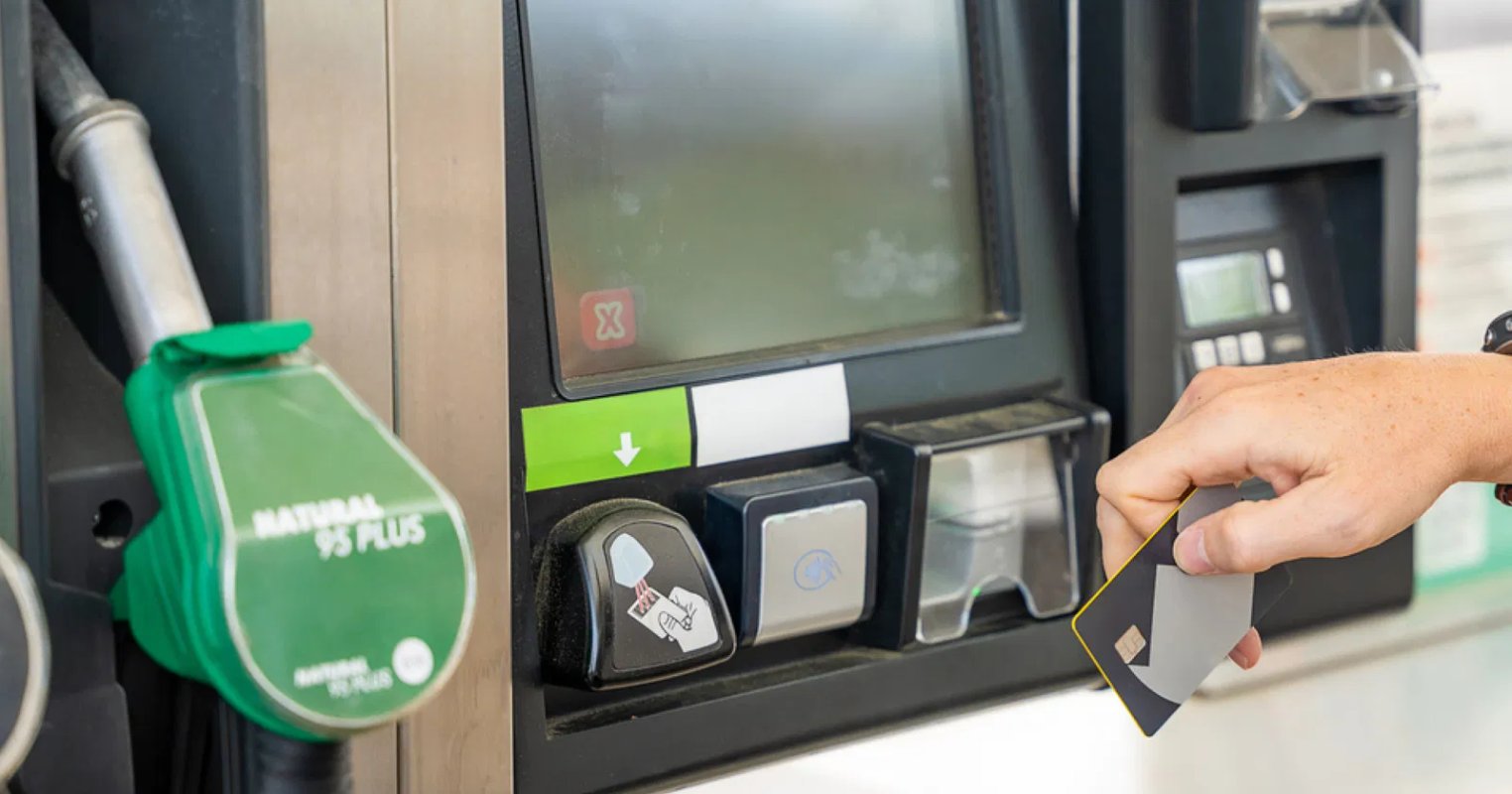
Your fuel card is more than a payment method. It gives you purchase controls, per-gallon discounts and transaction-level data for every fill-up across your fleet. You might hear fuel cards called gas cards, though fleet-specific versions include spending restrictions and reporting that regular consumer cards don't.
Get your free fuel log template
Track fuel usage, compare vehicle performance and spot cost-saving opportunities with Fleetio’s free customizable fuel log spreadsheet.
Download now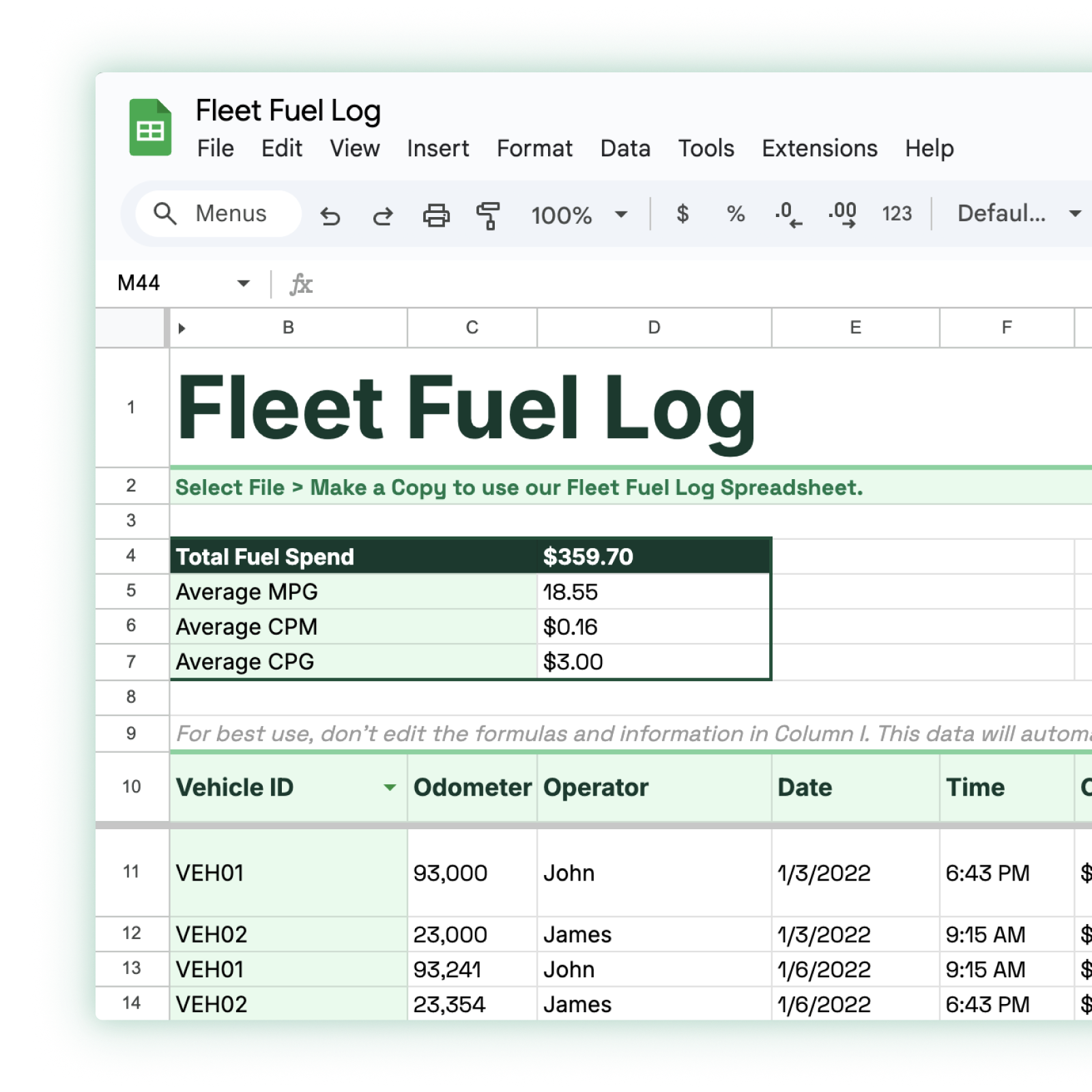
You can think of fuel cards as a corporate credit card with guardrails: you set spending limits, restrict purchases to fuel-only or specific merchant categories and get reporting that breaks down every transaction by driver, asset and location.
Even for a modest fleet, fuel is typically one of your top expenses. A fuel card doesn't eliminate that cost, but it gives you a couple of perks that a standard corporate card can't: control over what gets purchased at the pump, and data about where the money goes.
For fleets with company assets across multiple locations, a fuel card consolidates fuel management into a single program, eliminating scattered receipts and personal reimbursements. Not to mention, the ability to track fuel spend at the individual asset level is what separates a fleet fuel card from a generic payment card.
The key terms you'll encounter when evaluating cards are straightforward:
- Purchase controls let you restrict transactions by fuel type, dollar amount, time of day or gallons per fill-up.
- Fuel rebates (or discount structures) reduce your per-gallon cost based on volume, network or payment terms.
- Open- and closed-loop cards determine where your drivers can fuel up and affect everything from route flexibility to the size of your discount.
Every major fleet fuel card offers some version of these features. Where they diverge is in network scale, discounts and built-in data reporting quality and capabilities.
Open-loop vs. closed-loop fleet fuel cards
The first decision you'll make is whether you need an open-loop card, a closed-loop card or both. This choice shapes your drivers' fueling options, your discount potential and the level of transaction control you get.
Open-loop cards run on major payment networks like Visa or Mastercard. That means your drivers can use them at gas stations, truck stops and convenience stores across the country. The trade-off, however, is that broader acceptance typically comes with shallower fuel-specific discounts and fewer granular controls at the pump. Meanwhile, if your fleet operates across a wide geography or your routes shift frequently, open-loop cards reduce the risk of a driver being stuck without an in-network station.
Closed-loop cards are tied to a specific fuel network or brand and accepted only at participating stations within that discount network. They offer more generous per-gallon discounts and tighter purchase controls down to specific fuel grades and gallon limits. The obvious constraint is that if your drivers' routes don't align perfectly with the network's footprint, a closed-loop card could leave them stranded without fuel.
| Factor | Open-Loop Cards | Closed-Loop Cards |
|---|---|---|
| Acceptance | Nearly universal (Visa/Mastercard network) | Limited to participating stations |
| Fuel discounts | Generally lower per-gallon savings | Deeper volume-based discounts |
| Purchase controls | Broader merchant categories, less granular at the pump | Fuel-specific restrictions, tighter per-transaction limits |
| Best fit | Fleets with wide or unpredictable routes | Fleets with consistent, regional routes near network stations |
| Data granularity | Varies by provider | Typically richer fuel-specific transaction detail |
Most fleets make use of both card types: a closed-loop card for the predictable regional routes, and an open-loop card for long-haul drivers or field service teams that can't guarantee network coverage. The right choice depends on how your business fleet actually operates day to day.
Major fleet fuel card providers compared
The North American fleet fuel card market is dominated by a handful of providers, each known for hitting a particular sweet spot.
WEX
WEX offers both open-loop and closed-loop options with tiered volume discounts. Their network is massive, as they primarily work with mid-size to large fleets that need broad coverage and detailed reporting.
Voyager
Voyager, first issued through U.S. Bank but now part of the WEX family, operates on a proprietary fleet payment network with acceptance at over 300,000 fueling locations nationwide. That makes it a strong fit for fleets that prioritize acceptance breadth over closed-loop discounts, and it's widely used in government and large enterprise fleets.
Fuelman
Fuelman operates a closed-loop network with straightforward pricing and focused purchase controls. It's the ideal option if your routes cluster in well-covered metro areas, as the per-gallon savings can add up quickly for fleets with predictable regional routes. Fuelman's simplicity appeals most to small businesses with fewer than 20 assets, compared to enterprise-tier programs.
Coast
Coast takes a software-first approach. A newcomer targeting small to mid-size fleets, Coast pairs an open-loop Visa network with modern expense management tools. The pitch is less about fuel-specific discounts and more about spend visibility and control across all fleet expenses.
Comdata and EFS
Comdata, under the Corpay umbrella, and EFS (a WEX brand) serve the trucking and heavy-duty segment. If you're running Class 8 trucks or managing over-the-road operations, these cards offer discount location finders and fuel tax reporting tools built for long-haul economics. Their networks include major truck stop chains like Love's, giving drivers consistent fueling options along interstate corridors.
No single card wins across the board. Pricing structures vary significantly between providers, so request a full fee schedule and ask about account management support before committing. The comparison only matters when you weigh it against how your fleet actually operates, from where your routes run to how much fuel you burn each month.
How fuel card discounts and rebates actually work
Once you've narrowed down providers by network and fleet fit, the next thing you'll compare is the discount structure. The per-gallon rebate is what most fleet managers look at first. It's the most visible number, but it can also mislead you into making the wrong decision.
Fuel card discounts typically work in one of three ways:
- Volume-based rebates increase your per-gallon discount as your fleet's monthly fuel spend crosses certain thresholds. These tiers are usually calculated on monthly gallons purchased across all cards in your program.
- Network-based discounts offer a fixed or variable discount at in-network stations. This is the core model for closed-loop cards like Fuelman.
- Payment-term rebates reward you for paying your balance within a shorter window, sometimes as little as 15 days. Shorter payment windows affect your cash flow, so weigh the rebate against what faster cycles mean for your accounts payable process.
These structures don't always stack, and the headline rebate often comes with conditions. For example, a card advertising "up to 8 cents off per gallon" might deliver that rate only at the highest volume tier, only at in-network stations or only with accelerated payment. Your actual per-gallon savings depend on how your fleet's fueling patterns align with the card's incentive structure.
That math holds up across any card: a competitive rebate with clean, integrated data beats a generous rebate and a monthly CSV nobody reconciles.
The real fuel savings come from pairing a reasonable discount with data that exposes waste and fraud. Over time, that visibility outpaces the deepest per-gallon rebate.
Purchase controls and fraud prevention
Purchase control is a feature in almost every fleet fuel card. The differences are in how granular those card controls get and how quickly you find out when something looks wrong. The best spending controls combine prevention with detection; blocking unauthorized transactions before they clear and flagging anomalies after the fact.
Take the chase out of fuel tracking
Turn fuel receipts into usable data with Smart Uploads. Capture fuel costs, volume, odometer readings and more without the manual entry.
See Smart Uploads
Fuel-only transactions
At the baseline level, most cards let you restrict purchases to fuel-only transactions, set per-transaction dollar caps and limit the number of transactions per day. Some go further, implementing fuel type restrictions, like locking cards to diesel-only or unleaded-only, so a driver assigned to a diesel truck can't fill a personal gas vehicle on the company card.
Gallon-per-fill limits
Gallon-per-fill limits, meanwhile, flag or block transactions that exceed a vehicle's tank capacity. If someone tries to pump 40 gallons into a 25-gallon tank, you'll be notified. There are also time-of-day and day-of-week controls that restrict when cards can be used. This can help fleets that operate on defined schedules.
Location-based alerts and layered controls
Location-based alerts notify you when a fuel purchase happens far from a vehicle's expected route or GPS location. A driver who fuels twice in one shift at stations 200 miles apart is worth a second look. So is a 50-gallon transaction on a vehicle with a 30-gallon tank.
These controls work best in layers: fuel-only restrictions, gallon limits and location checks combine to shrink the window of opportunity. But where those anomaly alerts land matters just as much as whether they exist. If they sit in an email someone reviews at the end of the month, you've already lost the money. If they feed into a system that ties every transaction to a specific asset and flags exceptions in real time, you're catching problems before they compound.
How to match a fleet fuel card to your operation
The best fleet fuel card is the one that fits your specific business needs and where your fleet is headed. When you're evaluating options, start with geography and volume, then work toward data.
The basics matter: your geographic footprint (regional routes favor closed-loop discounts; wide coverage favors open-loop), monthly fuel volume (rebate tiers only help if you hit them), fuel types (confirm the card supports gas, diesel and EV charging if relevant), fee structure (card fees, inactivity fees and transaction fees can erode a competitive rebate) and fleet size (50+ assets usually need stronger controls and asset-level reporting).
But as covered earlier, the question that matters most is whether the card integrates with your fleet management software. If your fuel card data can't flow automatically into the system where you track maintenance, calculate Total Cost of Ownership (TCO) and measure cost per mile, you're building that bridge manually every month. Here's what that actually looks like in practice.
Compared to standard credit cards, fleet fuel cards give you spending restrictions and transaction detail that general-purpose cards simply don't offer. That difference matters when you're managing dozens or hundreds of assets.
What happens to your fuel data after the swipe
You've compared providers, negotiated a rebate and rolled out cards to your drivers. Transactions are flowing. But where is that data going?
For most fleets, it goes into a portal. The fuel card provider gives you a dashboard showing transactions, volumes and spend summaries. You can export a CSV. Maybe someone on your team downloads it monthly, pastes it into a spreadsheet and tries to match transactions to vehicles. Maybe a driver submits a fuel receipt through a mobile app that doesn't connect to anything else.
The data itself is fine. Fuel cards generate plenty of it. The problem is where it ends up. Fuel cost per mile only means something when it's tied to a specific asset's maintenance history, odometer readings and total operating cost. If fuel spend lives in one system and maintenance spend lives in another, you can't make a defensible repair-versus-replace decision.
Fleetio integrates with leading fuel card providers, including WEX, Voyager, Fuelman, Comdata and dozens of others. Those integrations automatically import transaction data and tie it to specific assets in your fleet, so you skip the CSV exports and the manual reconciliation. Every fill-up feeds directly into the asset's cost history, which means your cost-per-mile and TCO calculations update as the data comes in.
Fleetio's fuel card integration also flags anomalies in real time. When a fuel purchase exceeds an asset's tank capacity, or when a transaction happens at a location that doesn't match the asset's GPS coordinates, Fleetio flags it while you can still do something about it.
Your fuel card choice matters. But the value of that choice multiplies when the data from every swipe flows into the system where you're already managing maintenance, tracking costs and making decisions about your fleet's future. The card is the input. The insight is what you're paying for.
Get started with Fleetio
Whether you're running a small business fleet of 15 assets or managing thousands across multiple states, the setup is the same. Combined with maintenance records, telematics data and parts costs already in the platform, your fuel spend becomes part of a complete TCO picture for every asset you manage.
Don’t let fuel spend, spread you thin
With the right tools, you can track utilization, fuel economy and total spend to start saving now. Get a quick walkthrough to see how it works.
Let’s roll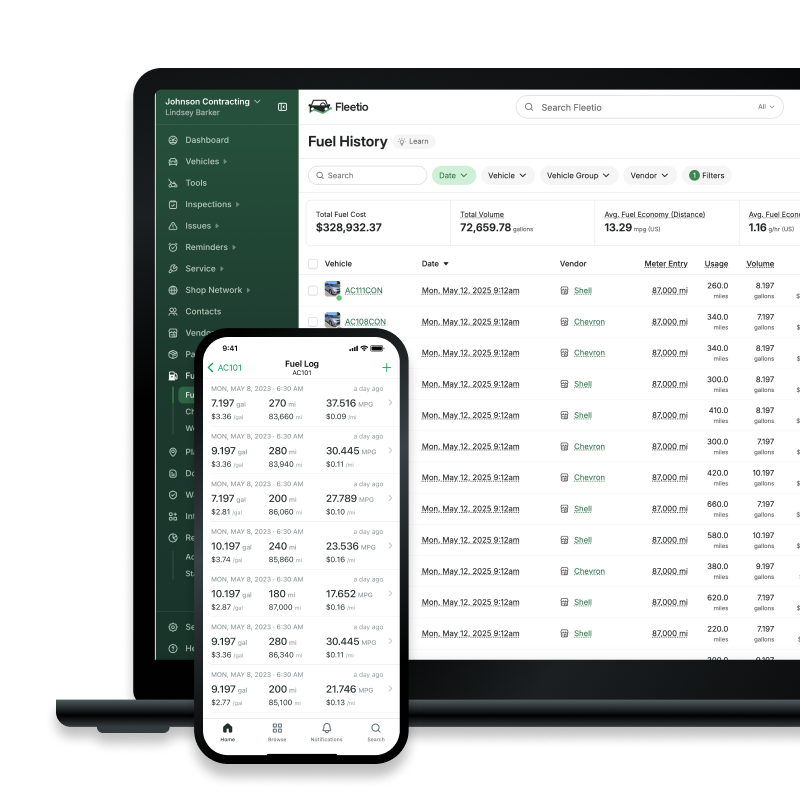
Use Fleetio Go, the mobile app for drivers and field operators, to log fuel purchases, submit DVIRs and report issues from anywhere, including non-integrated fueling locations. Start a free trial or schedule a demo to see how your fuel card data connects to the rest of your fleet operation.

Senior Copywriter
Tyler Freeland is a Senior Copywriter at Fleetio. A former creative writer for Freightliner and Western Star, he now transforms complex (and sometimes common) fleet management topics into practical, engaging insights that fleet professionals can apply every day.
LinkedIn|View articles by Tyler FreelandReady to get started?
Join thousands of satisfied customers using Fleetio
Questions? Call us at 1-800-975-5304