Fleet Maintenance: Key Steps, Challenges & Best Practices
Fleets are under more pressure than ever. You’re managing rising repair costs, stricter compliance requirements and a growing mix of vehicles and equipment – usually without any additional headcount. In order to stay in control of your operation, you need to view maintenance as a strategic lever for uptime, safety and margins.
Dec 12, 2025
12 min read
Key takeaways from this guide
-
Proactive maintenance is the foundation of fleet performance: Fleets avoid costly surprises when maintenance operates as a connected, repeatable system rather than a reactive checklist. Fragmented workflows lead directly to preventable downtime, safety risks and avoidable spend.
-
Visibility and standardization reduce the biggest maintenance risks: Consistent inspections, clear issue-to-repair workflows, and centralized documentation help teams catch defects early, maintain compliance, and keep assets road-ready across all locations and asset types.
-
Data-driven decisions require clean, connected information: Reliable meter readings, inspection results, work orders and cost data empower leaders to spot trends, control budgets and forecast lifecycle needs instead of making high-stakes guesses.
-
Scalable processes matter as fleets diversify and grow: Mixed asset types, multi-site operations and rising compliance expectations make it essential to standardize PM schedules, parts management, vendor coordination and reporting to maintain quality at scale.
-
How to put best practices into action: The guide shows how a connected maintenance platform can automate PM scheduling, streamline inspections, centralize work orders, and deliver real-time visibility so teams can run a predictable, cost-effective program day to day.
The fleets that win aren’t just fast at fixing what breaks. They treat fleet maintenance as a proactive system — with clear workflows, reliable data, and one shared place to track what’s happening. Without that system, small issues don’t stay small. They turn into preventable downtime, safety incidents, blown SLAs, surprise rentals, overtime, and “How did we miss this?” moments that cost real money.
This guide walks through what fleet maintenance includes, why it matters more than ever, the core components of an effective program, and how to build a plan that actually works day to day. Along the way, we’ll call out common problems, practical fixes, and how Fleetio helps you put the best practices into action with one connected maintenance platform.
If you want a deeper dive (or a resource you can hand to the rest of the team) you can also download our Guide for Managing Maintenance, built with input from Fleetio customers and industry experts.
What is fleet maintenance?
Fleet maintenance is the work of keeping your vehicles and equipment safe, compliant and ready to operate consistently. That includes preventive maintenance (PM), inspections, repairs, parts, vendors and the records that prove what happened, when and why.
At Fleetio, we draw a clear line: maintenance is proactive by default. Repairs and other services are the reactive work that still happens when something breaks. Most fleets don’t struggle because they lack mechanical skill, they struggle because the workflow is fragmented: spreadsheets, paper DVIRs, disconnected shop tools, and phone calls that never make it into the record.
A modern fleet maintenance program looks more like an operating model than a checklist. It’s a repeatable system that:
- Keeps assets road-ready through PM schedules based on OEM guidelines and real-world usage
- Uses consistent driver inspections and reporting to surface issues early
- Connects issues to repairs through clear, trackable workflows and work orders
- Manages parts, vendors, and warranties in one place
- Maintains accurate, audit-ready records for compliance and cost control
When these pieces live in one connected system, instead of scattered across tools and inboxes, teams get the visibility they need to protect uptime, safety and margins.
Why fleet maintenance matters more than ever
Fleet maintenance isn’t just “keeping vehicles running.” It affects safety performance, compliance posture, customer experience, and margins – and it influences whether the fleet is seen as a necessary cost center or a strategic asset the business depends on.
Yes, reactive work will always exist. Things break. Parts get delayed. Reality wins sometimes. But the strongest fleets reduce surprises by building a preventive maintenance (PM) program that holds up against real-world barriers like imperfect data, technician shortages, parts delays and budget constraints.
Rising compliance pressure and audit risk
Regulations keep evolving, and fleets are expected to prove they’re doing the right work at the right time. Daily inspections, DOT requirements, industry-specific rules, state-level requirements, emissions standards, and insurance expectations all depend on clean maintenance documentation.
When inspections live on paper and service history is scattered across folders and inboxes, audits become slow, stressful and risky. A connected maintenance system gives you one source of truth for inspections, repairs, approvals, and supporting documentation, so you can pull proof fast when it matters.
High costs tied to preventable downtime
Unplanned downtime is one of the most visible and expensive consequences of weak maintenance. Missed jobs, delayed deliveries, idle crews, rentals, overtime, and frustrated customers add up fast when an asset unexpectedly goes out of service.
The frustrating part is that a lot of this downtime is preventable. When fleets shift from “fix it when it breaks” to proactive PM based on OEM guidance and real-world usage, they can catch issues earlier, schedule repairs on their terms, and keep assets available when the business needs them.
Growing fleet complexity and mixed asset types
Today’s fleets are rarely just one vehicle type. You may be maintaining light-duty vehicles, heavy-duty trucks, trailers, off-road equipment, tools, and an emerging mix of EVs all at once (and sometimes across multiple locations and operating environments).
Without a centralized way to standardize inspections, schedules and workflows, each asset type ends up with its own playbook (or no playbook at all). That complexity multiplies risk: it’s harder to spot gaps, compare performance, and ensure everything is maintained to the same standard.
Demand for data-driven decision-making
Leadership teams expect data-backed answers: “Which units should we replace?”, “Where is our maintenance budget going?”, “Is downtime improving or getting worse?”
In practice, the data isn’t always clean. Odometer updates can be inconsistent, paper inspections get lost, and field connectivity creates gaps. That’s why more fleets move to connected systems that pull together meter readings, inspection results, work orders, and costs — so decision-makers aren’t stuck guessing.
Make maintenance your main priority
Get our Guide for Managing Maintenance, a practical, expert-backed resource to help you strengthen workflows, reduce downtime and align your entire team around proactive maintenance.
Download guide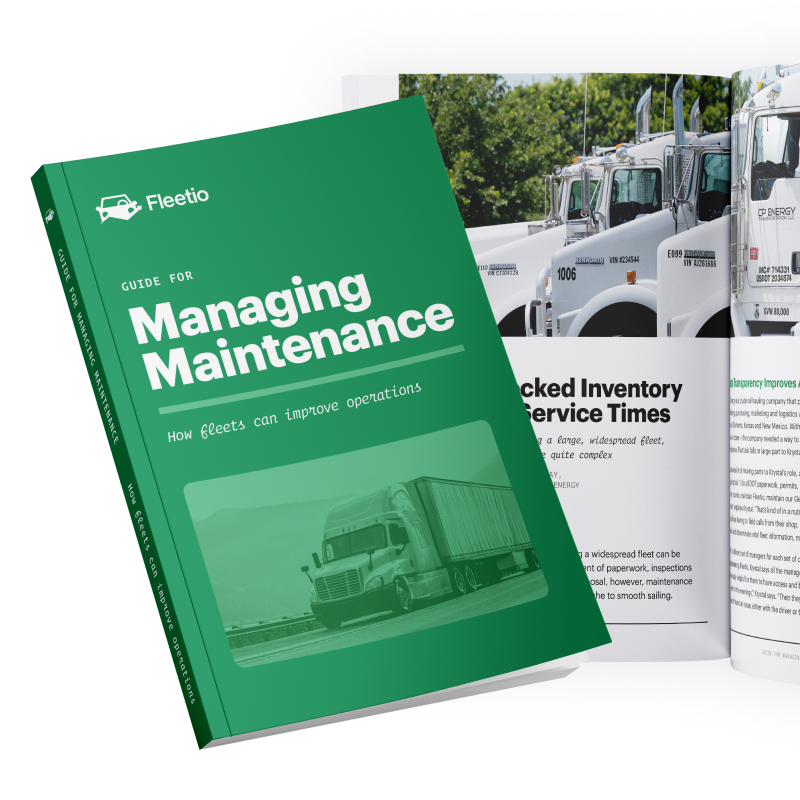
Core components of an effective fleet maintenance program
A strong fleet maintenance program goes beyond a list of tasks — it’s a connected operating model. The goal is predictable uptime, fewer surprises, and a workflow your team can run consistently across vehicles, asset types and locations.
You can explore a fuller breakdown in our guide to building a strong preventive maintenance program.
Preventive maintenance (PM)
PM is the backbone. When service happens on time (and the same standard is applied every time), fleets reduce breakdowns, protect warranties and extend asset life. Strong PM programs combine OEM-aligned schedules with real-world usage triggers and clear task lists.
Driver inspections & issue reporting
Drivers are often the first to notice problems, but only if inspections are consistent and easy to complete. Standardized, mobile-friendly DVIRs with photos and comments help teams catch issues early and create better handoffs to the shop.
Issue triage and repair workflows
A maintenance program works best when issues move predictably from identification to approval to repair. Clear workflows reduce bottlenecks, keep work from slipping through the cracks, and ensure every repair is documented end to end.
Parts & inventory visibility
Parts availability quietly controls repair speed. Centralized inventory, minimum stock levels, and real-time visibility help avoid delays, duplicate purchases, and last-minute premium shipping that blows the budget.
Vendor and shop coordination
Most fleets run some mix of in-house and outsourced repairs. Consistent approval steps and clear communication keep work moving and costs under control. When estimates, updates and service history live in one place, accountability goes up and turnaround time goes down.
Reporting and performance insights
A good maintenance program is measurable. Tracking fleet maintenance KPIs like PM compliance, downtime, cost per asset, and repair turnaround time helps teams spot patterns and continuously improve.
Top fleet maintenance problems (and how to solve them)
Most maintenance headaches aren’t unique, they follow predictable patterns. And the fix is usually some combination of better workflows plus technology that keeps everyone working from the same playbook.
Here are the most common problems we see, along with practical solutions you can apply immediately.
Limited visibility into asset health and maintenance status
When inspections, telematics alerts, fault codes, and work orders live in separate systems, teams lose real-time context. That creates blind spots, and blind spots turn into missed defects, delayed repairs, and avoidable breakdowns.
How to solve it:
Bring asset signals into one place: inspections, driver reports, diagnostic alerts, and meter updates. When you can see the true status of each asset, you can prioritize repairs faster and reduce “surprise downtime.” Fleetio centralizes these signals so managers, technicians, and drivers stay aligned.
Missed service leading to preventable downtime
Late or missed PM is one of the most expensive (and frustrating) causes of downtime. It often cascades into bigger repairs, safety issues, and avoidable disruption.
How to solve it:
Trigger service based on real usage, not a calendar reminder someone has to remember. Live odometer and engine-hour updates ensure service hits at the right time. Fleetio automatically generates PM tasks from real-world mileage or hours, reducing overdue service and protecting asset life.
Inefficient issue reporting and slow communication loops
A common breakdown happens between drivers, managers, technicians and vendors: defects get reported late, details get lost, and work stalls in texts, calls or paper forms.
How to solve it:
Use digital inspections with photo-based defect reporting so issues surface immediately with context. Then convert failed inspections directly into issues or work orders so nothing gets lost in translation. Fleetio turns reported defects into trackable work orders, tightening communication and reducing downtime-causing delays.
Overspending due to inaccurate records and vendor blind spots
When documentation is incomplete, costs leak everywhere: duplicate repairs, unnecessary line items, missed warranty claims, and parts usage that never gets tracked.
How to solve it:
Adopt digital approvals with line-item visibility, and add warranty checks where possible. Track labor, parts, and vendor work in one place so you can catch discrepancies early. Fleetio supports line-item approvals and warranty flags to help fleets validate charges and avoid preventable spend.
Difficulty scaling maintenance processes across sites
As fleets grow – new branches, acquisitions, multiple shops – maintenance processes drift. That creates uneven PM compliance, inconsistent standards, and limited visibility across locations.
How to solve it:
Standardize the workflow everywhere: inspections, PM schedules, work order steps, vendor approvals, and documentation. Use shared dashboards to compare performance across sites. Fleetio provides multi-location visibility into PM compliance, repair activity, and shop performance so you can scale without losing control.
How to build a fleet maintenance plan that works
A strong maintenance plan doesn’t have to be complicated, but it does need structure. Fleets vary by size, asset mix, and operating conditions, but the best programs tend to follow the same steps. Use this as a practical roadmap to build (or tighten up) a plan that supports uptime, safety and cost control.
Step 1: Start with OEM guidelines and usage patterns
OEM recommendations are the baseline. They outline service intervals and required tasks by vehicle or equipment type. But fleets can’t stop there. Duty cycle matters. Harsh job sites, heavy payloads, extreme temps, long idle time, and stop-and-go routes all change what “normal” wear looks like.
The most reliable plans blend OEM standards with your operating reality, then you can document what “normal” means for your fleet.
Step 2: Establish preventive service intervals
Translate OEM guidance and usage patterns into clear service intervals, usually:
- Time-based (e.g., every 90 days)
- Mileage-based (e.g., every 5,000 miles)
- Engine-hour-based (critical for off-road and mixed-asset fleets)
Where possible, automate tracking. Manual reminders create missed PM. Using odometer and engine-hour data helps service trigger when the asset actually needs it.
Step 3: Standardize inspections and reporting
Drivers are your first line of defense, but only if inspection reporting is consistent.
The most reliable fleets use:
- Standardized digital inspection forms
- Required photos for defects
- Severity levels and comments for clarity
- Automatic notifications when inspections fail
This replaces ad hoc paper checklists and ensures issues are captured in a way the shop can act on.
Step 4: Create clear issue-to-repair workflows
Identifying issues is only half the battle. What matters is how consistently issues turn into repairs.
A repeatable workflow should look like this:
Inspection failure or telematics alert → Issue created → Work order generated → Assigned → Tracked to completion
Make this visible to drivers, technicians, and managers so no one is guessing what’s happening or who owns the next step.
Step 5: Track performance and adjust regularly
A maintenance plan is a living system. Review performance monthly or quarterly using metrics like:
- PM compliance
- Unplanned downtime
- Repeat repairs
- Total cost of ownership (TCO)
- Cost per mile or hour
Trendlines help you spot patterns, tighten intervals, improve triage, and fix workflow gaps before they become expensive.
Achieve predictable, cost-effective fleet maintenance with Fleetio
If there’s a theme across everything above, it’s this: fleets need visibility, consistency, automation, and accountability to maintain assets efficiently. Paper processes, disconnected tools, and manual workflows make that hard, especially as fleets grow and complexity increases.
Fleetio acts as a single system of record for inspections, work orders, inventory and costs, so teams can manage the full maintenance lifecycle in one place.
With Fleetio, fleets get:
-
Automated preventive maintenance scheduling
PM tasks trigger based on real-time mileage or engine hours, so service happens on time – not when someone remembers. -
Instant issue reporting and DVIR-to-work-order automation
Failed inspections or driver-reported defects become issues or work orders automatically, reducing communication gaps and speeding up repairs. -
Real-time visibility across assets, shops and locations
Track status, approvals, turnaround time, and vendor activity across one or many sites. -
Total cost of ownership (TCO) insights
See cost per mile, repeat repairs, and asset performance to make smarter repair-versus-replace decisions. -
Cost control through vendor oversight and warranty tracking
Line-item approvals, warranty flags, and parts tracking help avoid unnecessary spend and recover costs you’d otherwise lose. -
Scalable, standardized workflows
Consistent processes and shared visibility help you maintain the same standard across every branch and shop.
Fleet maintenance is too important (and too expensive) to run on guesswork. Fleetio gives you the structure and automation to build a predictable, cost-effective program that keeps your fleet moving.
A maintenance system that drives impact
Fleetio gives you the workflows, visibility and automation needed to run a dependable, cost-effective maintenance program. See how teams track issues, schedule PM and control costs in one platform.
Book a demo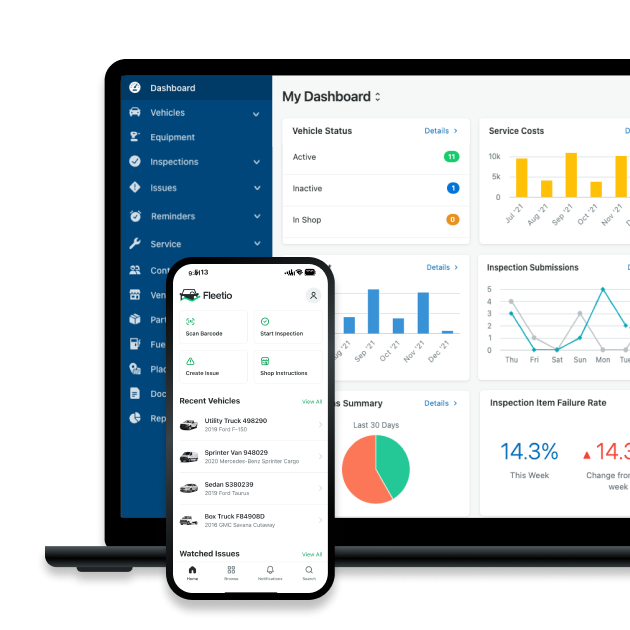
FAQs

Director of Fleet Content, Fleetio
Zach Searcy is the Director of Content at Fleetio with more than 5 years of experience in the automotive and fleet industries. His content creation days started in middle school when he and his friends began filming lightsaber battles to upload to a new website: 'YouTube.'
LinkedIn|View articles by Zach SearcyReady to get started?
Join thousands of satisfied customers using Fleetio
Questions? Call us at 1-800-975-5304