Preventive Maintenance Checklist: Template & Tips
Most PM checklists don't fail because they're wrong — they fail because nobody uses them. Here's how to build a preventive maintenance checklist your team will actually follow, plus templates for vehicles, trailers, equipment, and tools.
Feb 8, 2023 | Updated: Dec 30, 2025
15 min read
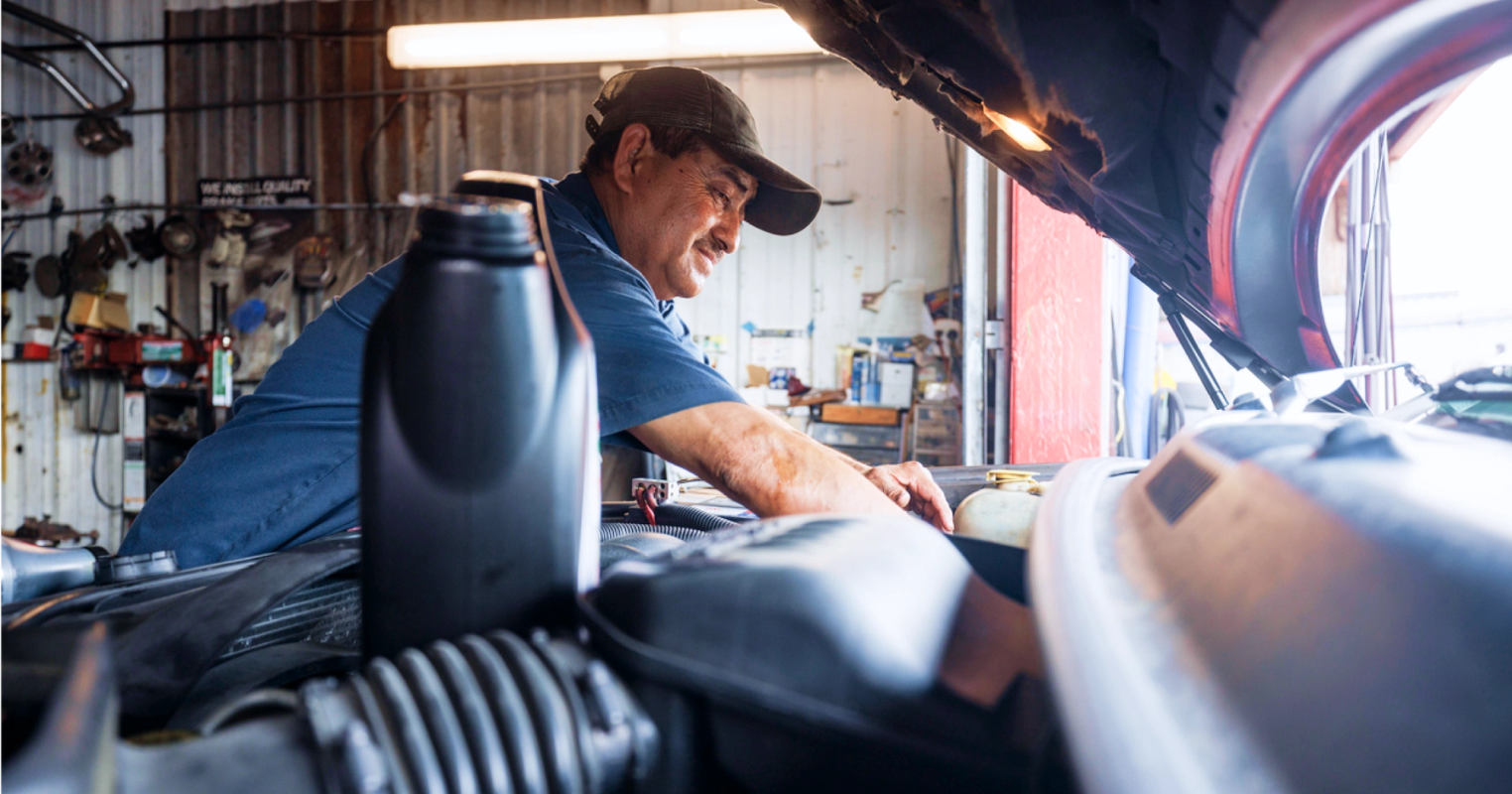
A preventive maintenance checklist is a repeatable set of inspection and service steps (with fields like meter readings, pass/fail, and notes) that helps keep vehicles and equipment reliable, compliant, and ready to work — without relying on memory or "tribal knowledge."
Here's what usually happens: Someone searches "preventive maintenance checklist," downloads a template, adjusts it for their operation, and then... it lives in a folder somewhere. Or gets printed once. Or becomes the thing everyone knows they should be using but somehow isn't.
The pain points are the same whether you're running fleet vehicles, trailers, heavy equipment or power tools: downtime is expensive, asset costs keep rising and inconsistency creates blind spots that turn small issues into big failures. So this guide breaks down what to include in a preventive maintenance checklist, shares a checklist template you can actually tailor and, most importantly, explains how to operationalize it so your team actually uses the dang thing.
What is a preventive maintenance checklist?
A preventive maintenance checklist is a structured, repeatable reference used to standardize inspections, routine service and safety checks at set intervals (time-based or meter-based). It's more than a list of tasks — it's an operational tool that:
- Clarifies what "done" looks like (pass/fail criteria)
- Creates accountability (who checked what, and when)
- Captures documentation (notes, photos, signatures) for audits, trends, and warranty support
PM checklists vary by asset type, but the goal stays the same: catch issues early, keep performance predictable and reduce the likelihood of preventable breakdowns.
Why do you need a preventive maintenance checklist?
Prevent mechanical failures and reduce downtime
The main purpose of preventive maintenance is to maintain vehicles and equipment — but the real business outcome is protecting uptime. A clear checklist helps your team spot wear, leaks, loose components and safety concerns before they escalate into breakdowns, missed jobs, route disruptions and emergency repairs.
In many maintenance environments, unplanned repairs and downtime can be dramatically more expensive than planned work — some industry guidance estimates unplanned downtime can cost up to 10x more than planned downtime. You can see it as an inconvenience, or you can look at it for what it really is: A budget killer.
Lower total cost of ownership with more predictable maintenance
PM checklists help reduce costs in multiple ways: fewer catastrophic failures, longer component life, better labor planning and more consistent service intervals. They also improve the quality of your maintenance data, which makes it easier to spot trends like recurring failures, early wear or parts that don't match your duty cycle.
When your records are reliable, you can adjust intervals based on reality, not assumptions, and build a smarter replacement plan over time.
Improve safety, compliance, and operational accountability
Safety isn't a nice-to-have, it's a baseline expectation. And for fleets, it's tied directly to liability and compliance. A checklist makes sure critical safety items don't get skipped and that documentation exists when you need it most (audits, roadside inspections, warranty claims, incident reviews).
If you operate commercial motor vehicles, your checklist should align with relevant requirements around inspection, repair, and maintenance (for example, FMCSA regulations like 49 CFR Part 396). And beyond compliance, our core perspective is simple: safety is a human right — daily inspections and consistent maintenance are how you respect that responsibility at scale.
For more on this mindset, see preventive maintenance should be your first safety system.
What to include in a preventive maintenance checklist
The most effective preventive maintenance checklists share a clear structure, regardless of asset type. Start with OEM recommendations, then adapt based on operating conditions (duty cycle, loads, terrain, climate), historical issues and regulatory requirements.
Your preventive maintenance checklist should cover:
- OEM guidelines and warranties (service intervals, required inspections, approved fluids/parts)
- State and federal compliance regulations (where applicable)
- Internal maintenance goals (cost control, safety, uptime, standardization across locations)
Below are the core categories most PM checklists should include.
Inspections
Inspections are the visual and functional checks that catch problems early before they have the chance to become repairs. Examples include tires, lights, leaks, hoses, wear points and warning indicators.
Tip
Standardization matters. Digital inspections (especially those that allow photo capture and notes) reduce ambiguity and make it easier to triage issues quickly. If you're using vehicle inspections, you can capture photos, add comments and keep a consistent inspection history for each asset.
Routine service tasks
These are your recurring "do the work" items — oil changes, filter replacements, lubrication, belt checks and other scheduled maintenance tied to time or meter readings.
For fleets, this is often mileage-based or time-based. For equipment, it may be hours-based. Learn more about usage-based preventive maintenance if you're managing assets with variable utilization.
Safety checks
Safety checks focus on items that directly impact safe operation and reduce liability: brakes, steering response, lighting, emergency equipment, alarms and any required documentation.
If you're running commercial vehicles, your daily inspection process and maintenance checklist should complement each other, because a checklist only works if issues discovered in the field reliably make it into maintenance workflows.
Parts, fluids, and consumables
Documenting fluids and consumables isn't busywork. It helps your team spot leaks, catch abnormal consumption (which can signal larger issues) and forecast inventory needs. Include:
- Fluid levels and condition checks
- Filters (air, oil, cabin, fuel) and replacement notes
- Common wear items (wiper blades, bulbs, belts, hoses)
Usage- or meter-based tasks
Tie work to real-world usage whenever possible:
- Odometer (miles/km)
- Engine hours
- PTO hours
- Generator run time
- Equipment runtime meters
If you're relying on manual entries, it's easy to miss intervals. Digital tools can reduce this risk by automating meter capture and triggering maintenance based on recorded readings.
Documentation requirements
A checklist is only as useful as the record it produces. Every PM event should capture:
- Date/time
- Asset ID (and VIN/serial where relevant)
- Meter reading (odometer/hours)
- Who performed the work
- Pass/fail status and findings
- Notes, photos, and follow-up actions
- Technician signature and (if needed) supervisor sign-off
Centralized, searchable histories make audits, warranty support and trend analysis dramatically easier than scattered paper forms.
Define goals for your preventive maintenance checklist
Knowing what you want to accomplish with your preventive maintenance checklist is a great way to narrow your focus. You can orient your PM approach in a lot of ways, but these common goals help guide your decisions.
- Reduce costs – Focus on optimal service intervals, extending asset lifespan, and minimizing costly downtime. Your checklist should highlight high-impact failure points and help you catch issues before they become expensive repairs.
- Improve shop efficiency – If you manage maintenance in-house, build a checklist that supports consistent technician workflows: clear pass/fail criteria, less ambiguity and better handoffs from inspections to work orders.
- Prioritize safety and compliance – Use your checklist to standardize the checks that keep you compliant and reduce risk on the road. If you're in a regulated environment, documentation matters as much as the work itself.
More uptime. Less downtime. All in one guide.
Discover tips and strategies to enhance preventive maintenance, keep track of repairs, and get more out of every asset.
Get your free guide
What you need to implement a preventive maintenance checklist
A checklist won't help if it lives in a folder. Execution is everything, and consistent execution requires a few operational foundations.
- Service intervals (time, mileage, or hours). Start with OEM recommendations, then adjust based on real-world usage and operating conditions. Use mileage for vehicles, engine hours for equipment or time-based intervals where downtime is more predictable. If you need a starting point, use a preventive maintenance schedule and refine from there.
- A daily inspection process. Daily driver inspections create an essential feedback loop: if an issue keeps showing up in the field, your PM checklist may not be catching it. Digital driver vehicle inspection reports help capture issues fast (with photos and notes) and route them to maintenance without paper handoffs.
- A clear maintenance plan and handoff workflow. Whether you outsource work or run an internal shop, you need a consistent process for turning inspections into action: work orders, priority levels, parts allocation and technician assignments. This is especially important for multi-location operations where inconsistency spreads quickly (see multi-site SOPs).
- Record keeping you can actually use. A vehicle maintenance log should track services, costs, parts and documentation in one place so you can calculate total cost of ownership, support warranty claims and make budgeting decisions with confidence.
- Parts and inventory visibility. In-house shops need a reliable way to track parts and consumables so PM work doesn't stall due to missing inventory. Good documentation also helps you forecast demand (instead of rushing orders after a preventable failure).
You can't predict breakdowns... but you can prevent them
Prevent breakdowns before they happen. Use our free calculator to see the risks in your maintenance plan and fix them now.
Check it out
Preventive maintenance checklist template
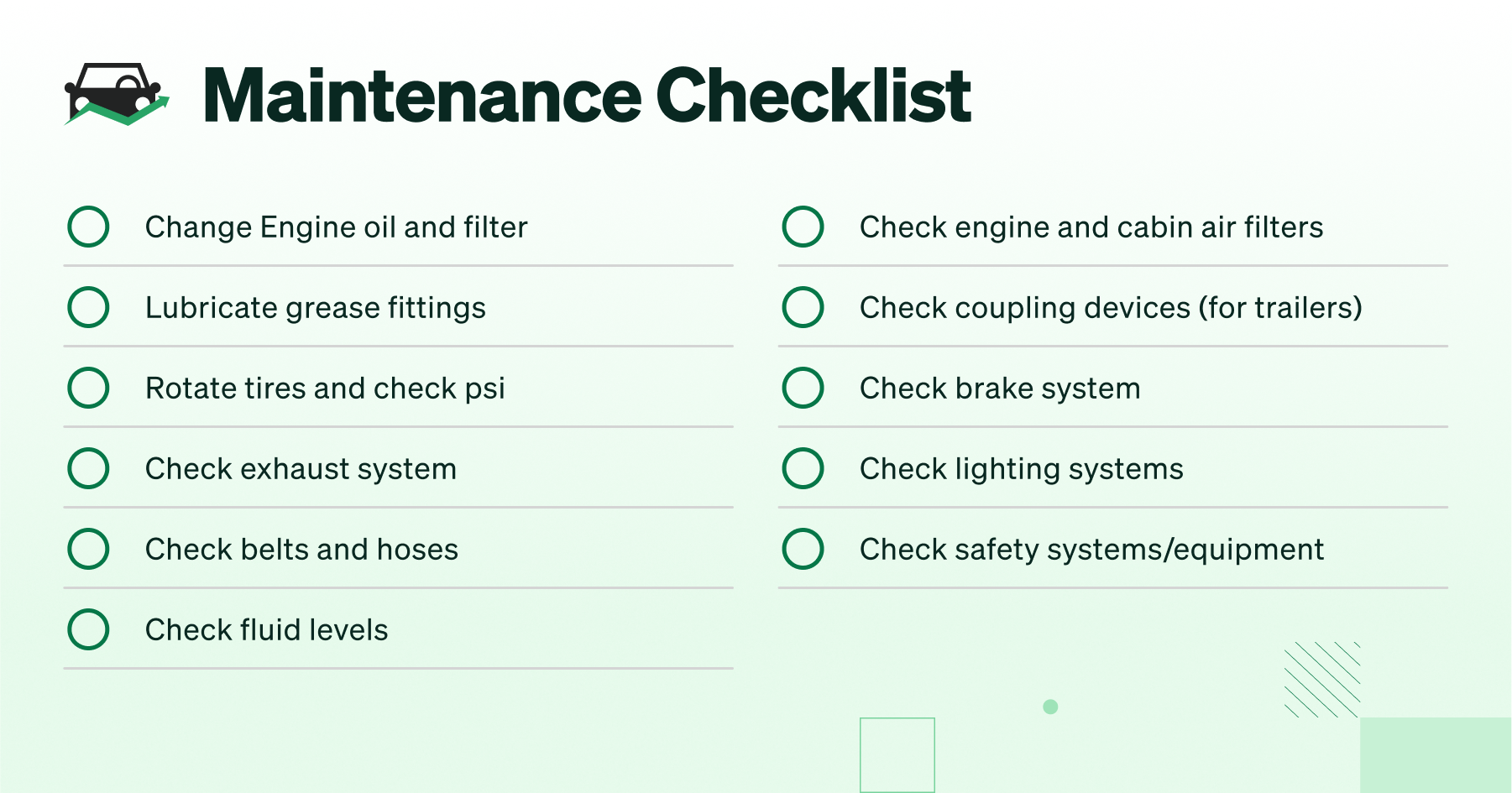
Use the template structure below to standardize PM across assets — then tailor the checklist items based on vehicle type, equipment class, operating conditions, and compliance requirements.
Note
Templates are a strong start, but digital workflows outperform static documents because they reduce missed intervals, centralize records, and improve accountability. (If you're already tracking maintenance digitally, you can turn this checklist into recurring schedules and work orders.)
Checklist header fields to include
| Field | What to capture | Why it matters |
|---|---|---|
| Asset ID | Unit number, name, or internal ID | Consistent tracking across teams |
| VIN / Serial | VIN for vehicles, serial for equipment/tools | Warranty, audits, resale |
| Location / Site | Shop, yard, branch, jobsite | Multi-site consistency and accountability |
| Date | Service date (and start/end time if helpful) | Proof of completion and trend analysis |
| Meter reading | Odometer, engine hours, runtime | Triggers next service interval |
| Interval | "Every 5,000 miles" / "Every 250 hours" | Standardizes scheduling |
| Technician | Name (and supervisor, if needed) | Accountability |
| Pass/Fail | Per category or per line item | Clear status at a glance |
| Notes | Findings, measurements, comments | Context for decisions and follow-up |
| Photos/attachments | Images, invoices, receipts | Faster diagnosis + audit trail |
| Follow-up action | Repair needed, parts required, next due date | Turns findings into work |
| Signature | Technician sign-off (digital or written) | Verification and compliance support |
How to tailor this template to your assets
- Start with the OEM schedule, then adjust based on your duty cycle (city vs. highway, heavy loads, idle time, climate).
- Add your recurring failure points (what breaks most often in your operation).
- Define "pass/fail" clearly (measurements beat opinions).
- Separate "inspect" from "replace" so technicians aren't doing unnecessary work.
- Align with compliance needs (especially for regulated fleets and jobsite equipment).
Fleet vehicle preventive maintenance checklist (light-, medium-, and heavy-duty)
Fluids and filters
- Check engine oil level and condition; replace oil and filter per interval
- Check coolant level and inspect for leaks (radiator, hoses, clamps)
- Check brake fluid level/condition; look for leaks at lines and fittings
- Check power steering fluid (if applicable) and inspect for leaks
- Check transmission fluid (where applicable) and signs of slipping or contamination
- Check differential/transfer case fluids (as applicable)
- Inspect air filter and cabin air filter; replace if restricted or dirty
Tires and wheels
- Check tire pressure (PSI) and inspect tread depth and uneven wear
- Rotate tires per interval (when applicable)
- Inspect sidewalls for damage, bulges, or punctures
- Check wheel condition and lug nut torque (per OEM spec)
Brakes
- Inspect pad/shoe thickness and rotor/drum condition
- Check for pulling, vibration, or abnormal brake noise
- Verify parking brake holds as expected
Belts, hoses, and under-hood components
- Inspect belts for cracking, glazing, or improper tension
- Inspect hoses for swelling, leaks, brittleness, or abrasion
- Check battery condition, terminals, and corrosion
- Inspect intake and vacuum lines where applicable
Steering, suspension, and chassis
- Inspect shocks/struts for leaks or damage
- Check ball joints, tie rods, bushings, and mounting points
- Inspect for loose components and abnormal wear
Electrical and lighting
- Test headlights, brake lights, reverse lights, and turn signals
- Check interior warning lights and diagnostic indicators
- Inspect wiring for chafing or damage
Exhaust and emissions
- Inspect exhaust system for leaks, damage, or loose hangers
- Check for abnormal smoke or smells that indicate engine issues
Safety equipment and cab essentials (as applicable)
- Confirm presence/condition of emergency kit, triangles, and fire extinguisher
- Check mirrors, windshield wipers, and washer fluid
- Verify safety systems and alarms (if applicable)
Trailer / coupling devices (if applicable)
- Inspect coupling devices, safety chains, and locking mechanisms
- Check electrical connections and air lines (where applicable)
- Inspect trailer lights and reflectors
Trailer preventive maintenance checklist
- Inspect tires, tread, and pressure; check for uneven wear
- Check wheel bearings (play, noise, lubrication) and hubs for leaks
- Inspect brakes (air or electric) and verify proper adjustment
- Inspect suspension components (leaf springs, hangers, bushings)
- Verify lights, wiring, and connectors
- Inspect coupling components (kingpin, fifth wheel, pintle hook, latch, safety chains)
- Check frame integrity and signs of cracks or damage
- Verify DOT/required reflectors and conspicuity markings (where applicable)
Heavy equipment preventive maintenance checklist (construction, off-road, specialty)
- Record engine hours (and idle hours if tracked)
- Inspect hydraulic system: fluid level, hose wear, fittings, leaks
- Inspect tracks/undercarriage or tires depending on equipment type
- Check coolant, engine oil, filters, and fuel/water separators per interval
- Inspect attachments (pins, bushings, couplers) for wear and lubrication needs
- Test safety systems (alarms, backup beeper, lights, interlocks)
- Document defects with photos and define follow-up actions clearly
Power tools and equipment preventive maintenance checklist
- Cool down after use (when applicable)
- Clean after use (vents, housings, guards, moving parts)
- Inspect cords, plugs, batteries, and chargers for damage
- Confirm required guards are in place and functioning
- Keep tools lubricated (per manufacturer instructions)
- Sharpen bits and blades as needed (or replace when worn)
- Verify calibration for tools that require it (e.g., torque tools, measuring devices)
- Store tools to prevent damage (dry, secured, labeled)
- Repair or replace worn parts and batteries before failure impacts productivity
How to operationalize your preventive maintenance checklist
A checklist by itself won't solve maintenance. Many fleets already have a PM checklist, but the real gap is ensuring the work gets done correctly and on time, every time. Operationalizing your checklist means building clarity, visibility and accountability into your maintenance workflow.
Establish clear task definitions (and pass/fail criteria)
Ambiguity creates inconsistency. "Inspect brakes" can mean wildly different things across technicians. Instead, define what to check and what "pass" means (for example: pad thickness above a specific threshold, no visible leaks, no abnormal noise).
Track mileage, engine hours and meter readings
Preventive maintenance should be tied to actual usage, not guesswork. If meter readings live in spreadsheets or on sticky notes, intervals get missed. Automated meter updates (via mobile entry or integrations) help teams schedule PM when it's actually due.
Schedule recurring work orders so nothing falls through the cracks
Recurring schedules reduce reliance on memory and make PM predictable. Standardize PM triggers by asset class (miles, hours, or time) and ensure follow-up repairs are created automatically when inspections fail.
If you manage a fleet, this is where preventive maintenance scheduling becomes a force multiplier.
Maintain complete service records (including attachments)
Service histories aren't just "nice to have." They support warranty claims, trend analysis, audits, budgeting, and replacement planning. Capture invoices, parts costs, and photos so maintenance decisions are based on evidence, not anecdotes.
Review and update your checklist regularly
Treat your checklist like a living document. Revisit it quarterly, after major failures or when you change vehicle specs, routes, loads or operating conditions. Use what your data is telling you to add, remove or clarify checklist items.
How Fleetio helps automate and streamline preventive maintenance
The biggest challenge in preventive maintenance usually is ensuring it actually gets done on time, with consistent documentation, across every asset and location. Fleetio turns a checklist into a living workflow that keeps your team aligned, accountable and ahead of breakdowns.
- Automated PM schedules and meter-based triggers: Create recurring maintenance schedules tied to real usage so PM happens when it should, not when someone remembers.
- Centralized service histories and documentation: Track every inspection, repair, cost and part in one searchable place for smarter decisions and easier audits.
- Mobile-first workflows for technicians and drivers: Capture issues instantly, attach photos and notes, and reduce paper and spreadsheet chaos.
What’s your preventive maintenance system look like?
Imagine a system that schedules PMs, tracks repairs, and keeps you in the loop—hands free. That’s Fleetio.
Schedule a time to chat

Senior Fleet Content Specialist
As a Senior Fleet Content Specialist at Fleetio, Peyton explores the voices and experiences that shape fleet operations. She focuses on how fleet professionals adopt technology, improve efficiency and lead their teams to bring clarity and context to the challenges happening across the industry.
View articles by Peyton PanikReady to get started?
Join thousands of satisfied customers using Fleetio
Questions? Call us at 1-800-975-5304