Fleetio 2026 Year In Review
In 2026, Fleetio gave fleet teams more control over repair costs, fewer manual steps between reported issues and completed work and new ways to put their data to use. Explore the year’s updates across maintenance, AI and integrations, plus the results that show what they meant for the crews doing the work.
Nov 12, 2026
14 min read
What you need to know
- Fleets kept more than $46 million in proposed work from becoming invoices: Smart Assessments, line-item approvals and AI-assisted approvals gave teams more context before repair costs were authorized.
- Routine maintenance moved with fewer manual steps: Smart Uploads, connected parts workflows, Service Assignments and nearly 4 million Automation runs reduced the busywork around every repair.
- AI Service Advisor carried more of the work forward: Teams saved about 2.5 hours per repair as Service Advisor prioritized issues, drafted work orders and closed eligible issues after service.
- Fleet data became easier to question and apply: Fleetio MCP Server, AI Data Analyst, Fleet Map and Data Connectors brought fleet information into the tools the rest of the business already uses.
- Crews got more help and more training: Weekday Support coverage grew by three hours, live chat arrived in Fleetio Go and Fleetio Academy marked its first year alongside 17 live workshops and webinars.
Fleet operations in 2026 were shaped by rising maintenance costs, longer repair cycles, technician shortages and growing pressure to make trustworthy decisions from fragmented data. For large, distributed fleets, those challenges compound across every location, asset and service provider.
Finding the small operational changes that drive results takes time most teams simply don't have. In 2026, Fleetio invested across maintenance, integrations and intelligence to help fleets control costs, work more efficiently and move from problem to action faster.
We brought more context into repair approvals, embedded intelligence throughout the maintenance workflow and gave teams new ways to turn fleet data into decisions. The result is a platform that helps fleets address today's operational pressure while building a stronger foundation for what comes next.
Fleetio at Work: 2026 at a Glance
$46M+ in Maintenance Shop Network spend rejected
Fleet teams reviewed and declined more than $46 million in proposed maintenance work, giving them greater control before unnecessary costs became invoices.
3M+ issues resolved
More than three million maintenance needs moved from reported to resolved. In 2026, AI Service Advisor introduced additional support for assessing and resolving issues, helping teams determine the right next step and move maintenance work forward faster.
2.5 hours saved per repair with AI Service Advisor
AI-assisted prioritization and repair workflows helped teams move from issue to action faster, reducing administrative effort and giving maintenance teams more time for higher-value work.
Nearly 4M automations kept routine work moving
Fleetio Automations ran nearly 4 million times in 2026, saving each account more than 25 hours in manual tasks each month and giving teams more time for higher-value fleet work.
Catch Unnecessary Repair Costs Before They Add Up
Every maintenance decision carries a cost, but fleet teams have not always had the time or context to evaluate each recommendation as work happens.
This year, Fleetio invested in giving fleets more control at the point where maintenance costs are reviewed, approved and recorded. Now, fleets can challenge unnecessary work, apply consistent standards and retain greater control over maintenance spending without creating another operational bottleneck.
Catch questionable costs without holding up repairs
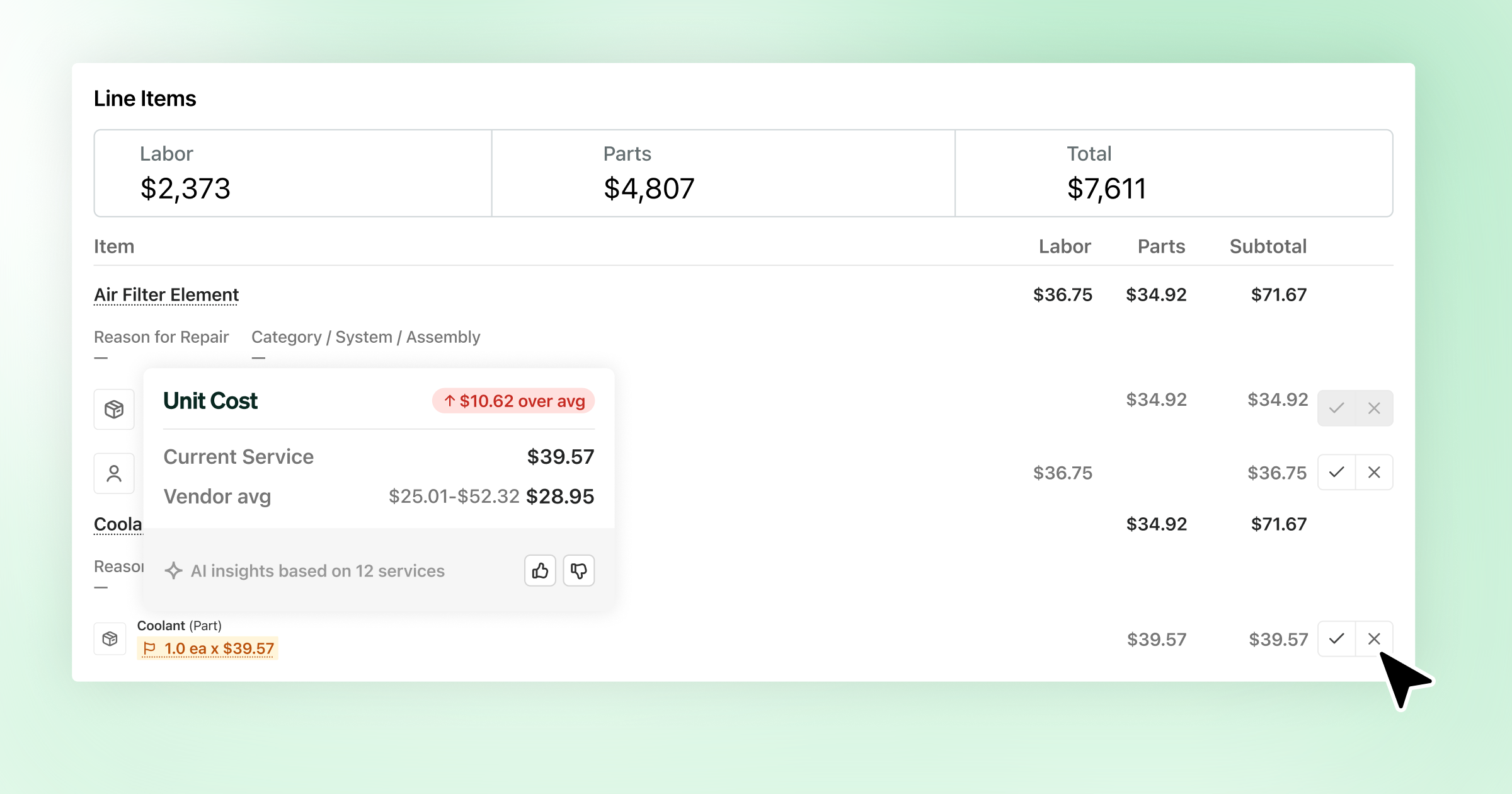
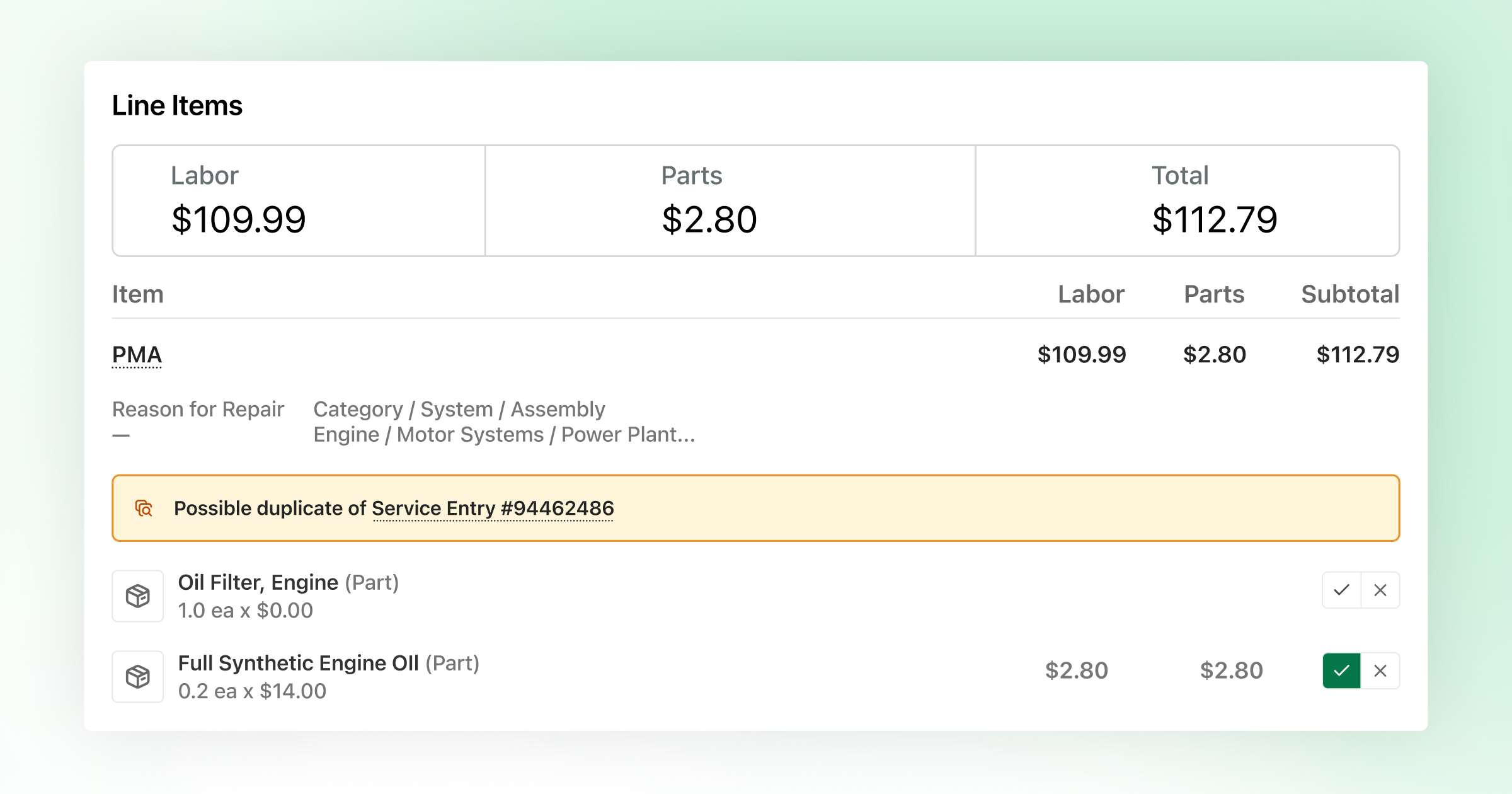
Every repair estimate presents an opportunity to keep maintenance spending in check. For vehicles serviced through Fleetio's Maintenance Shop Network, AI Service Advisor reviews proposed work against fleet maintenance history, flagging potential duplicate services, unusual parts and labor costs, and warranty opportunities that deserve a closer look.
With line-item approvals, maintenance teams can act on those findings directly in Fleetio. They can reject an individual service that doesn't make sense while approving the rest of the estimate, keeping necessary repairs moving without another round of back-and-forth with the shop.
Together, these capabilities give fleets more precise control over repair spending, helping them catch questionable charges before they're authorized without delaying the work vehicles need.
Keep spending standards consistent across every shop
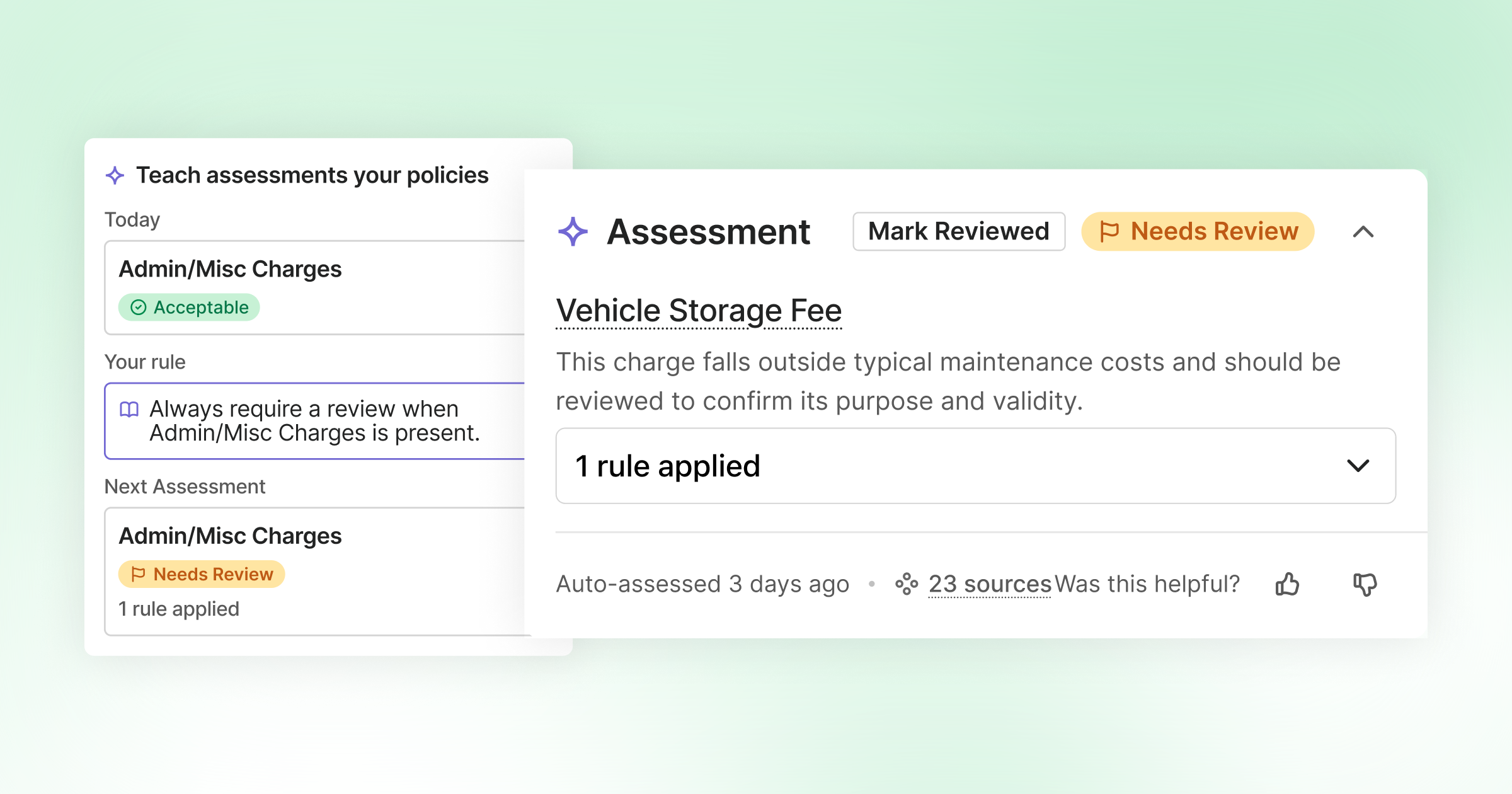
Managing repair costs across multiple vehicles, shops and locations takes more than reviewing estimates one at a time. AI-assisted approvals help fleets apply their spending policies consistently, automatically approving qualifying routine repairs that fall within established cost limits and receive an acceptable assessment from AI Service Advisor.
Repairs that fall outside those guardrails remain available for review, so maintenance teams can focus their attention on unusual expenses and higher-risk decisions. The result is greater consistency in how maintenance dollars are approved, with less time spent reviewing costs that already meet the fleet's standards.
"Fleetio gives our branch managers control of their budgets. They see every repair request and can reject the little line items that quickly add up." Nick Eddy, Safety and Fleet Operations Manager, Auto-Chlor
We also shipped
- Approval Routing by Maximum Approval Limit
- Smarter Shop Directory search
- Google Reviews in the Shop Directory
- Editing service entries while repair orders are pending
Spend Less Time Managing Maintenance Busywork
Fleet teams lose significant time to the work that happens between the work: entering invoice details, reviewing routine records, chasing updates, creating follow-up tasks and cleaning up information after service is complete.
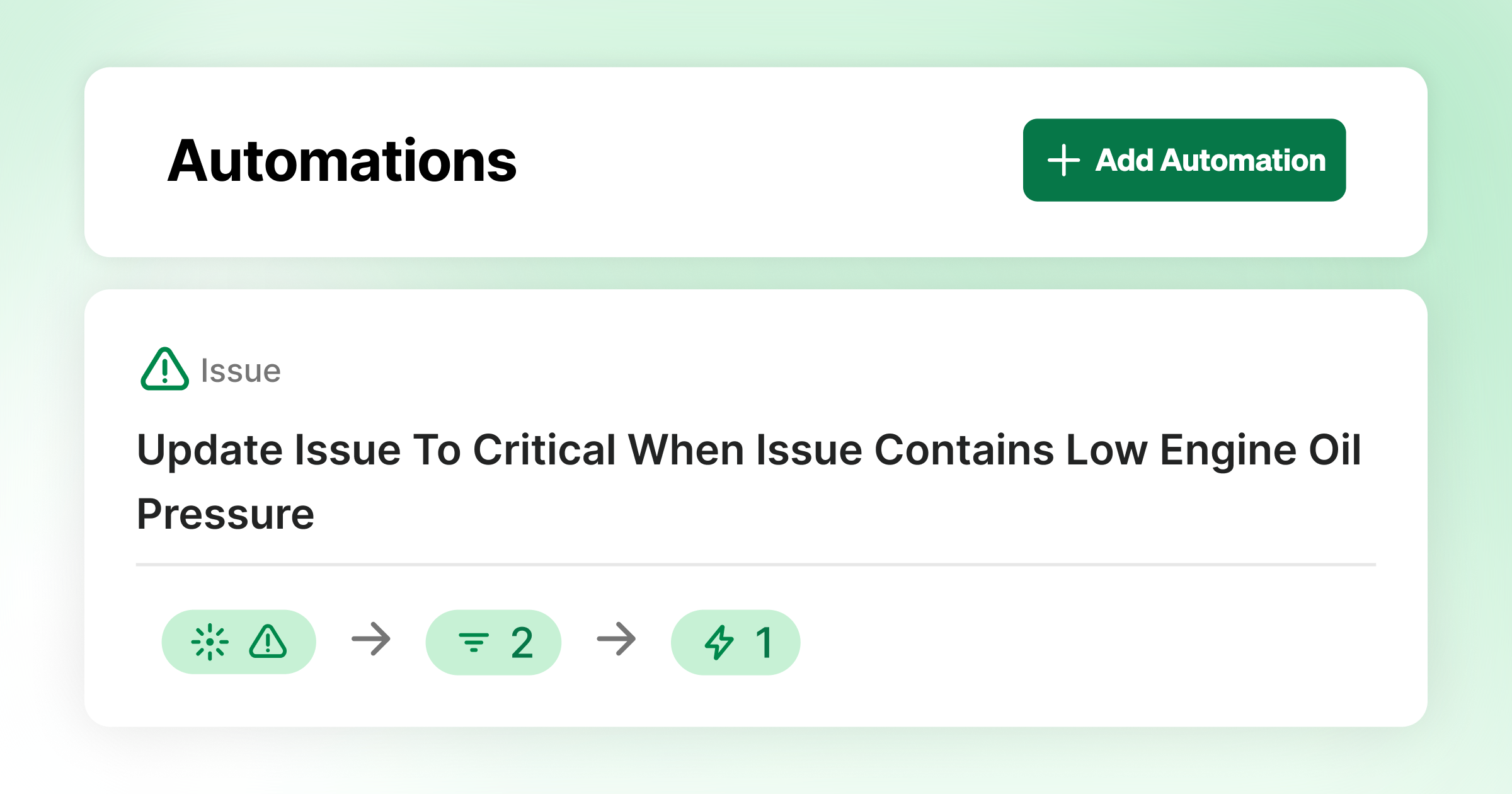
To reduce manual steps, we expanded the documents Smart Uploads can turn into usable fleet records, connected more of the parts lifecycle to maintenance work and introduced new ways to assign and automate outsourced service. We also extended AI Service Advisor across the maintenance workflow.
All the details, a fraction of the data entry
Every maintenance invoice, fuel receipt and inspection form contains information fleets need to track, but entering it all by hand takes time and leaves room for errors. Smart Uploads helps teams turn these documents into usable Fleetio records with far less manual entry.
Maintenance invoices can be converted into detailed service records that capture vehicle information, mileage, parts, labor and costs. Fuel receipts from the field can be used to create fuel records, while existing paper inspection forms can be converted into digital forms for drivers to complete.
With less time spent copying information between documents and systems, fleets can maintain more complete records of maintenance and fuel activity. That gives teams reliable data to work from when reviewing costs, tracking service history and making decisions about their vehicles.
Get the right parts to the right repair, with less back-and-forth
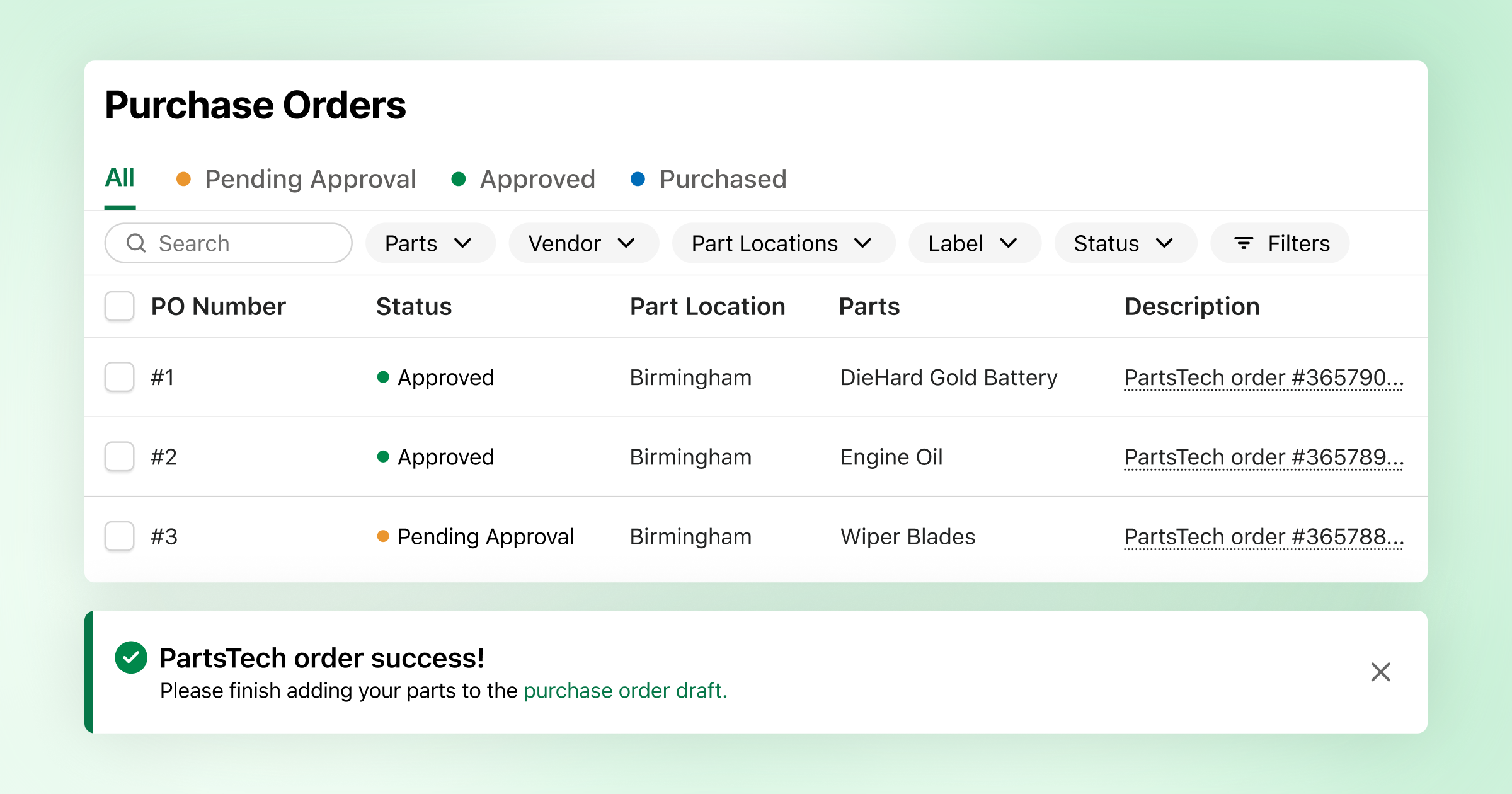
In 2026, Fleetio connected more of the parts and inventory process, from purchasing and receiving to tracking usage and managing stock.
Teams can compare suppliers and order through PartsTech, receive purchased parts directly into work orders, capture inventory used during inspections and identify parts that have not been used recently.
That means less time searching for parts, re-entering purchase details and checking stock, and more time getting the right parts onto the right repair.
Keep service moving with clear ownership and less follow-up
Service Assignments give teams a clear owner for upcoming and overdue service, along with the details, notifications and recommended shop needed to act. Service Entry Automations can then respond as outsourced work progresses through the Maintenance Shop Network, updating asset status, notifying the right people and standardizing record details without another round of manual follow-up.
Fleets using Service Assignments are seeing 10% higher service reminder compliance and resolving overdue work 50% faster. When assignments include SMS and a shop recommendation, jobs are often completed within hours instead of weeks.
Together, these capabilities connect service reminders to completed external work. Teams spend less time coordinating handoffs and chasing updates across vehicles, locations and service providers.
AI helps carry maintenance work forward
A reported issue or vehicle fault is often just the beginning of the maintenance process. Teams still need to determine what requires attention, prepare the necessary work and make sure records reflect what was actually repaired.
AI Service Advisor helps connect those steps. It can identify recurring fault patterns, bring related problems together and prioritize issues that need attention. When it's time to prepare service, it can draft work orders with recommended tasks and notes based on the vehicle's maintenance needs, giving teams a starting point they can review and adjust.
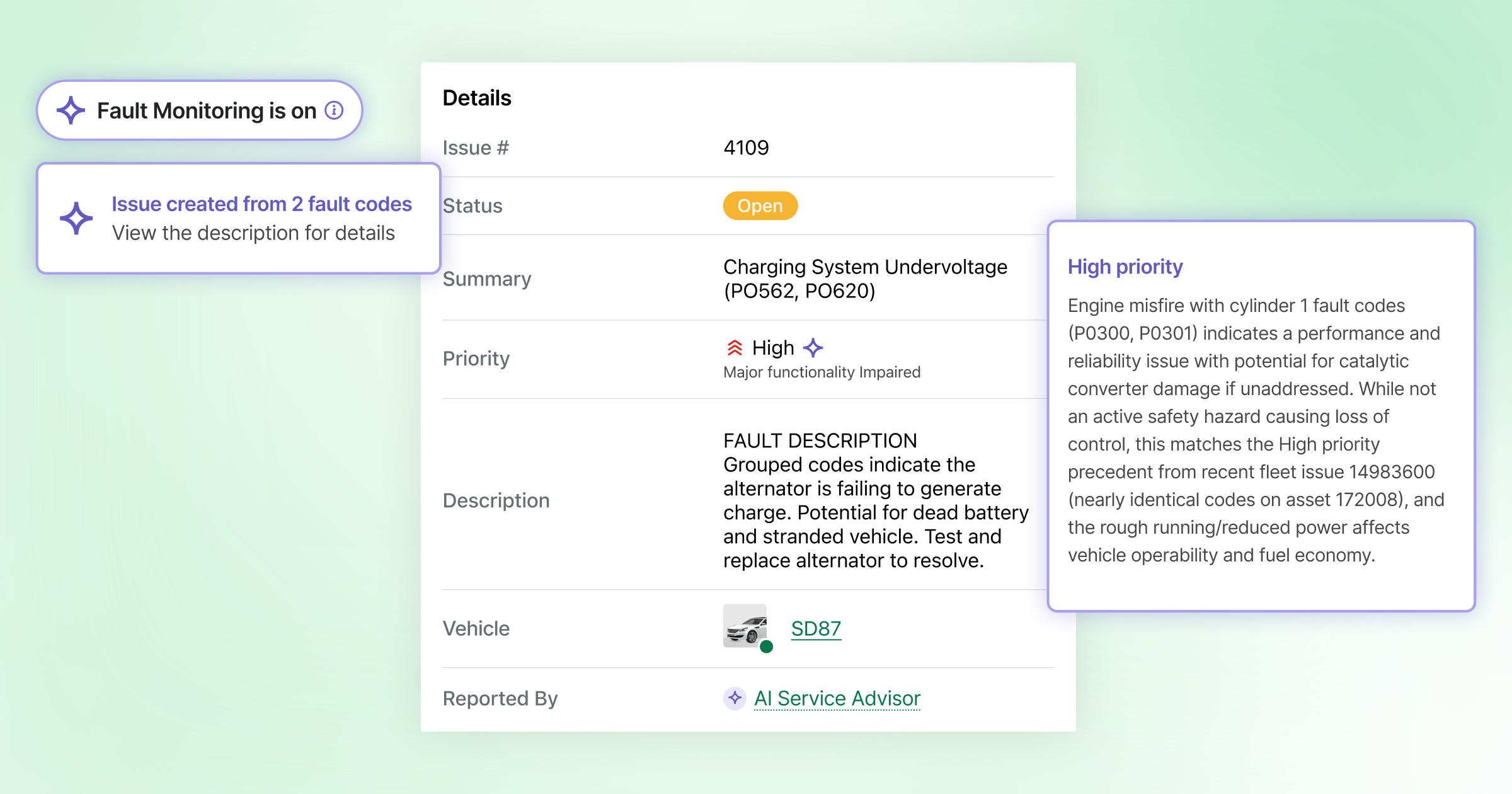
As repairs progress, Service Advisor can assess active work orders to highlight items needing closer review. Once service is complete, it can help identify open issues that were addressed during the repair and automatically close eligible matches when enabled.
That means less time sorting through issues, building service tasks from scratch and cleaning up records after the fact. Maintenance teams can spend more of their day making decisions and getting vehicles serviced, with fewer administrative steps along the way.
These capabilities reduce the manual triage, preparation and reconciliation that can consume a maintenance team's day. Experienced people remain in control of the decisions that require judgment, while repetitive work surrounding those decisions requires fewer manual steps.
"The fact that I don't have to go line by line on every work order is huge. It easily saves me an hour and a half a day." Jill Perry, Ramos Oil
We also shipped
- OR conditions for more flexible Automation workflows
- Inspection forms embedded directly in maintenance workflows
- Inspection schedules based on a broader range of asset attributes
- Individual completion tracking for work order line items
- Field Management and customizable record layouts
- Faster field workflows in Fleetio Go
Put Fleet Data to Work
Fleet leaders are expected to defend budgets, evaluate replacement needs and explain changes in operating cost. But the information required to make those decisions is often spread across fleet records, telematics platforms, dashboards, spreadsheets and other business systems.
In 2026, Fleetio invested in making fleet information easier to bring together, question and apply, whether a team is investigating cost, responding to an asset in the field or preparing for its next business review.
Bring Fleetio data into the AI tools your business already uses
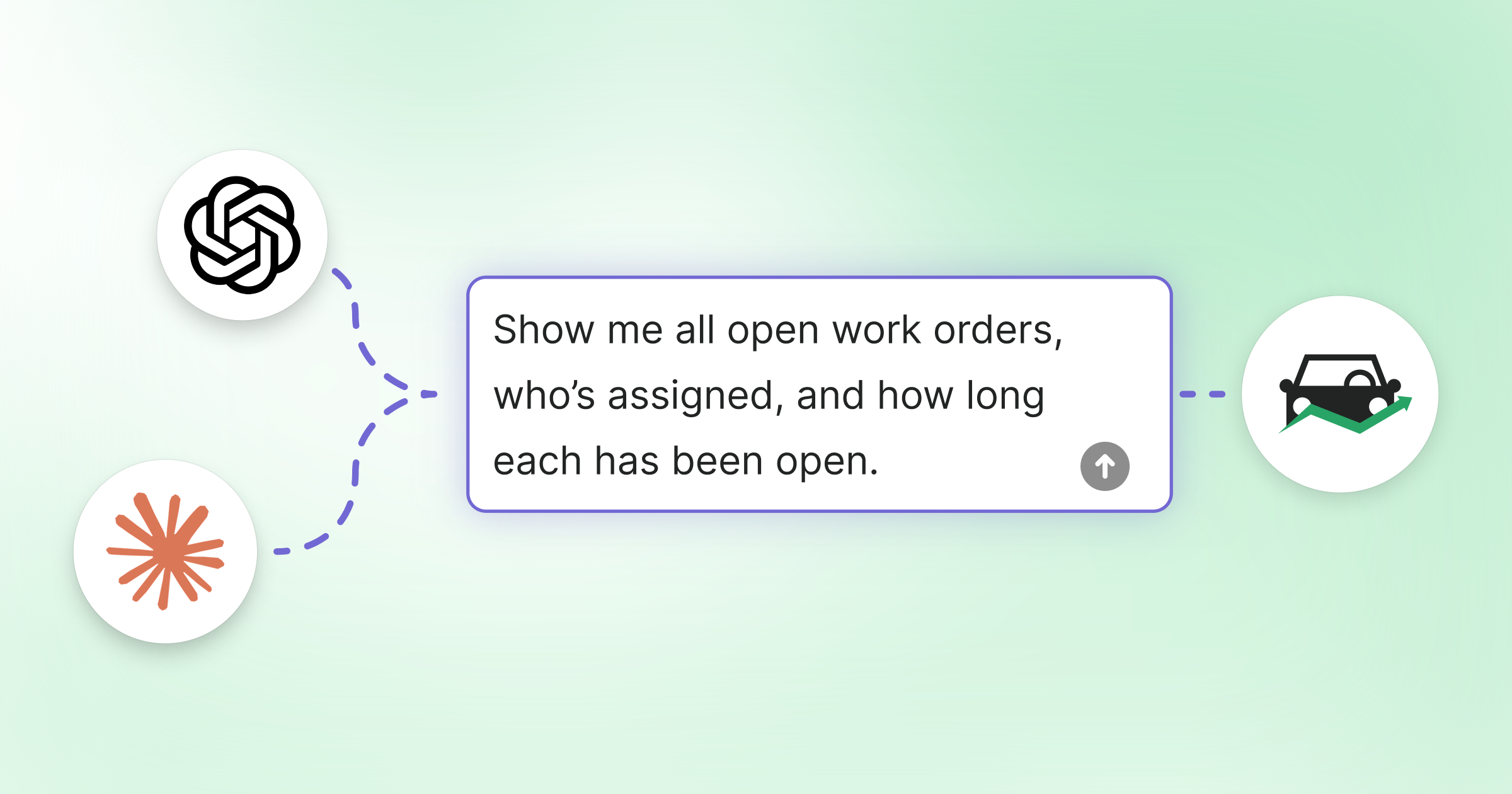
Fleet information becomes even more valuable when it can be analyzed alongside the rest of the business. Fleetio's MCP connector makes it possible to securely access live fleet information through AI tools like ChatGPT, Claude and Codex, bringing maintenance, fuel, vehicle and operational records into conversations alongside other connected business information.
A fleet leader preparing for budget planning could bring together maintenance costs from Fleetio, financial targets from a spreadsheet and other business records to investigate which vehicles are driving expenses or where information may be missing. Instead of moving between multiple systems to compile that information manually, teams can explore it together and prepare more complete answers for leadership.
See where assets are and what needs attention
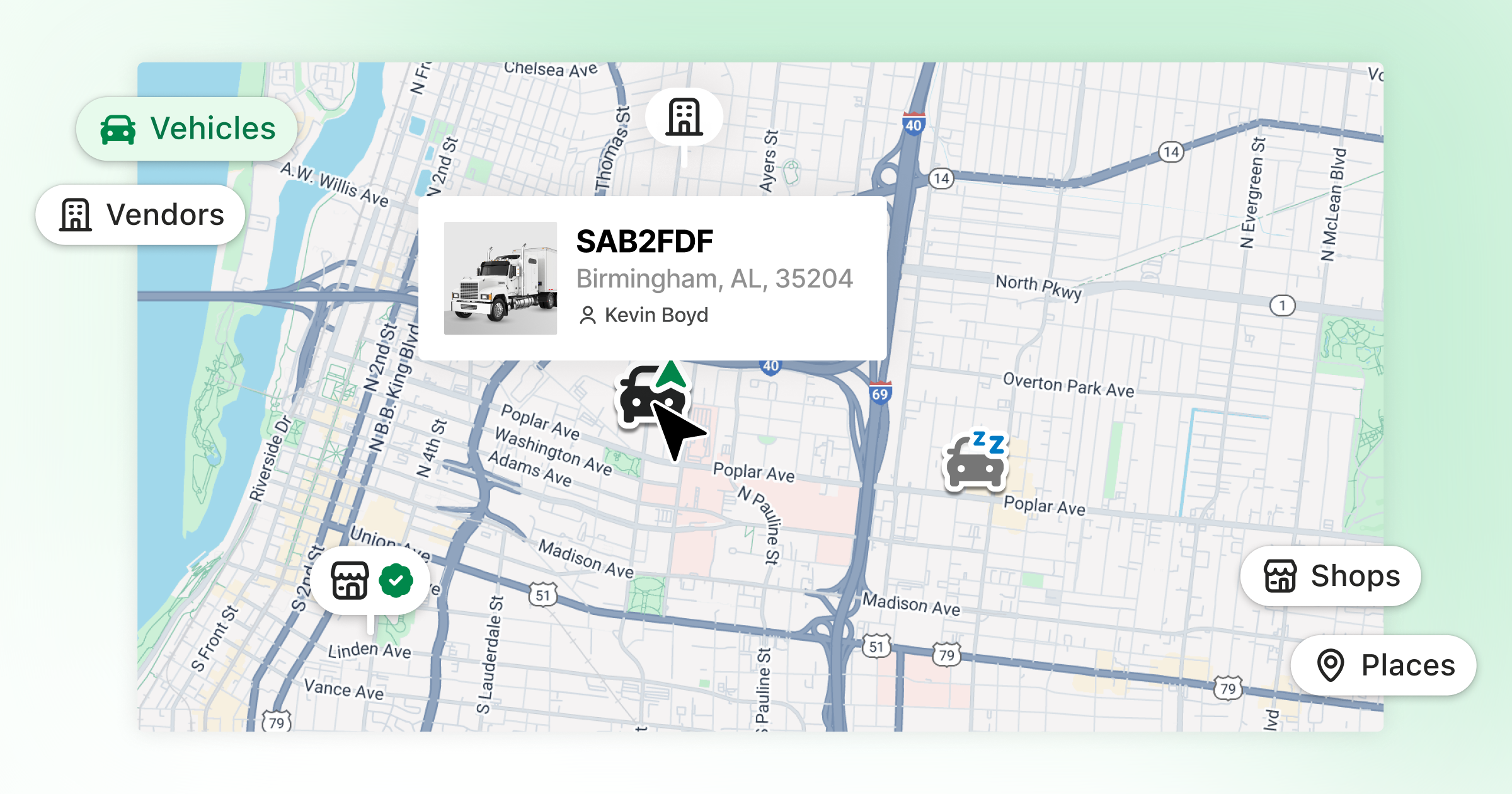
Fleet Map brings live asset locations, geofences, nearby shops and vendors into one interactive map inside Fleetio. It combines location information from supported telematics providers with locations recorded during inspections, fuel purchases and other fleet activity, giving teams a more complete view of assets even when different vehicles use different tracking systems.
With maintenance information and nearby service options in reach, teams can locate an asset, understand its needs and coordinate the next step without switching between maps, telematics portals and maintenance records. Geofence alerts and connected Automations can also help keep operational information current as vehicles enter or leave important locations.
Explore fleet trends and answer questions faster
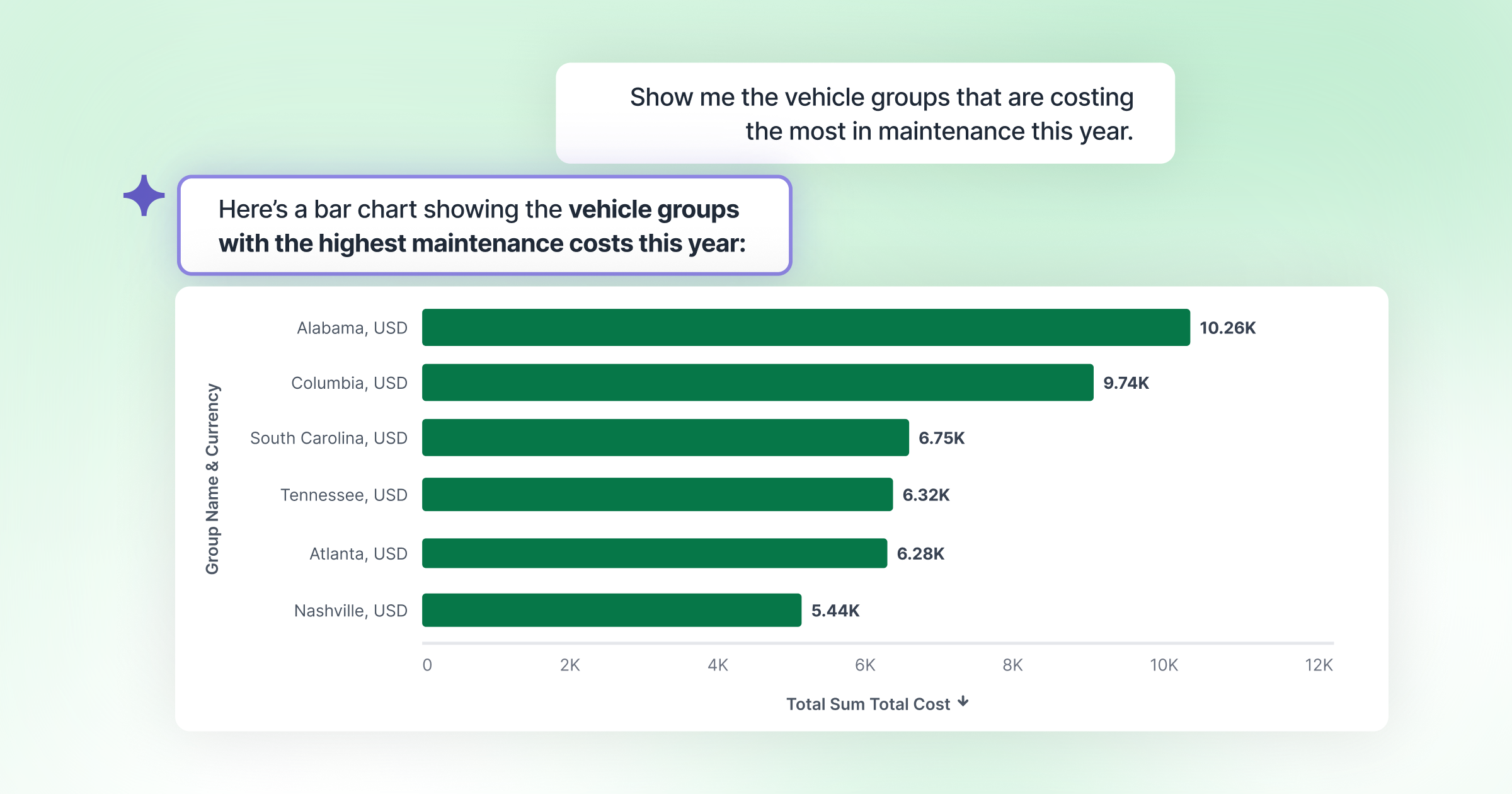
AI Data Analyst gives fleet and operations teams a conversational way to work with supported Fleetio data. Users can ask questions about maintenance costs, recurring repairs, fuel spending and other fleet activity using everyday language instead of building every report from scratch.
The response can take the form of a report, visualization or explanation. Teams can then ask follow-up questions to compare vehicles, groups, locations or time periods and explore what is driving the result.
This shortens the distance between a business question and the information needed to answer it. Reports can also be pinned to dashboards or shared with leadership, turning one investigation into something the organization can use again.
Make fleet data useful across the business
Fleet decisions increasingly affect teams beyond maintenance. Finance needs accurate operating costs, operations leaders need visibility into asset performance and business analysts need fleet information alongside data from other systems.
Fleetio's Data Connectors help bring maintenance, vehicle, fuel and other fleet records into the tools businesses use for reporting and analysis. Integrations through Workato, Airbyte, Fivetran and other supported connectors help teams connect Fleetio with business applications and data platforms, while Excel and Power Query connections make it easier to refresh information in familiar reporting workflows.
With fewer disconnected exports and more consistent access to fleet information, teams can incorporate maintenance costs into financial reporting, evaluate performance alongside other business metrics and give stakeholders a clearer view of the fleet's impact on the organization.
"Before Fleetio, a lot of our process was still manual and access to the system was limited. Moving to Fleetio opened that up across departments and gave everyone visibility into the same data." Dustin Palmer, Fleet Manager, The Colony
We also shipped
- Custom Records that can contribute eligible costs to asset-cost and TCO reporting
- More third-party integrations available through the Integrations Directory
- 4Refuel Integration and link2pump Fuel Integration
- GTS Tolls Integration
More Support for the Crews Doing the Work
Keeping a fleet running takes a team that knows where to find answers and has the confidence to put new tools to work. In 2026, Fleetio expanded weekday Support coverage by three hours, with help available from 4 a.m. to 7 p.m. Central, and introduced live support chat directly in the Fleetio Go mobile app so customers can get assistance from the field.
Fleetio Academy also celebrated its first anniversary, giving customers free, self-paced training tailored to fleet managers, administrators, drivers and technicians. Learning opportunities extended beyond the Academy, with 17 live workshops and webinars. From Fleetio 101 to Maintenance Shop Network training and hands-on sessions covering new capabilities, customers had more ways to build their skills, bring their teams up to speed and get more value from Fleetio.
What We Shipped, Quarter by Quarter
| Quarter | Control Maintenance Spend | Move Maintenance Work Automatically | Turn Fleet Data into Action |
|---|---|---|---|
| Q1 |
|
|
|
| Q2 |
|
|
|
| Q3 |
|
|
|
| Q4 |
|
|
|
Selected 2026 releases; not a comprehensive list. Availability varies by plan.
Throughout 2026, Fleetio invested in helping fleets control maintenance spend, move more maintenance work automatically and turn fleet data into action.
Built for What Fleet Operations Need Next
The investments made in 2026 reflect an ongoing commitment to helping fleets operate with more control, consistency and clarity. As fleet work becomes more connected, and the decisions behind it become more complex, Fleetio will continue building the workflows, integrations and intelligence teams need to keep moving forward.
Methodology and availability note: Platform totals reflect the 2026 reporting period through November 2026. Capabilities described in this document may vary by plan, Maintenance Shop Network participation and third-party requirements.

Senior Product Marketing Manager
Brianna Perry is a Senior Product Marketing Manager at Fleetio, where she partners with the Intelligence and AI product team to bring Fleetio's AI products to market. With more than 5 years at Fleetio, she focuses on translating emerging technology into practical solutions that help fleets make smarter, faster decisions.
LinkedIn|View articles by Brianna Perry
Senior Copywriter
Tyler Freeland is a Senior Copywriter at Fleetio. A former creative writer for Freightliner and Western Star, he now transforms complex (and sometimes common) fleet topics into practical, engaging insights that fleet leaders can apply every day.
LinkedIn|View articles by Tyler FreelandReady to get started?
Join thousands of satisfied customers using Fleetio
Questions? Call us at 1-800-975-5304