Fleetio + Coast: How To Track and Trust Your TCO
Fleetio and Coast surveyed 190 fleet professionals to see how fleets are managing Total Cost of Ownership (TCO) in 2026. While 63% track TCO, many still rely on manual work, disconnected systems and periodic reviews. Here’s what the research reveals and where fleets can improve.
Sep 1, 2026
6 min read

What you need to know
-
63% of fleets track TCO, but most still rely on manual methods: 41% use spreadsheets or paper-based processes, leaving data incomplete, late and disconnected from the assets that created it.
-
Maintenance is the hardest cost to predict: Maintenance and repairs topped the list at 29%, followed by parts at 22% and fuel at 18% — because a repair involves far more than one invoice.
-
Indirect and soft costs are the hardest to capture: 44% of fleets struggle most with costs like downtime and lost productivity, which never arrive with an invoice.
-
Quarterly TCO reviews leave too much time between decisions: 43% of fleets review TCO only quarterly, missing the window to act on cost data when it matters most.
-
Fuel integration points the way forward: Only 28% of fleets connect fuel card data with telematics or fleet management software — but those that do have a more reliable picture of true consumption.
41% of fleets still track TCO manually
There's a quote in The Fast and Furious saga that relates to fleets, and it goes something like this:
"It's not how you stand by your TCO it's how you track your TCO. You gottta learn that."
Ok. That's not said in any of the movies.
Nonetheless, if you asked a fleet manager what they spent on fuel last month, they might pull up a spreadsheet. If you asked them to provide maintenance invoices, they may point you to a stack of receipts sitting by the coffee pot. If you ask them for labor costs or what utilization looks like, they might show you a whiteboard full of sticky notes and running-dry-erasers.
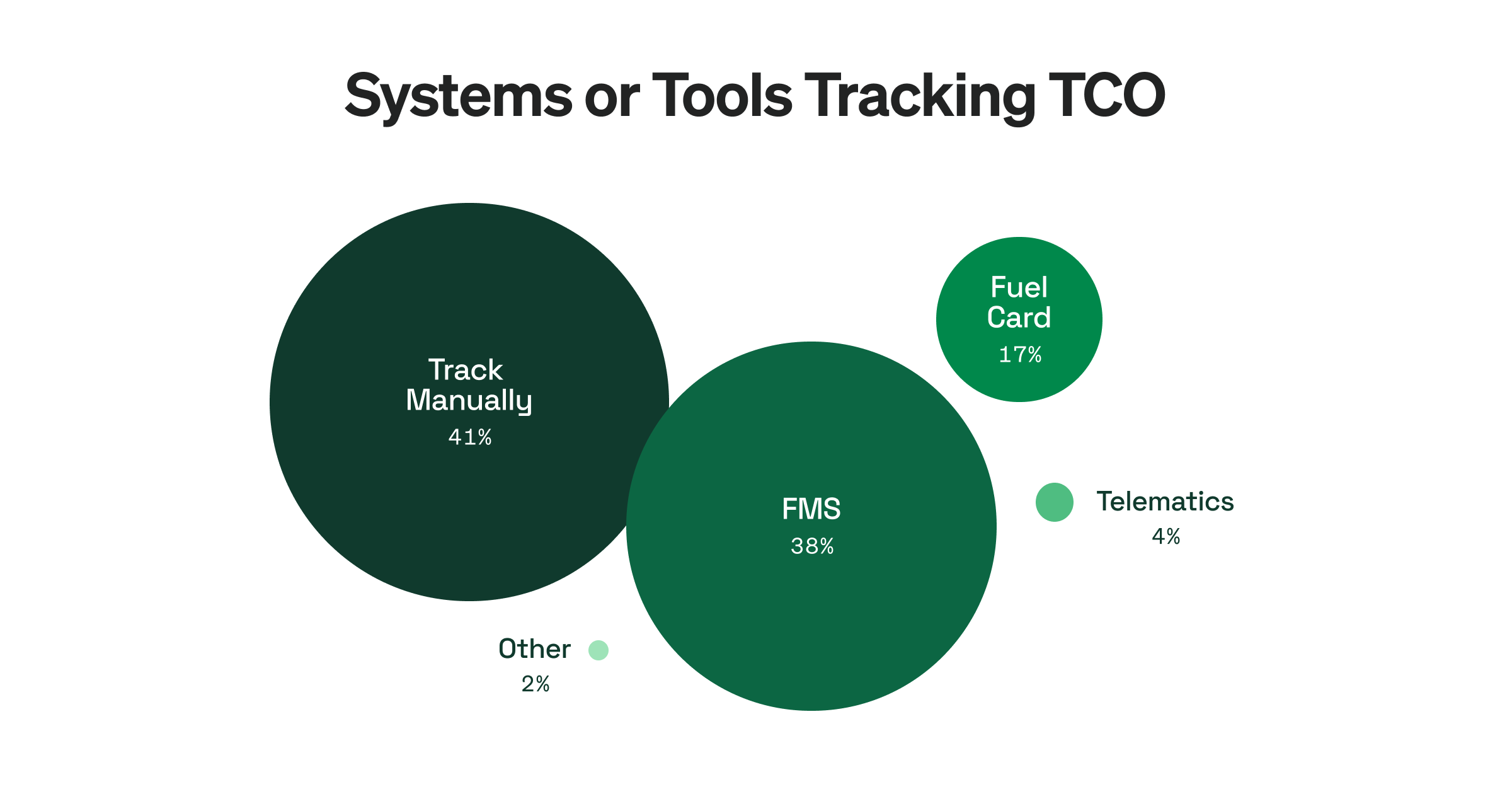
Of the fleets surveyed, 41% use manual methods to track TCO. Fleet management software came in just behind at 38%, followed by fuel cards at 17% and telematics at 4%. Respondents could select multiple methods.
A spreadsheet can calculate TCO, but it can't automatically keep that information up-to-date in real time. Someone has to collect the maintenance costs. Someone has to bring over the fuel transactions. Finance may have acquisition, insurance or other expenses. Odometer and utilization data could be hiding out somewhere else entirely. Each handoff adds work and another chance for data to be late, incomplete or entered differently.
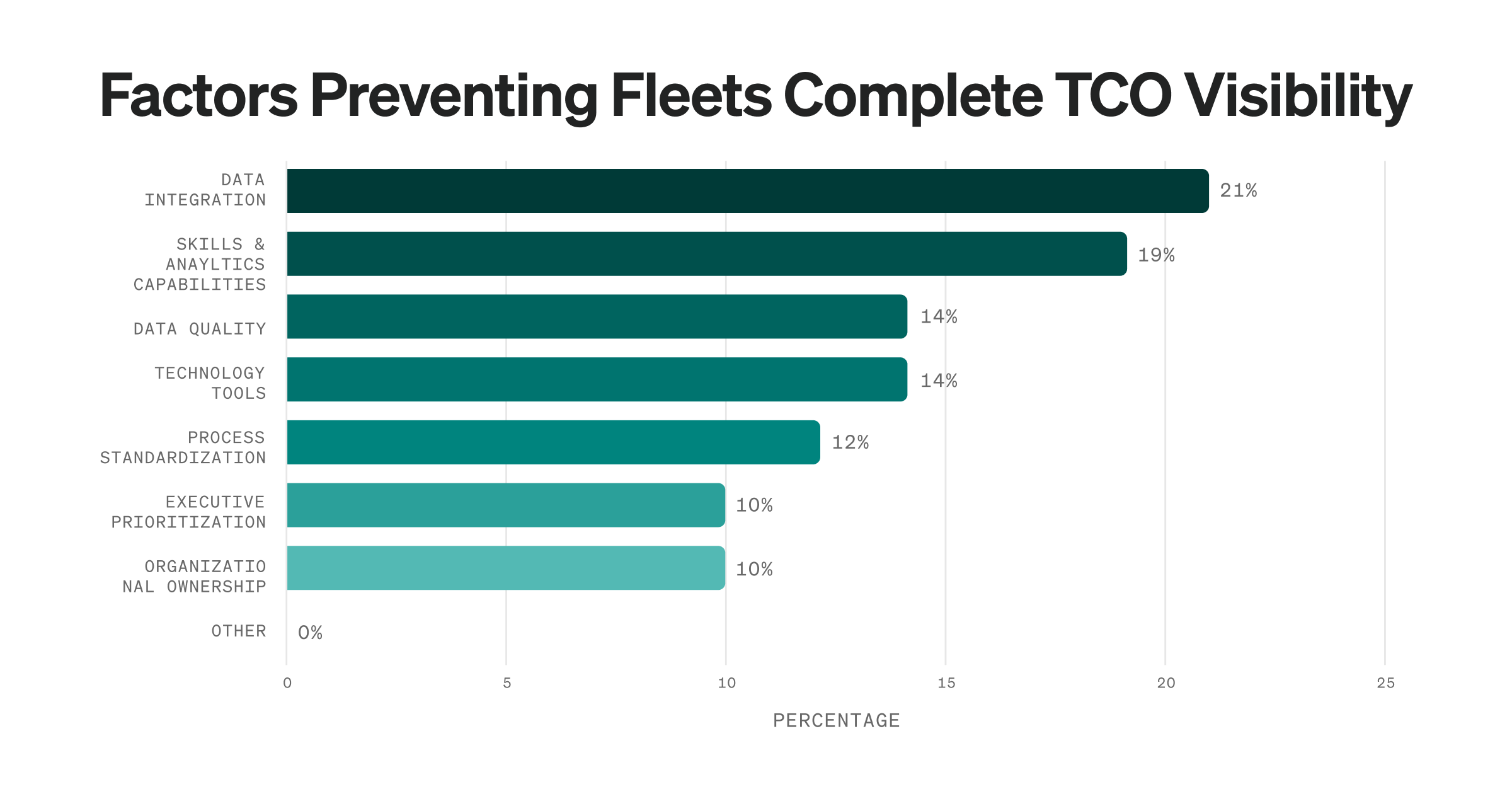
When fleets were asked what prevents complete TCO visibility, data integration was the most common answer at 21%. Skills and analytics capabilities followed at 19%, while data quality and technology tools each accounted for 14%.
Think you know TCO?
See how 190 fleet professionals are tracking Total Cost of Ownership, including where maintenance, fuel and disconnected systems create gaps in cost visibility.
Download now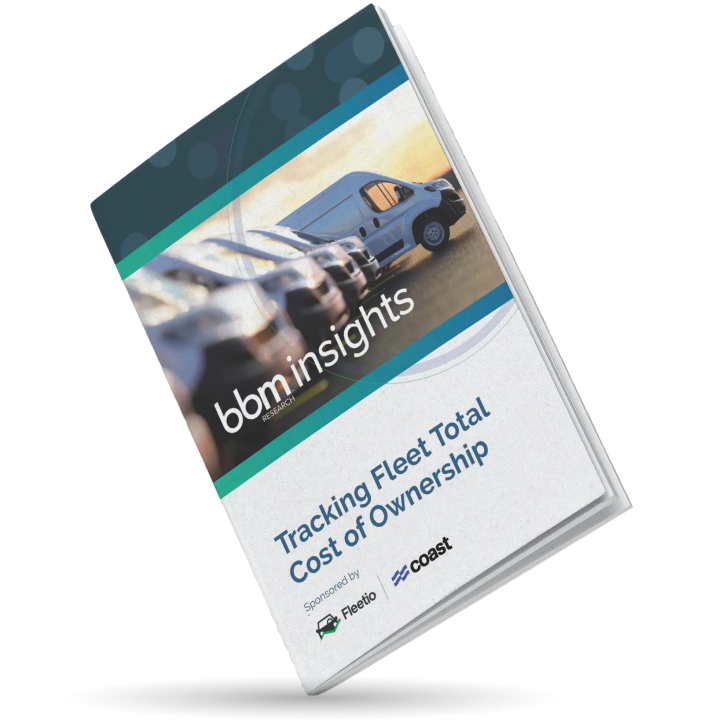
Maintenance is where cost predictability breaks down
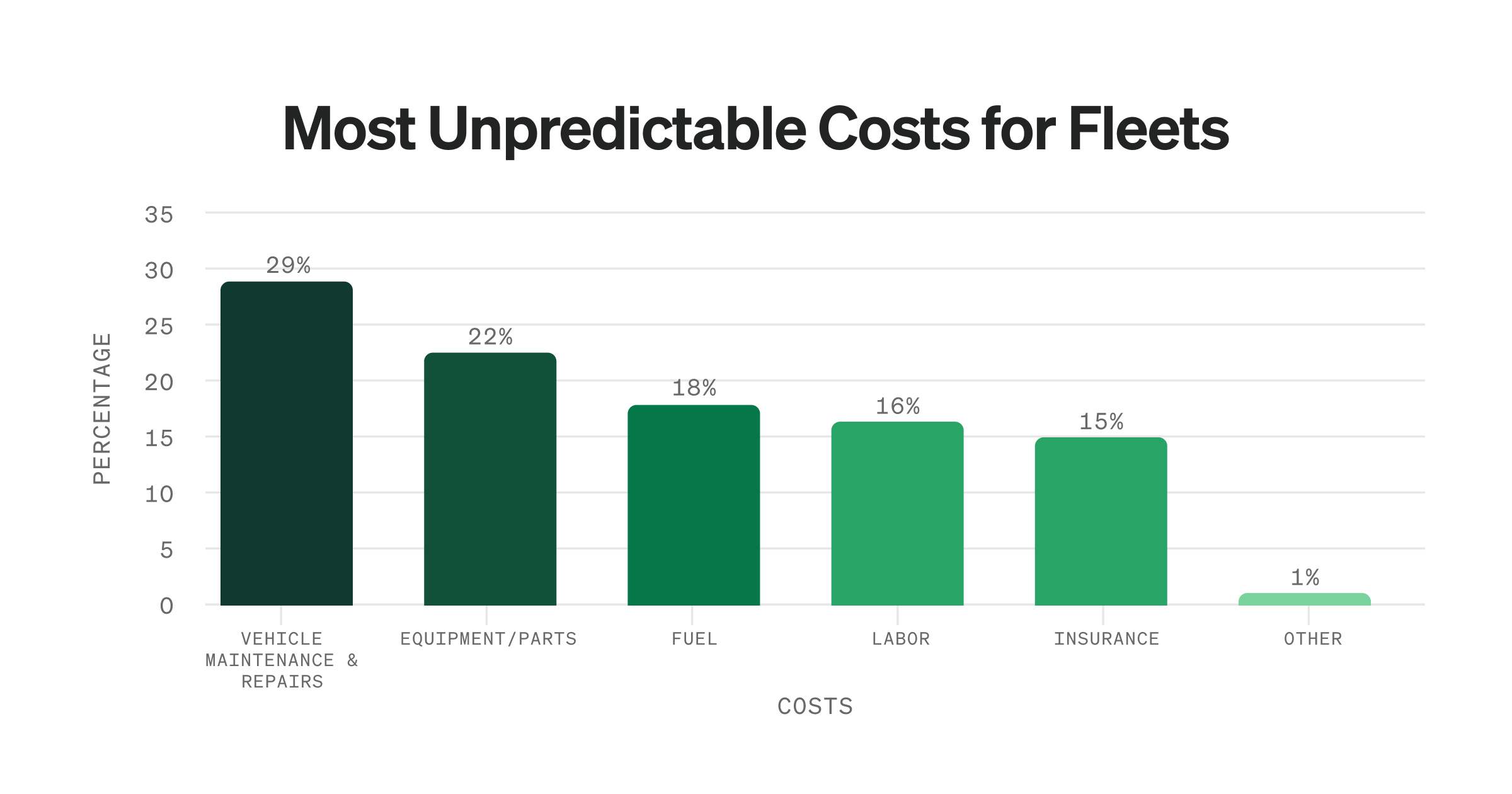
It may come as no surprise that maintenance and repairs topped the list of unpredictable fleet costs at 29%. Parts followed at 22%, ahead of fuel at 18%, labor at 16% and insurance at 15%.
Pay close attention to the order.
Fuel prices move, but fuel transactions are relatively easy to capture. Maintenance is a whole lot messier. A repair can involve a failed component, technician labor, parts, an outside vendor and several days of downtime. The invoice tells you part of the story. It doesn't necessarily tell you the repair cost of the operation.
The report found that 40% of fleets use a Fleet Maintenance Management System to track and reconcile maintenance spend. Another 32% rely on vendor invoices and purchase order matching, while 27% use accounting or Enterprise Resource Planning (ERP) systems.
Those methods answer different questions. An accounting system can tell finance how much was paid. A work order can tell the fleet team which asset was repaired, why it needed work and what was replaced. Connecting those records makes it much easier to see whether a $3,000 repair was an isolated expense or the latest entry in a growing maintenance problem.
Some of the most expensive costs never reach the TCO calculation
Downtime doesn't arrive with an invoice.
Neither does the productivity lost while a driver waits for another asset or the admin time it took to gather and move information between systems.
That helps explain why 44% of respondents identified indirect and soft costs as the hardest cost category to capture accurately. Operating costs were next at 36%, followed by depreciation and residual value at 13% and acquisition costs at 6%.
It just goes to show how two vehicles might have similar maintenance spend over a year. If one requires scheduled service while the other repeatedly breaks down during working hours, their effect on the operation isn't the same.
Make sense of your cents
Fleet costs shouldn’t be a mystery. Get a clear view and calculate your fleet's Total Cost of Ownership with our free TCO calculator today.
Run the numbers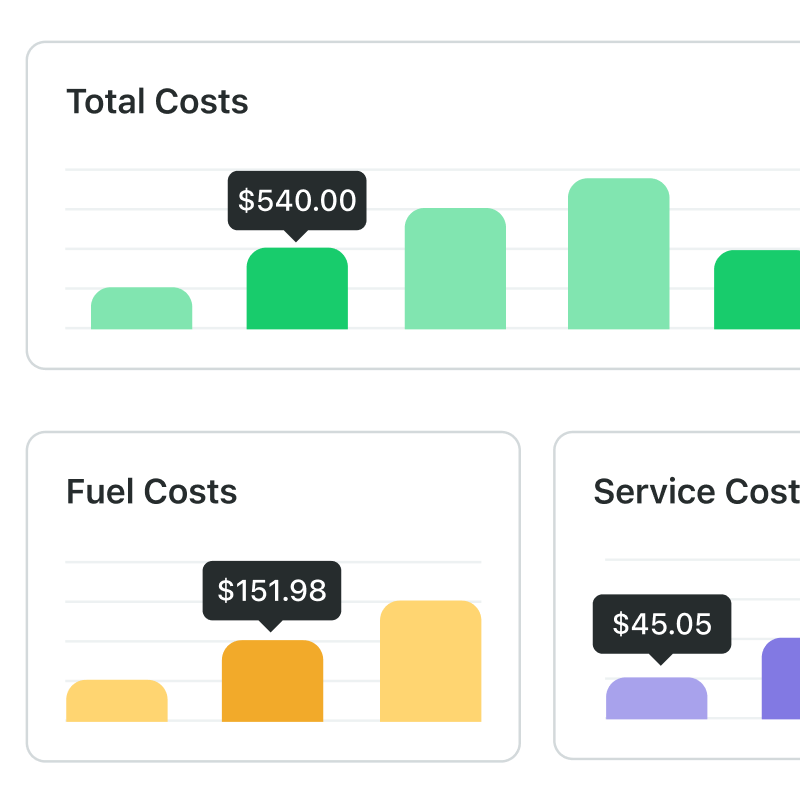
Quarterly TCO reviews leave a lot of miles between decisions
Even fleets that track TCO aren't necessarily looking at it as often as they should.
The survey found that 43% review or update TCO quarterly. Another 28% do it annually and 13% semi-annually. Only 7% reported event-driven reviews tied to events such as major repairs, asset replacement or fuel spikes.
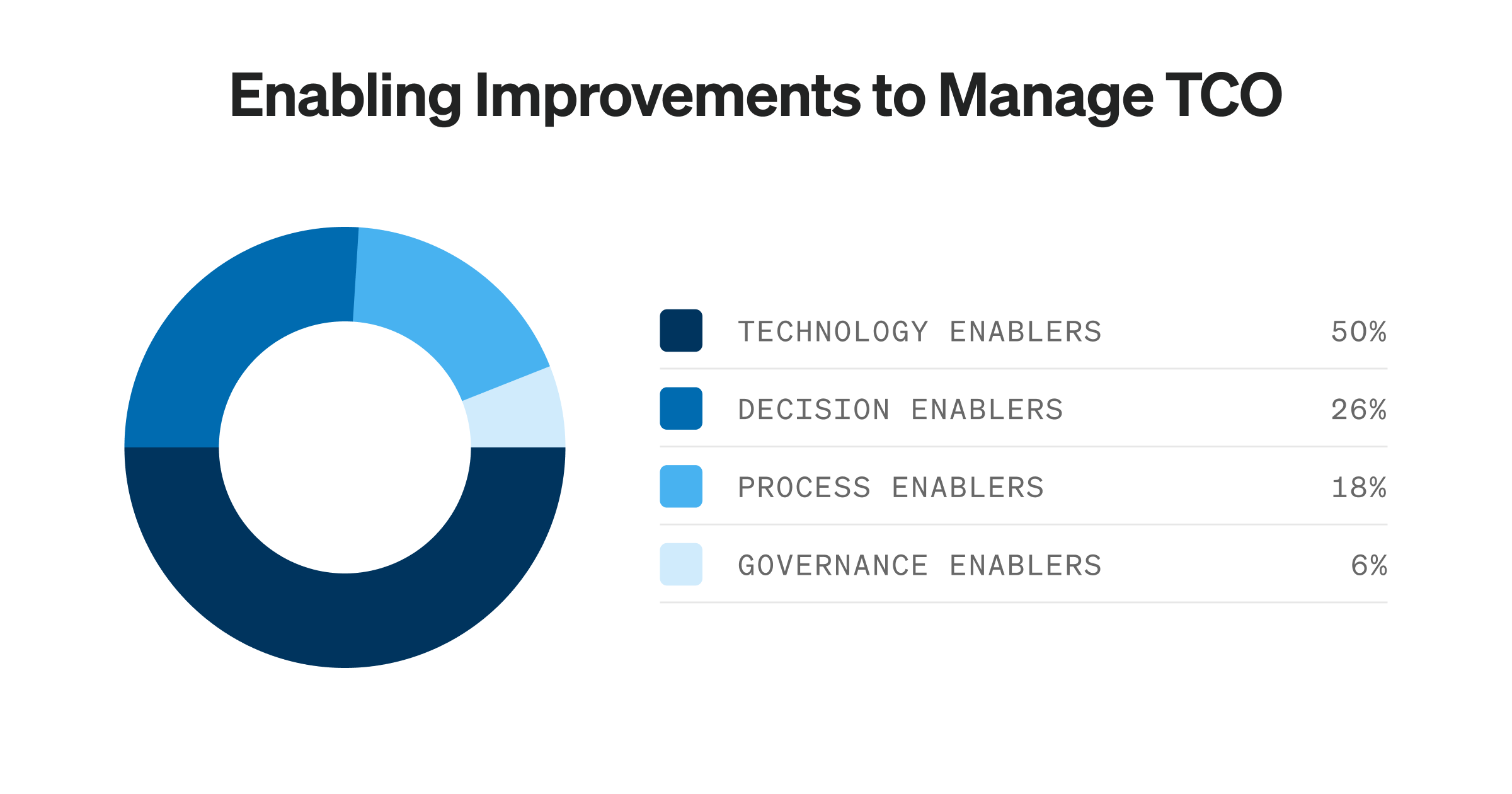
A quarterly report can show that an asset became expensive over the previous three months. By then, the fleet may have already approved another repair, absorbed additional downtime or kept an inefficient vehicle in service.
The useful window for cost data is often much shorter.
If a major repair pushes an aging asset past an acceptable cost threshold, that's when its maintenance history, utilization and other expenses are most useful.
Fuel shows what better-connected cost tracking can look like
Fuel is further along than many other fleet cost categories, but the survey still found gaps.
Thirty-five percent of fleets use fuel card reports to track and reconcile fuel spend, while 34% track it manually. Only 28% integrate fuel card data with telematics or a fleet management system and 5% reported having a formal reconciliation process.
At the same time, fleets have considerable confidence in their fuel metrics. Sixty-eight percent said they were very or extremely confident that their reported MPG reflected true fuel consumption. Another 25% were moderately confident.
That confidence is most useful when the underlying transactions can be checked against vehicle and odometer data.
A fuel purchase assigned to the wrong asset can distort MPG. A missing odometer reading can do the same. Connecting the records makes it easier to spot those discrepancies before they become part of a TCO report.
The same principle applies to maintenance, utilization and other operating expenses.
Is your fleet rollin’ on a budget?
Get the expert tips you need to keep your expenses in check and build a budget that drives success.
Download the guide
Put TCO closer to the decisions it should inform
TCO earns its keep when fleet managers can use it to decide whether to repair or replace an asset, investigate an unexpected increase in operating cost or show finance where the fleet budget is going.
That requires more than a calculation.
Cost records need to connect back to the assets and activity that created them. They need to stay current enough to catch changes while there's still time to respond. And the numbers need to be reliable enough that fleet managers can use them with confidence.

Senior Copywriter
Tyler Freeland is a Senior Copywriter at Fleetio. A former creative writer for Freightliner and Western Star, he now transforms complex (and sometimes common) fleet management topics into practical, engaging insights that fleet professionals can apply every day.
LinkedIn|View articles by Tyler FreelandReady to get started?
Join thousands of satisfied customers using Fleetio
Questions? Call us at 1-800-975-5304