Government Fleet Management: 6 Ways to Boost Efficiency and Cut Costs in 2026
Government fleet managers are under more pressure than ever. Tighter budgets, zero-emission mandates, stricter compliance requirements, and a widening talent gap are forcing agencies to rethink how they operate — and what tools they use to do it.
Dec 15, 2022 | Updated: May 21, 2026
10 min read
Key takeaways from this guide
-
Government fleets need to modernize outdated systems: Many public-sector fleets still rely on paper and spreadsheets, which create inefficiencies, data gaps and increased downtime. Transitioning to digital fleet management is critical to improve visibility and accountability.
-
Preventive maintenance and inspections drive reliability: Consistent PM schedules and digital inspection processes help prevent costly repairs and extend asset lifespans. Automating service reminders and enabling mobile inspections empower teams to stay proactive rather than reactive.
-
Data insights unlock smarter operations: Leveraging telematics, utilization data and total cost of ownership (TCO) metrics gives managers the clarity to optimize asset lifecycles and replacement plans. Real-time data turns guesswork into measurable performance improvements.
-
Reporting transforms accountability and transparency: Automated fleet reports allow government agencies to track KPIs, share insights with leadership and ensure compliance with fiscal oversight. This transparency supports better decision-making and budget allocation.
The technology has kept pace. Digital fleet management platforms, AI-assisted maintenance scheduling, and integrated telematics give public fleet managers the data they need to act faster and spend smarter. The challenge is putting them to work.
Here's what that looks like in practice.
What is Government Fleet Management?
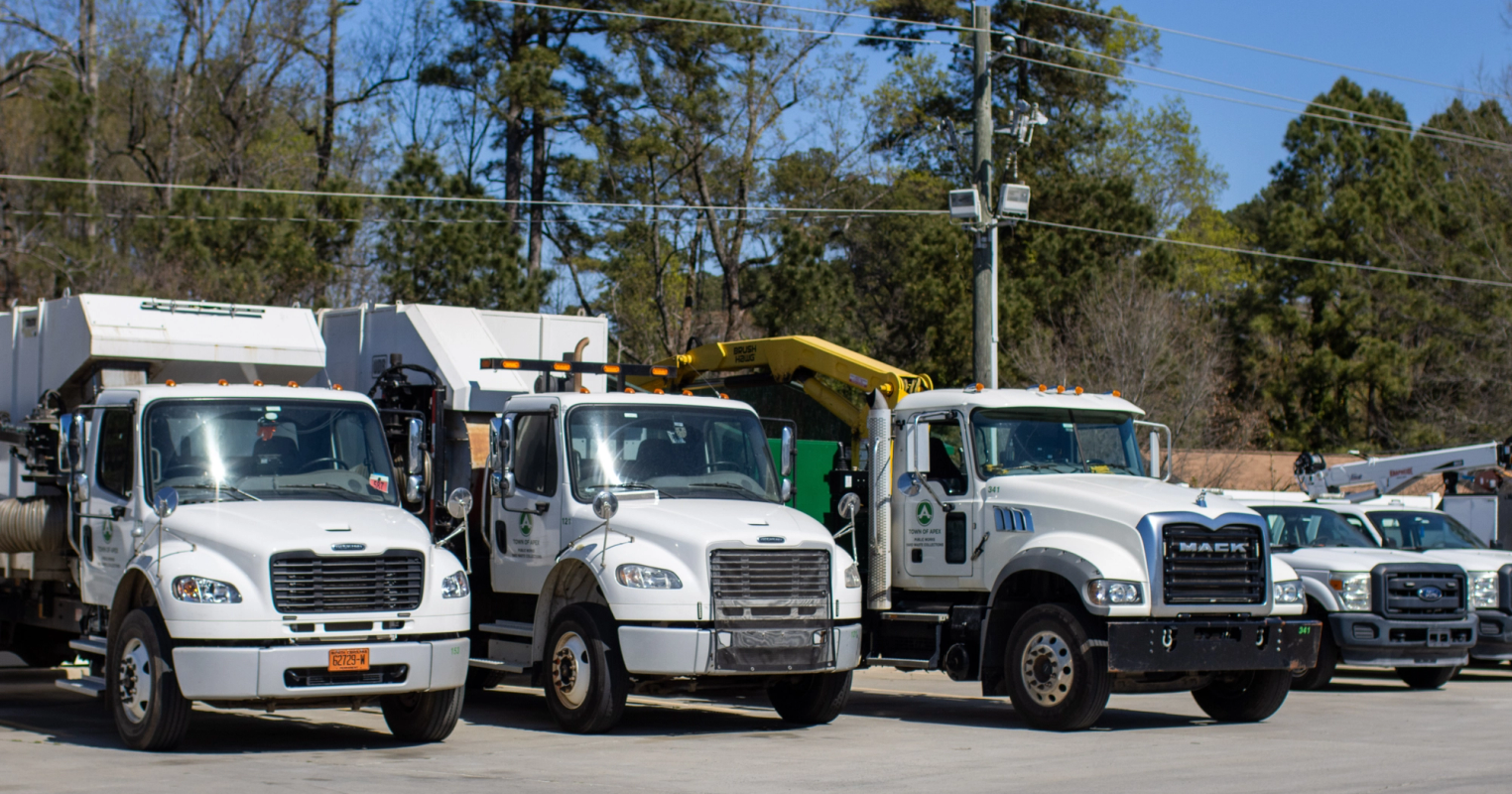
Government fleet management covers the oversight of public-sector assets and their operators — from municipal trucks and police vehicles to heavy equipment and utility assets. The goal is to keep those assets safe, compliant, and running efficiently, all within the constraints of grant, capital, or expense funding.
Despite how much the technology has matured, many public agencies still rely on paper-based processes or disconnected spreadsheets to track maintenance, inspections, and spend. These manual approaches create data gaps, slow down decision-making, and often lead to costly unplanned repairs that a preventive schedule would have caught months earlier.
According to our 2026 State of Fleet Management report — which surveyed over 600 fleet professionals across North America, including government operations — the fleets that consistently outperform their peers share one characteristic: disciplined, data-backed processes. Not necessarily the biggest budgets or the newest assets. The discipline to execute.
Below are six ways government fleet managers are closing that gap right now.
6 Ways to Improve Government Fleet Management
Many government fleet managers are leveraging digital fleet solutions to manage in-house municipal truck maintenance and maintenance for other assets, track vehicles and analyze expenses. An integrated solution, like a fleet optimization platform (cough cough Fleetio cough cough) offers a central location for all fleet data, and automates workflows, allowing fleet managers to focus time on improving operations.
1. Use digital tools to manage preventive maintenance
Maintenance is one of the largest ongoing cost drivers in any fleet. Keeping assets on the road longer — and avoiding the expense of reactive repairs — comes down to staying ahead of your preventive maintenance (PM) schedule.
That's harder to do than it sounds when you're managing a large, diverse inventory of assets across multiple departments or sites. Manual tracking methods break down quickly: service intervals get missed, technicians get overwhelmed with unplanned work, and costs climb.
Digital fleet management platforms solve this by automating service reminders based on odometer readings, engine hours, or time intervals. When it's time for a PM, the system flags it — no chasing down drivers for mileage updates, no relying on memory. Your team stays focused on executing the work instead of tracking it down.
Our 2026 Fleet Benchmark Report has some data worth noting here: cost per mile rises dramatically as assets age, jumping from $0.06 for assets 0–5 years old to $1.10 for assets over 10 years. A consistent PM program is one of the most direct ways to slow that curve.
2. Build a stronger inspection process
Your maintenance program is only as good as the inspection process feeding it. If drivers aren't surfacing issues early, small problems become expensive repairs — and expensive repairs become unplanned downtime.
Daily Vehicle Inspection Reports (DVIRs) are a foundational part of any government fleet's safety and compliance posture. Digital inspection tools make this process faster and more thorough. Drivers complete inspections from a mobile device, with fields customized to each asset type. They can attach photos and comments directly to the report, giving your maintenance team the context they need to triage issues accurately.
From a fleet manager's perspective, the shift from paper to digital inspections is less about the format and more about the speed of response. Instead of waiting for a stack of paper forms to reach your desk, you're notified the moment a failure is flagged — and that issue flows directly into a work order, ready for your team to act on.
3. Make your telematics data work harder
Many government fleets operate across large geographic areas, often with assets spread across multiple departments, shifts, and locations. Keeping track of where assets are — and how they're being used — requires more than check-in calls and paper logs.
Telematics devices give you continuous visibility. They track location, monitor driver behavior, capture fuel usage, and send diagnostic trouble code (DTC) alerts when something needs attention. Paired with a fleet management platform, that data flows automatically: odometer readings sync, service reminders update, and fault codes get logged without anyone manually entering a thing.
According to Verizon Connect's 2026 Fleet Technology Trends Report, AI-powered fleet technology is increasingly moving from data collection toward turning insight into action — and telematics integration is the foundation that makes that possible. The fleets seeing the most value aren't just collecting the data; they're acting on it faster.
For government operations specifically, real-time fault alerts and engine diagnostics can mean the difference between pulling an asset before it fails and dealing with a roadside breakdown that takes a service vehicle out of rotation for days.
Connect all your sites, so your fleet runs as one
When every site is connected, operations run smoothly, assets move, teams align and your multi-site fleet runs as one. Start driving results across every location.
Get your fleet in sync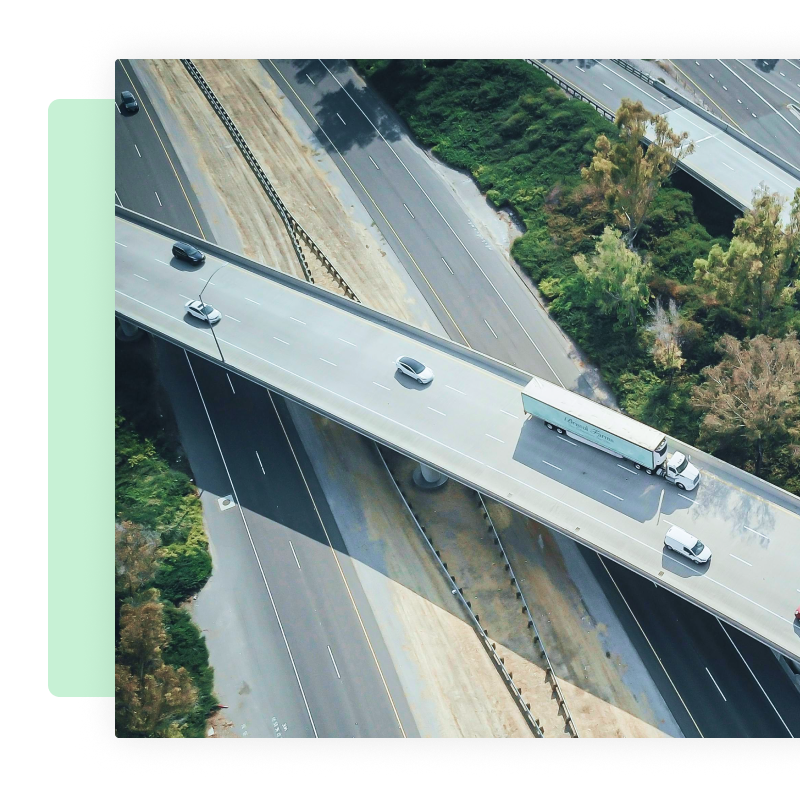
4. Improve asset utilization and replacement planning
Government fleet assets — emergency vehicles, specialized equipment, utility trucks — are among the most expensive in any fleet sector, and they're often held longer than their commercial counterparts because replacement budgets are constrained.
That makes utilization data essential. If an asset sits unused 70% of the time, it's tying up budget that could be allocated elsewhere. If a critical asset is chronically overworked, you're likely accelerating wear and shortening its usable life.
Fleet management platforms automatically track meters and mileage, giving you a clear picture of how each asset is being used. Over time, that data builds a foundation for defensible replacement planning — something government fleet managers increasingly need when presenting budget requests to finance departments and elected officials.
In 2026, sustainability mandates are adding another dimension to replacement planning. California's Advanced Clean Fleets rule, for example, requires zero-emission asset adoption beginning this year, and similar initiatives are being tracked at the federal level. Utilization data helps fleet managers make the case for the right assets at the right time — whether that's a traditional replacement or the beginning of an electrification plan.
5. Know your true total cost of ownership
Every government fleet manager knows they're accountable to tight budgets. But accountability is hard to demonstrate without clear cost visibility — and total cost of ownership (TCO) is the most complete picture of what your fleet actually costs to operate.
TCO goes beyond purchase price. It includes fuel, maintenance, repairs, inspections, downtime, and disposal value. Calculating it manually for dozens or hundreds of assets is time-consuming and error-prone. Digital fleet platforms do the math automatically, pulling from all the activity recorded in the system to give you both a fleet-wide view and an asset-by-asset breakdown.
That granularity matters when you're trying to understand whether a specific asset is worth keeping in service or whether it's reached the point where repair costs consistently outpace its value. It also matters when you're comparing the long-term cost profile of conventional assets against EVs — a conversation more government fleet managers are having as electrification timelines come into focus.
A 2025 study by Qmerit found that 64% of fleet professionals now operate EVs, with 87% planning to electrify within the next five years. For government fleets evaluating that transition, TCO data is the foundation for making those decisions with confidence rather than guesswork.
6. Report the metrics that matter
Fleet managers generate a lot of data. The challenge is turning it into something useful for the people who need to act on it — whether that's your maintenance team, your department director, or a city council with budget authority.
Digital fleet platforms automate reporting on the metrics that matter most: maintenance costs, asset utilization, PM compliance rates, inspection outcomes, and fuel spend. Reports are downloadable, shareable, and schedulable — meaning your leadership team can receive a regular fleet performance update without you having to build it from scratch each time.
For public-sector operations, this kind of transparency is particularly valuable. Budget decisions require documentation. Capital requests require data. Demonstrating the ROI of a fleet management platform — or making the case for a replacement cycle — is a lot easier when the numbers are already compiled and formatted.
Automated reporting also supports accountability across your team. When technicians know that PM completion rates, inspection pass rates, and work order closure times are being tracked and reported, the data tends to improve.
Built to serve those who serve
Our GSA-approved platform helps government fleets cut costs, gain visibility, extend asset life and reduce admin hours. See how you can better your fleet to better serve your community.
Go further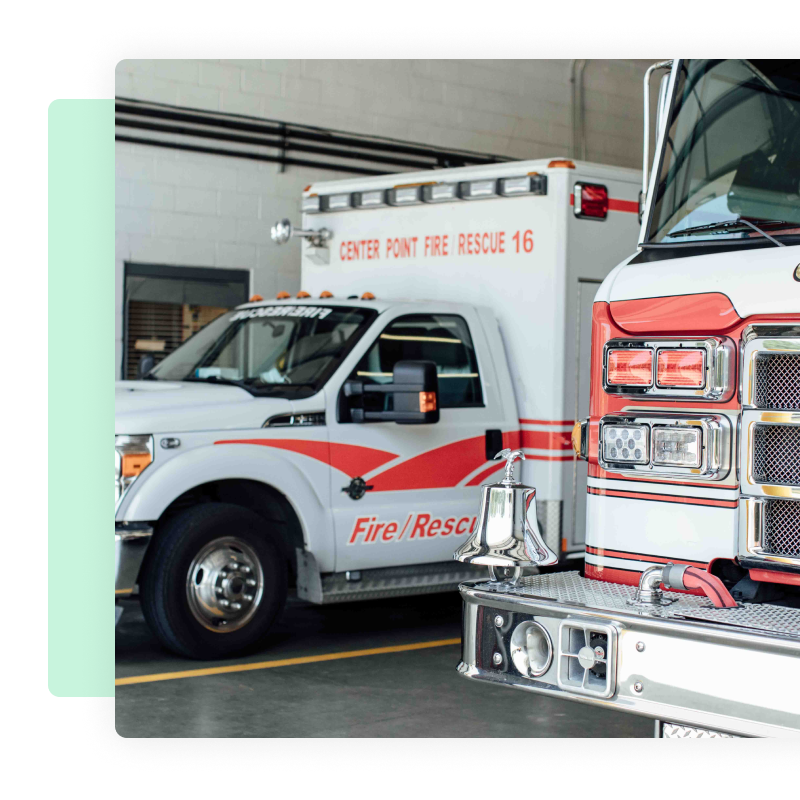
What to expect from government fleet management in 2026
A few themes are shaping how forward-thinking government fleet managers are approaching the year ahead:
AI is becoming part of the workflow. According to Verizon Connect's 2026 Fleet Technology Trends Report, 53.3% of fleets are actively researching or piloting AI capabilities. For government fleets, this shows up most practically in predictive maintenance — using vehicle health signals and historical service data to flag issues before they become failures.
EV planning is moving from conversation to action. Whether your agency is responding to state-level mandates or working toward internal sustainability goals, the question of when to electrify is becoming more pressing than whether to. Fleet platforms that track TCO and utilization by asset make that planning process more manageable.
Multi-site visibility is a growing priority. Many government fleets operate across departments, facilities, or jurisdictions. Platforms that connect those sites — giving managers a single view of all assets, regardless of where they're stationed — reduce the coordination overhead that slows response times and inflates costs.
Getting started
The most common obstacle government fleet managers describe isn't a lack of interest in better tools — it's uncertainty about where to start, especially when budgets are tight and staff capacity is limited.
The practical answer: start with the data you already have. A fleet management platform like Fleetio helps you build a foundation by centralizing your asset records, automating service reminders, and making inspection data actionable — without requiring a large implementation lift.
From there, you build. Telematics integration, cost reporting, utilization analysis — each layer adds visibility and helps you make a stronger case for your budget, your replacement plan, and your team.
Government fleet managers serve communities that depend on vehicles showing up and doing their jobs. The teams that make that happen most consistently aren't the ones with the most resources. They're the ones with the most disciplined processes — and the data to back them up.
Ready to see how Fleetio works for government fleets? Our GSA-approved platform is built for the accountability and visibility public-sector operations require. Learn more about Fleetio for government fleets.
FAQ

Content Marketing Specialist
Laura Flowers is the Content Marketing Specialist at Fleetio. When she’s not blogging, you can find her reading on the couch with her cat or in the studio tap dancing.
LinkedIn
Senior Fleet Content Specialist
As a Senior Fleet Content Specialist at Fleetio, Rachael Plant uses her near decade of industry experience to craft practical content aimed at helping fleet professionals tackle everyday challenges with confidence.
LinkedIn|View articles by Rachael PlantReady to get started?
Join thousands of satisfied customers using Fleetio
Questions? Call us at 1-800-975-5304