Small Fleet SOPs: Simple Playbooks for Uptime and Cost Control
If your team is lean and time is tight, guesswork kills momentum, SOPs can turn daily tasks into clear steps your crew can follow fast. The result is fewer surprises, more uptime and a process your team actually follows.
Oct 28, 2025
8 min read

Key takeaways from this guide
-
Standardize to reduce downtime: SOPs shrink variation across inspections, approvals, repairs and recordkeeping so small teams keep vehicles road-ready and avoid repeat work.
-
Turn steps into workflows, not PDFs: Replace static docs with digital checklists, rules, assignments and required fields so the right process is the easiest one to follow.
-
Prioritize uptime with tight loops: Use PM plans, mobile inspections that auto-create defects, one-tap work orders, and visible queues to catch issues early and move repairs fast.
-
Instrument everything to control costs: Capture labor, parts, fuel, odometer and sensor data with standard codes and track KPIs like uptime, time to repair, PM on-time rate and cost per unit to plan instead of react.
-
Roll out narrowly, then scale in one system: Start with a high-impact flow, template it, automate notifications and pilot for two weeks before expanding; Fleetio unifies digital inspections, work orders, parts, telematics and dashboards so SOPs live where work happens and compliance becomes automatic.
When your team is small and everyone wears more than one hat, consistency beats heroics. You don’t have time to chase paperwork, re-enter data or debate who owns the next step. Standard operating procedures (SOPs) give your crew a shared way to handle inspections, approvals, repairs and recordkeeping so vehicles stay road-ready and costs don’t drift. The key isn’t just writing the steps — it’s turning them into simple, repeatable workflows your team can follow without thinking.
SOPs help you capture the same details every time, which means you can compare performance across jobs and spot patterns faster. That makes decisions easier, not heavier. And once your steps live in the same system where people already work, fleet compliance becomes a byproduct of doing the job the right way.
Why SOPs matter when resources are tight
Inconsistent steps create downtime. If every tech does it a little differently, PMs get missed, defects slip and the same unit comes back for repeat work. SOPs shrink the variation that steals time from a small crew.
Docs alone won’t change behavior. A PDF on a shared drive won’t help when the day gets busy. You need digital checklists, rules and auto-assignments that guide each task as it happens.
Clean data pays off. When inspections, parts and labor are captured the same way, you can see high-cost units, repeat issues and overdue services at a glance. That clarity helps you plan, not react.
Goals when building fleet SOPs
When you're building out fleet SOPs, there's three primary goals you want to keep in mind that can help guide your process and produce the best outcomes.
1. Keep vehicles in service
Your SOPs should surface issues early and move repairs fast.
Lock in the basics
- PM plans by asset type with automatic reminders
- Mobile inspections with pass/fail rules and photo proof
- Defects that convert to work orders in one tap
- Parts attached to each job so consumption updates as work happens
Make it visible
- Dashboards that highlight overdue PM, open defects and units down for repair
- A simple view of labor, parts and vendor status on every work order
Why it works
Preventive work happens on time, repeat failures get flagged and repair cycles shrink. The same steps every time help a small team avoid last-minute scrambles and unnecessary downtime.
2. Make the right process the easy process
SOPs should remove manual steps, not add more.
Lock in the basics
- Templates for inspections, PM and work orders
- Approval rules that route requests to the right person
- Required fields for warranty checks, reason codes and compliance notes
- Assignment SOPs so you always know who had what and when
Make it automatic
- Notifications that fire when a unit fails inspection or a job crosses a threshold
- Rules that open a work order from a failed item and prefill labor or parts
Why it works
When the path is short and obvious, busy teams follow it. You stop chasing signatures, checking spreadsheets or asking for photos after the fact.
3. See and control every dollar
Turn everyday activity into consistent, comparable data.
Lock in the basics
- Standard cost codes for labor, parts and outside service
- Fuel, odometer and sensor data flowing into one system
- Closeout steps that capture totals, notes and warranty status
Make it actionable
- Reports that rank high-cost units and repeat repairs
- Budget alerts that flag overages before they snowball
Why it works
Clean, consistent data lets you trim waste, justify replacements and forecast needs with confidence.
Manage every move your fleet makes — all in one platform
Stay on top of maintenance, compliance and costs with workflows that work for your whole team — no silos, no separate systems.
Let’s get after it
How to Build an Effective Fleet SOP
When you’re building standard operating procedures for your fleet, start with clarity and structure. A great SOP makes it easy for anyone on your team to do the right thing, the same way, every time.
Elements of a strong SOP
A well-designed SOP balances consistency with flexibility. Use these key elements to ensure it’s actionable:
- Purpose: The problem this SOP solves
- Scope: Assets, people and locations it covers
- Owner: Role responsible for updates
- Trigger: Event that starts the process
- Steps: Numbered list with who, what and proof
- Exceptions: When to escalate or break glass
- Metrics: 2–3 KPIs tied to uptime, process or cost
- Tools: Forms, checklists, dashboards and reports
A 5-step plan to write SOPs fast
You don’t need to write a playbook for every process overnight. Start small and build momentum.
- Identify your friction points: Look for moments that cause downtime or confusion — like missed PMs, incomplete inspections, or unclear approvals. Target the workflows that slow you down the most.
- Select one high-impact process: Begin with a core flow (such as inspections → defects → work orders → closeout). Show results fast and build buy-in before scaling.
- Map the path clearly: Document who does what, in which tool, and what proof is required. Use visuals, not paragraphs. Keep it simple enough to review in one meeting.
- Digitize and automate: Turn your steps into mobile checklists, notifications, and required fields. Make the right process the easiest one to follow.
- Pilot and measure: Run the SOP for two weeks. Track metrics like time to repair, PM on-time rate, and first-pass inspection accuracy. Adjust fast and expand once it works.
Examples of what you can include
- Daily Vehicle Inspections (DVIRs): Drivers complete a mobile checklist; failed items automatically create defects and notify the shop lead.
- PM Services: Odometer readings trigger service reminders, with labor and parts prefilled from templates.
- Parts & Inventory: Techs scan parts to each job so stock levels and costs update automatically.
- Assignments: Every vehicle hand-off requires a condition check and photo for accountability.
Each process is short, digital and built to run in real time — no separate spreadsheets or after-the-fact recordkeeping.
What to track after rollout
Once your SOPs are live, use performance metrics to show progress and guide adjustments. Tracking the same data week over week helps your team see what’s working — and where processes need tightening.
- Uptime: Measure the percentage of assets available for service. A rising trend means your preventive maintenance program is paying off.
- Time to Repair: Track how long it takes to close defects from creation to completion. The faster this number drops, the smoother your workflow.
- PM On-Time Rate: Monitor how many preventive jobs are completed before their due date. A high rate signals consistent, proactive maintenance.
- Repeat Repairs: Watch for units that return for the same issue. A decreasing trend points to better root-cause fixes and quality control.
- Cost per Unit: Review month-over-month maintenance costs by vehicle class or location. Keeping this stable — or lowering it — shows your SOPs are driving efficiency.
Are you down with SOP?
Every fleet needs a standard. Get your DOT-Compliant Vehicle Inspection Form & SOP Pack to keep inspections complete, compliant and consistent every time.
Download for free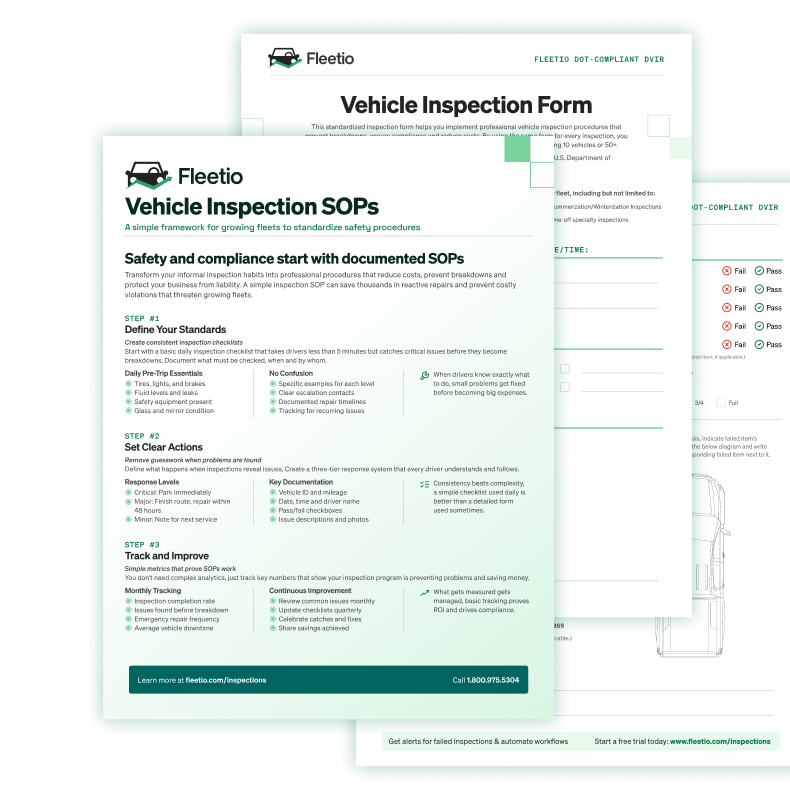
Make SOPs stick with a platform
SOPs work best when they live in the tools your team already uses. Digital inspections capture the same evidence every time. Digital work orders standardize service steps, track labor and parts and keep repair history accurate. When fuel, telematics and purchase data flow into the same place, you see the entire cost picture for each unit without re-keying numbers.
Centralized dashboards, like the ones you can find in Fleetio, give you one view of uptime, compliance and spend. You can compare location performance, coach where needed and plan maintenance before failures ripple into the schedule. That’s how a small team runs like a bigger one.
Rollout tips for small teams
- Start narrow. One workflow, one location, one owner. Prove the benefit, then expand.
- Train in the tool. Walk through the actual screens and checklists your team will use.
- Measure out loud. Share the dashboard during standup. Celebrate faster repairs and on-time PM.
- Keep it current. Retire steps that add friction and don’t move uptime, process or cost.
The payoff
SOPs aren’t red tape. They’re a way to keep vehicles moving, reduce busywork and protect your budget without adding headcount. When your playbook is short, digital and repeatable, people follow it. That’s how you turn lean teams into consistent performers — and how you get more done with the assets and people you already have.
Small business doesn’t mean small fleet
Fleetio gives growing teams enterprise-level control. See how you can maximize asset uptime, automate maintenance and turn data into confident decisions.
Catch a demo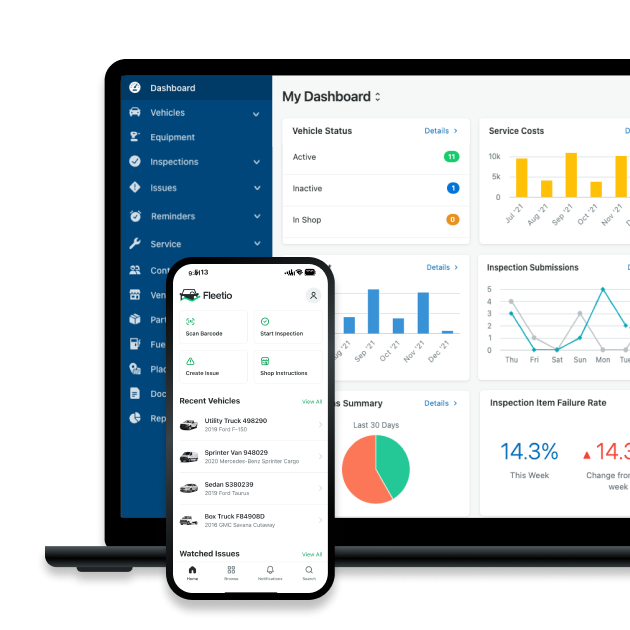

Senior Fleet Content Specialist
As a Senior Fleet Content Specialist at Fleetio, Peyton explores the voices and experiences that shape fleet operations. She focuses on how fleet professionals adopt technology, improve efficiency and lead their teams to bring clarity and context to the challenges happening across the industry.
View articles by Peyton Panik
Director of Fleet Content, Fleetio
Zach Searcy is the Director of Content at Fleetio with more than 5 years of experience in the automotive and fleet industries. His content creation days started in middle school when he and his friends began filming lightsaber battles to upload to a new website: 'YouTube.'
LinkedIn|View articles by Zach SearcyReady to get started?
Join thousands of satisfied customers using Fleetio
Questions? Call us at 1-800-975-5304