Fleet Procurement: What It Is and How to Build a Strategy
A vehicle's purchase price is the smallest part of what it costs your fleet. A procurement strategy is how you make the buying decision with fuel, maintenance, insurance and resale value already accounted for.
Jun 25, 2021 | Updated: Sep 22, 2026
7 min read

What you need to know
- Look beyond purchase price: A strong fleet procurement strategy accounts for total cost of ownership, including depreciation, fuel, insurance, maintenance, downtime and resale value.
- Build specs around real operational needs: Driver feedback, duty cycles, vehicle purpose, powertrain and upfitting requirements should shape purchasing decisions before an order is placed.
- Use data to improve every procurement cycle: Evaluating suppliers and tracking fuel economy, repairs, downtime and cost per mile helps fleets make more informed purchasing and replacement decisions over time.
The purchase price of a truck is the smallest number you will deal with over its life. Fuel, maintenance, insurance, downtime and resale value account for most of the spend, and every one of them is shaped by decisions made before the order is signed. Procurement is where those decisions happen.
What Is Fleet Procurement
Fleet procurement is the process of sourcing and acquiring the vehicles, equipment and services a fleet needs to operate. It starts when you identify a need and ends when the asset is in service, covering spec'ing, supplier evaluation, negotiation, financing and delivery along the way.
The common mistake is treating the vehicle purchase as the finish line. Procurement also covers tires, upfitting, fuel programs, telematics hardware, replacement parts, insurance and service contracts. A fleet that negotiates hard on a chassis and then pays list price on tires and upfits for the next eight years has only done part of the job.
Two related decisions get folded into procurement and are worth separating:
- Acquisition is the transaction itself, including the order, the financing terms and delivery.
- Replacement is the decision about when an existing asset leaves the fleet.
Procurement is the planning layer that feeds both. It is also the only one of the three you can run on a schedule instead of in reaction to a breakdown.
Buy, lease or a mix
Ownership model belongs in the strategy, not in a conversation with the dealer at the end of it. Buying gives you the asset at the end of the term and no mileage restrictions, which matters for high-utilization fleets and specialized upfits you cannot easily hand back. Leasing keeps capital free and makes cycling more predictable, which suits fleets that replace on a tight schedule or run standard configurations.
Many fleets run both, buying the specialized assets they will keep for a decade and leasing the light-duty vehicles they cycle every three to four years.
Step 1: Get Input From Your Drivers
Your drivers use the equipment every day, which makes them the closest thing you have to field data on what works. Give them a way to provide open and honest feedback, knowing they are the people a bad purchase affects most.
Ask open-ended questions to build the profile for a new vehicle:
- What do you like about the current vehicle? What do you dislike?
- What would allow you to do your job better?
- What would be nice to have but is not required?
Bringing drivers in early also gives you cover later. When a spec decision gets questioned, you can point to the operators who asked for it.
Step 2: Assess Your Fleet's Needs
After talking to your drivers, identify the biggest gaps in the current fleet. Factors to consider when building the profile of a new vehicle:
- Purpose of vehicle, such as transportation, freight or maintenance
- Type of vehicle, such as van, pickup truck or box truck
- Style of vehicle, including cab configuration, bed length and body length
- Quantity, based on whether your current fleet size lets you cover the work efficiently
- Powertrain, including whether gas, diesel, hybrid or electric fits your duty cycles and charging access
Buy smarter, spend less and get more out of your budget
Making the right fleet purchases starts with the right strategy. With Fleetio, you can track costs, compare vendors and manage procurement all in one place. Try it out for free today and see how it all works!
Test it on your fleet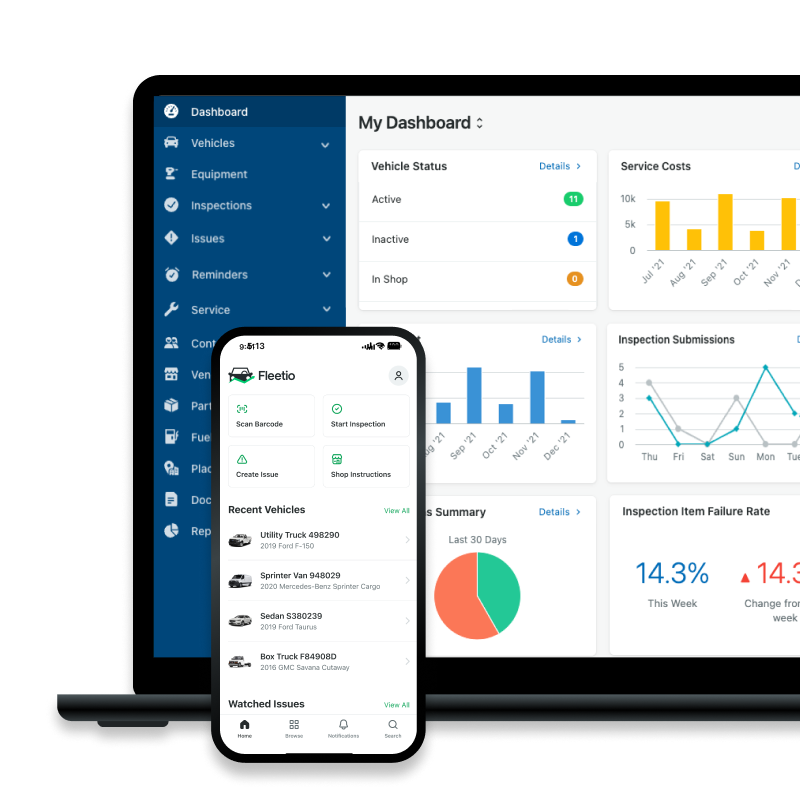
If a vehicle needs to be specially outfitted for a job, decide that now rather than after delivery. Ordering an already-outfitted truck or sending a new unit straight to the upfitter keeps it from sitting idle while you sort out equipment.
Then look closely at the vehicles you already run. Inspecting your current assets tells you where wear concentrates, which features go unused and which ones drivers work around.
Example: The floorboard of a truck is littered with empty water bottles. If you add a water cooler rack to your checklist for future trucks and provide refillable water bottles, you can provide your team with an additional amenity and reduce waste on the job site.
Step 3: Calculate Total Cost of Ownership
Once you know the spec and have narrowed the field to a few options, calculate the TCO of each vehicle before comparing sticker prices.
Some costs are fixed no matter which unit you choose, including taxes, licensing and permits. Four vary enough by vehicle to change the ranking of your options.
-
Depreciation is usually the largest single cost of ownership and the one buyers underweight. Resale value varies widely by make, model and configuration, so two trucks with similar purchase prices can differ substantially at disposal. Deciding new versus used belongs here too: a new vehicle typically needs less early maintenance, while a used one has already absorbed its steepest depreciation.
-
Fuel is treated as a fixed cost more often than it should be. Comparing rated efficiency against your actual duty cycles, not the window sticker, gives you a usable number. If you have not evaluated EV options recently, it is worth reviewing today's best electric vehicles for fleets against your routes and charging access.
-
Insurance rating variables are largely outside your control, but vehicle choice is not. Premiums differ by make, model and safety equipment, so request quotes on your shortlist before you commit rather than after. Existing providers often reward loyalty, though quoting the shortlist elsewhere tells you whether that reward is real.
-
Maintenance and parts availability separates similar-looking options. Parts lead times, warranty coverage and how far the nearest qualified shop sits from your routes all show up as downtime later.
Replacement and disposal sit on the other end of the same equation. To help pin down the right timing, use our free vehicle replacement calculator.
Don’t let hidden fleet costs hit your bottom line
Hidden expenses, unexpected maintenance and poor cost tracking can quickly eat away at your profits. Learn how to calculate and control your fleet’s true total cost of ownership before it impacts your business.
Download now
Step 4: Choose the Right Suppliers
The work in the first three steps loses most of its value if you buy from someone who cannot deliver. Research each provider with the assumption that you will be working with them for years, because sourcing, parts and warranty support tend to stay with the original relationship.
A few things worth checking before you commit:
- Allocation history, meaning whether they have delivered on order commitments during tight supply years
- Parts and service network coverage near your operating areas
- Willingness to put lead times and escalation paths in writing
- References from fleets of similar size and duty cycle
Word-of-mouth still does most of the work here. Reach out to your industry contacts, since most people will share both the providers who treated them well and the ones who did not.
Step 5: Track What You Buy
The best vehicle for your fleet today will not be the best one in five years, and the only way to know when that changes is to have the data. Fuel economy, repair frequency, downtime and cost per mile are what turn the next procurement cycle into an evidence-based decision instead of a repeat of the last one.
Adding your existing vehicles to a fleet management software platform like Fleetio gives you the cost history behind every line in your TCO model, which is the same data you will use to negotiate the next order.
What does fleet procurement include
Needing real-time fleet data to support your vehicle management decisions? Start a free trial of Fleetio or request a demo today!
Fleet Procurement FAQs

Director of Fleet Content, Fleetio
Zach Searcy is the Director of Content at Fleetio with more than 5 years of experience in the automotive and fleet industries. His content creation days started in middle school when he and his friends began filming lightsaber battles to upload to a new website: 'YouTube.'
LinkedIn|View articles by Zach Searcy
Senior Copywriter
Tyler Freeland is a Senior Copywriter at Fleetio. A former creative writer for Freightliner and Western Star, he now transforms complex (and sometimes common) fleet management topics into practical, engaging insights that fleet professionals can apply every day.
LinkedIn|View articles by Tyler FreelandReady to get started?
Join thousands of satisfied customers using Fleetio
Questions? Call us at 1-800-975-5304