How to Build Predictive Maintenance That Reduces Downtime
Predictive maintenance is the practice of using asset data to identify potential failures before they happen. Instead of waiting for equipment to break or servicing assets on a fixed schedule, teams use condition indicators, fault codes and performance trends to determine when maintenance is actually needed.
Jun 23, 2026
15 min read

What you need to know about predictive maintenance
- Predictive maintenance isn't always AI: Predictive maintenance doesn't have to start with machine learning models or advanced sensors. Many fleets use maintenance history, failure trends and usage data to identify issues before they become costly breakdowns and unplanned downtime.
- Execution drives results: The biggest challenge isn't predicting failures — it's making sure alerts, inspections and fault codes turn into scheduled work. Even the most sophisticated predictive systems fail when recommendations never leave the dashboard.
- Foundation comes first: Accurate maintenance records, automated workflows and strong preventive maintenance compliance create the foundation for predictive maintenance success. Fleets that can consistently act on maintenance signals are better positioned to realize ROI from more advanced predictive technologies.
Predictive maintenance has become one of the most talked-about concepts in fleet maintenance. Vendors promise earlier failure detection, smarter analytics and artificial intelligence that can identify problems before technicians ever pick up a wrench.
But most fleets don't struggle because they can't detect problems. They struggle because they can't consistently act on the information they already have.
A fault code that never becomes a work order. An inspection failure that sits unresolved. A dashboard full of alerts that technicians no longer trust. These execution gaps prevent fleets from realizing the value of predictive maintenance, regardless of how sophisticated the underlying technology may be.
The good news is that successful predictive maintenance doesn't always require machine learning models, digital twins or advanced sensor networks. In many cases, the biggest gains come from building reliable processes that turn signals into completed work. Here's how fleets can build predictive maintenance programs that actually reduce downtime.
How to Build Predictive Maintenance That Reduces Downtime
Predictive maintenance isn’t just about avoiding breakdowns. When implemented correctly, it can improve asset reliability, reduce unnecessary part replacements and create more controlled operating costs. And that’s just the start.
Predictive maintenance fails when alerts never turn into action. When work orders never see the light of day. The fleets that reduce disruptions and protect uptime on a consistent basis aren’t necessarily running more complex models or processes — they’re equipping their maintenance teams with systems that turn red lights into green lights, signals into completed work.
We've seen hundreds of fleets implement condition monitoring. And the ones seeing real ROI? They’re not the ones running more sophisticated detection models. They're the ones executing with consistency.
Teams are constantly investing in better sensors and smarter algorithms, because that's where most vendors tend to focus. Yet when you're already stretched thin, the promise of "knowing before it breaks" sounds a lot better than “knowing after the fact.
You've likely seen dashboards light up like fireworks on the 4th of July with alerts and condition scores. But the gap between "predicted equipment failures" and "completed repair" remains far and wide. Meanwhile, the maintenance backlog grows, technicians question whether the system actually works and leadership starts to ask when the investment will pay off.
What Is Predictive Maintenance?
Predictive maintenance is a practical way to use operational data to anticipate failures before they occur. Like we say around here all the time, “If it ain’t broke, prevent it”. The clues can come from all over your operation: sensor readings, fault codes, usage trends, inspection results and data from connected assets. The goal is to catch issues before they become disruptions, giving you time to schedule repairs, avoid unnecessary downtime and keep assets working as expected. At its core, predictive maintenance is about replacing “uh-oh” breakdowns with “ah-ha” decisions.
The difference between predictive, preventive and reactive maintenance:
| Maintenance Type | Trigger | Typical Outcome |
|---|---|---|
| Reactive | Asset fails | Unplanned downtime, emergency repairs, higher costs |
| Preventive | Time or usage interval (e.g., every 5,000 miles) | Scheduled work, but replaces components too early or too late |
| Predictive | Condition indicators suggest impending failure | Targeted intervention before failure, optimized part life |
Predictive maintenance means different things depending on your fleet.
For some operations, it means replacing alternators at 75,000 miles because failures start to occur around 80,000. For others, it's machine learning models analyzing vibration data, temperatures and operating conditions to detect problems in real time. Both are predictive maintenance.
The problem is that the fleet industry tends to treat predictive maintenance and artificial intelligence as interchangeable. They aren’t.
A fleet replacing brake components based on years of failure history is being predictive. A fleet that schedules starter replacements before winter because historical data shows failures spike in cold weather is being predictive. Neither approach is wrong. Neither requires a team of rocket scientists. Both can keep vehicles on the road and out of the shop.
Somewhere along the way, the conversation became obsessed with how accurately fleets can predict failure.
But prediction was never the hard part. It’s always been about execution.
We've seen organizations spend months evaluating sensors, analytics platforms and AI-powered monitoring tools. Meanwhile, the maintenance team is still struggling to clear the backlog in front of them. Technicians are juggling reactive repairs, PM schedules keep slipping, and assets continue to come into the shop with the same recurring issues.
That's why the most successful predictive maintenance programs aren't always running the most sophisticated detection models. They're the ones who consistently turn alerts into completed work.
Put the “pre” in preventive maintenance
Standardize PM intervals, automate service intervals and keep every asset on track with reminders your team can act on.
Check it out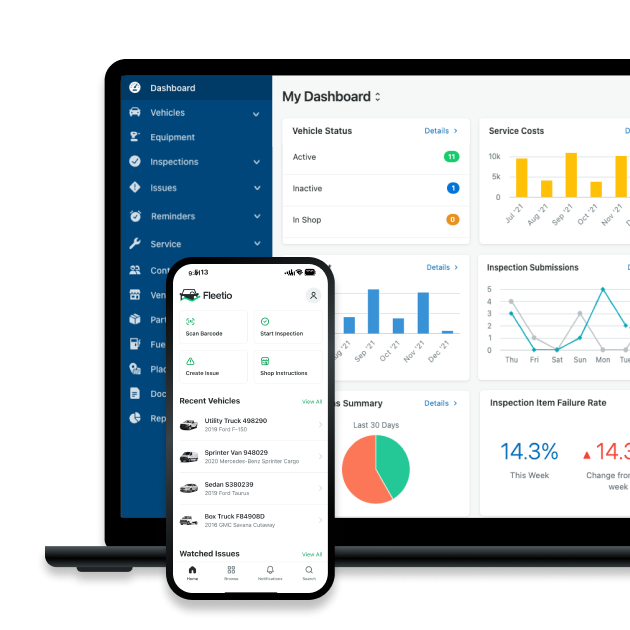
How Predictive Maintenance Works
Predictive maintenance requires three layers: data collection, analysis and triggering and workflow execution. The key is having them all work together. Most implementations over-invest in the first two while neglecting the third. That imbalance weakens the overall predictive maintenance strategy because detection without execution cannot reduce downtime.
Even advanced predictive analytics models fail when they aren’t tightly integrated with maintenance management workflows that convert alerts into action.
Data Collection
- Function: Gather operational signals from assets
- Common implementation: Telematics, IoT sensors, real-time data feeds, inspections, fault codes
- Typical failure point: Data exists but isn't centralized or trusted
Analysis and Triggering
- Function: Convert signals into actionable alerts
- Common implementation: Rule-based thresholds, trend detection, ML models
- Typical failure point: Alerts fire but lack context for prioritization based on asset criticality, operational impact or safety risk
Workflow Execution
- Function: Convert alerts into completed, tracked work
- Common implementation: Work order creation, parts allocation, technician assignment, cost capture
- Typical failure point: Signals die in dashboards; repairs happen but aren't recorded
The vendor conversation centers on layers one and two. AWS publishes reference architectures for sensor ingestion and anomaly detection. IBM announced Maximo condition monitoring capabilities in December 2024, emphasizing agentic AI that interprets asset data and recommends actions. Siemens continues pushing digital twins as the predictive accelerant.
These capabilities don't help when organizations can't reliably convert an alert into scheduled work with verified completion.
A telematics integration detects a fault code. The signal enters the system. Now what?
- Does someone see it?
- Does it create a trackable issue?
- Does that issue become a work order with parts and labor assigned?
- Is the completion recorded at actual costs?
- Does the resolution feed back into historical data for future pattern recognition?
If any link breaks, the prediction's value evaporates. Many integrations sync daily rather than in real time. While real-time data has value, it only improves outcomes when the surrounding workflow can respond immediately. That's often sufficient when the workflow layer is solid. An accurate alert that becomes a work order beats a real-time alert that sits in a dashboard.
Why Predictive Maintenance Delivers ROI
Predictive maintenance pays off when maintenance history informs decision-making. We've found that maintenance tracking reveals trends across your fleet, enabling you to optimize your predictive maintenance programs by proactively addressing potential issues. Seeing that alternators fail at a certain mileage lets you replace them in a controlled environment in the shop, rather than 2,000 miles later on the road.
Eliminating surprise repairs requires knowing which components fail at which intervals across your specific fleet, duty cycles and operating conditions. Without that visibility, teams default to reactive maintenance — responding only after failures occur and downtime has already begun. That knowledge comes from historical service records. Every avoided roadside failure or emergency repair directly reduces unplanned downtime and protects operational continuity.
Pro Tip
When teams can confidently schedule maintenance before failure, they reduce operational disruptions and protect asset uptime.
Reducing shop visits requires data that lets you batch related services. Addressing the transmission issue while the asset is already down for brake work. Batching requires visibility into upcoming needs, which in turn requires trusted records of what was done and when. Without that coordination, assets experience repeated downtime rather than a single controlled service window.
Without that visibility, maintenance costs rise due to repeated labor, expedited parts and unnecessary downtime.
Improving safety requires inspection results that trigger immediate action. A failed tire inspection at 7 AM should change an asset's status and create a work order before the driver finishes their route.
Extending asset lifespan and improving asset performance requires understanding how your assets actually perform, not just how the OEM expects them to perform. Your service history shows what actually happens to your assets, drivers, and operating conditions.
Avoiding compliance violations requires high on-time maintenance compliance. Most mature fleets target 95-98% completion rates. Predictive capabilities don't help if preventive maintenance is already slipping.
Maintenance history is the compounding asset that makes every future decision more accurate.
Why Predictive Maintenance Programs Stall
Most predictive maintenance solutions fail at workflow execution: alerts that never become completed work. A successful predictive maintenance strategy starts with operational discipline, not advanced algorithms.
Teams often blame data quality or model accuracy. "We need better sensors." "The algorithm generates too many false positives." "Our data isn't clean enough for machine learning."
These problems exist. But the more common failure is operational:
- Alerts fire, but nobody acts because there's no clear owner or escalation path
- Work orders get created, but not prioritized against competing demands
- Teams shift back into corrective maintenance mode, addressing the loudest failure instead of the most strategically important issue
- The repair gets done, yet no one records the maintenance code or resolution details, so the same problem recurs without pattern recognition
- Costs aren't captured, so maintenance costs can't be analyzed, ROI can't be measured, and leadership loses confidence
Practitioner communities reflect this skepticism. Reddit threads on predictive maintenance repeatedly steer conversations back to fundamentals: "Do your preventive maintenance first." Teams have seen dashboards light up with alerts while the maintenance backlog grows. They've observed sophisticated condition-monitoring systems generate noise that technicians learn to ignore.
Getting technicians to trust predictive systems presents its own challenges. Alert fatigue builds when systems cry wolf. A technician who has seen 10 "urgent" alerts that turned out to be sensor noise will start ignoring the 11th, even when it's legitimate. Building that trust requires consistent accuracy, clear explanations of why an alert matters and visible follow-through when technicians raise concerns about false positives. It also requires involving the maintenance team early, so technicians understand how predictions are generated and how they impact daily priorities.
Never miss a service interval again
Automate maintenance reminders, inspections and service schedules to keep vehicles on the road and reduce costly downtime.
Start automating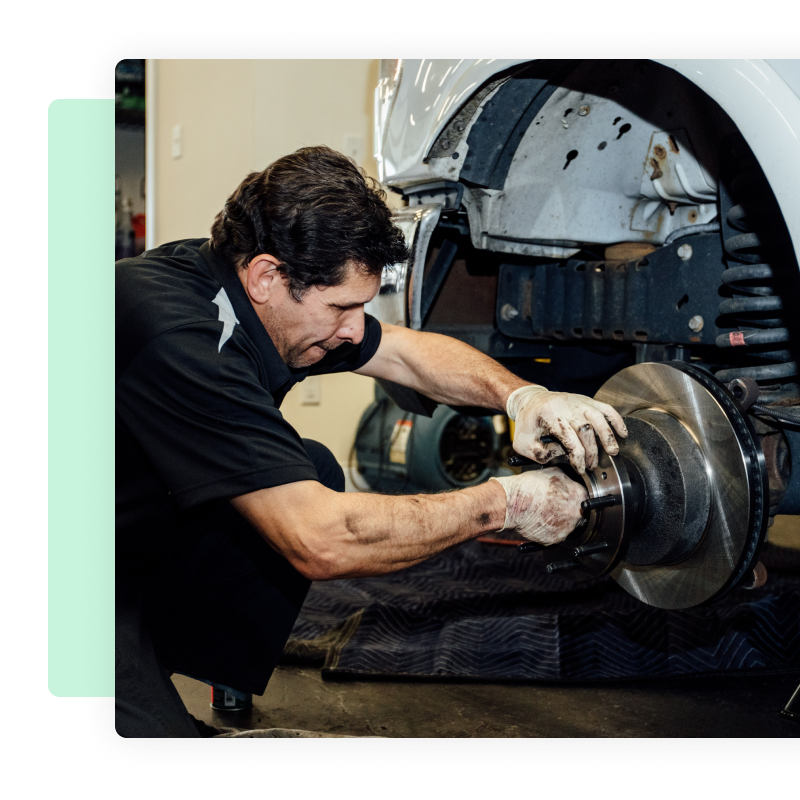
Predictions without closed-loop processes become alert noise that technicians learn to ignore. When alerts are ignored, the risk of downtime increases because early warning signals never translate into preventive action. The complete workflow runs from signal to issue to work order to completion to cost capture to feedback into history. If any step is manual, inconsistent, or missing, the loop breaks.
Consider two fleets: one reliably completes 95%+ of preventive maintenance on time, the other has advanced anomaly detection but a 70% completion rate. The first fleet can act on predictions. The second can't. High compliance creates the capacity to respond to predictive signals without letting routine maintenance slip.
How Fleet Operations Close the Loop
Fleets that convert predictions into outcomes have successfully automated the path from signal to scheduled work.
A driver submits an inspection with a failed item. In a closed-loop system, several things happen automatically:
| Step | What Happens | Why It Matters |
|---|---|---|
| Inspection submitted | Driver uses Fleetio Go mobile app with photos and comments | Creates a trackable record with context |
| Status changes | Asset moves from active to out-of-service automatically | Prevents unsafe operation without manual intervention |
| Issue created | Failed item generates an issue linked to the inspection | Maintains full context for the technician |
| Work order generated | Issue converts to a Digital Work Order with context attached | Enables informed repairs without re-explaining the problem |
| Repair completed | Technician sees what failed, reviews photos and completes the work | Improves repair quality with visual evidence |
| Costs captured | Parts inventory and labor time are recorded at completion | Enables ROI measurement and cost trending |
| Asset returns to service | Status changes back to active | Operations resume with a documented resolution |
| History updated | Service record informs future maintenance patterns and TCO analysis | Closes the learning loop |
This workflow minimizes manual data entry and alerts your team when issues arise with the vehicle. In mature operations, this level of automation is embedded directly into the organization’s maintenance management system rather than layered on as a separate analytics tool. This keeps signals from dying on a dashboard.
Turn data into direct action
Connect real-time vehicle data to maintenance workflows, improve visibility and make faster fleet decisions with integrated telematics.
Explore telematics
In practice, friction still may occur. Parts may not be in inventory, resulting in procurement delays. Multiple assets may require immediate attention, necessitating prioritization decisions. Technicians might disagree with automated priorities due to contextual factors that the system doesn't recognize. The value of automated workflows isn't in eliminating these decisions — it's in making them visible and trackable, rather than lost in manual handoffs and memory.
The same pattern applies to other predictive triggers. These use cases demonstrate that predictive maintenance isn’t just one system; it’s a repeatable operational pattern.
- Fault codes from telematics: Integrations with Geotab or Samsara pull DTCs into the maintenance management platform and create service reminders that help teams proactively schedule maintenance based on severity, location, and availability
- Meter-based thresholds: Preventive Maintenance Scheduling triggers based on odometer or engine hours without manual entry. Usage data from driver inspections and automatic sync keep triggers accurate
- OEM-based schedules: Provide the baseline, then get customized based on actual usage patterns revealed in the maintenance history
OEM recommendations tell you what should happen under standard conditions, but your maintenance history reveals what actually happens with your specific assets, drivers, and operating conditions. That gap between manufacturer expectations and operational reality matters. And it's also where cross-industry patterns emerge.
What To Prioritize First
Most predictive maintenance investments underperform because execution breaks down. Organizations implementing predictive maintenance often focus first on analytics rather than on operational readiness. Before investing in more sophisticated sensing and analysis, make sure you can act on what you already know.
Start With Trustworthy Records
Every service, every cost, every outcome captured consistently. If your maintenance history is stored in spreadsheets, technician memory, or disconnected systems, no amount of predictive accuracy will help. You need one reliable record of what happened to each asset.
Pro Tip
Without reliable records, patterns behind recurring breakdowns stay hidden, and efforts to improve uptime stall.
Automate Triggers Based on Actual Usage
Odometer, engine hours, time since last service, not just calendar schedules. Manual entry creates lag and errors. Usage data from driver inspections and automatic meter sync via telematics keeps triggers accurate without an administrative burden.
Build Closed-Loop Workflows
Inspection failures and fault codes should automatically create issues and work orders, not just alerts. The path from signal to scheduled work should require minimal human and manual intervention. If someone has to remember to check a dashboard and manually create a work order, the loop is already broken.
Target High On-Time Compliance as Your Baseline
If you're completing 80% of preventive maintenance on time, execution capacity is the bottleneck, not prediction accuracy. Most mature operations target 95-98% completion rates before layering in predictive capabilities.
Understand What ROI Can Look Like
The ROI calculation for predictive systems varies significantly by fleet size and complexity. A fleet of 20 vehicles might get more value from consistent preventive maintenance and better record-keeping than from sophisticated anomaly detection.
A fleet of 2,000 vehicles with diverse asset types and high utilization rates will see different returns from the same investment. Resource constraints matter. Build the foundational capabilities first, then add sophistication where it delivers measurable value for your specific operation.
In many cases, operational discipline delivers returns long before advanced analytics do. Auto-Chlor System avoided more than $280,000 in unnecessary repair spend by creating more control and accountability around maintenance decisions — not by deploying more sophisticated detection technology.
Anomaly models, digital twins and artificial intelligence assistants. These capabilities matter. But now you have the operational infrastructure to act on their findings. Predictions become completed work, and historical data improves the accuracy of future predictions.
Organizations that realize returns from predictive maintenance operate systems in which every signal becomes completed and tracked work. They build predictive maintenance as a capability rather than buying it as a technology.

Senior Copywriter
Tyler Freeland is a Senior Copywriter at Fleetio. A former creative writer for Freightliner and Western Star, he now transforms complex (and sometimes common) fleet management topics into practical, engaging insights that fleet professionals can apply every day.
LinkedIn|View articles by Tyler FreelandReady to get started?
Join thousands of satisfied customers using Fleetio
Questions? Call us at 1-800-975-5304