4 Signs Your Fleet Deserves a Better Service Provider
It’s time for a wake-up call. In today’s world of ever-increasing operating costs, fleets can’t afford to settle for “good enough” from their service providers.
Sep 3, 2025
6 min read
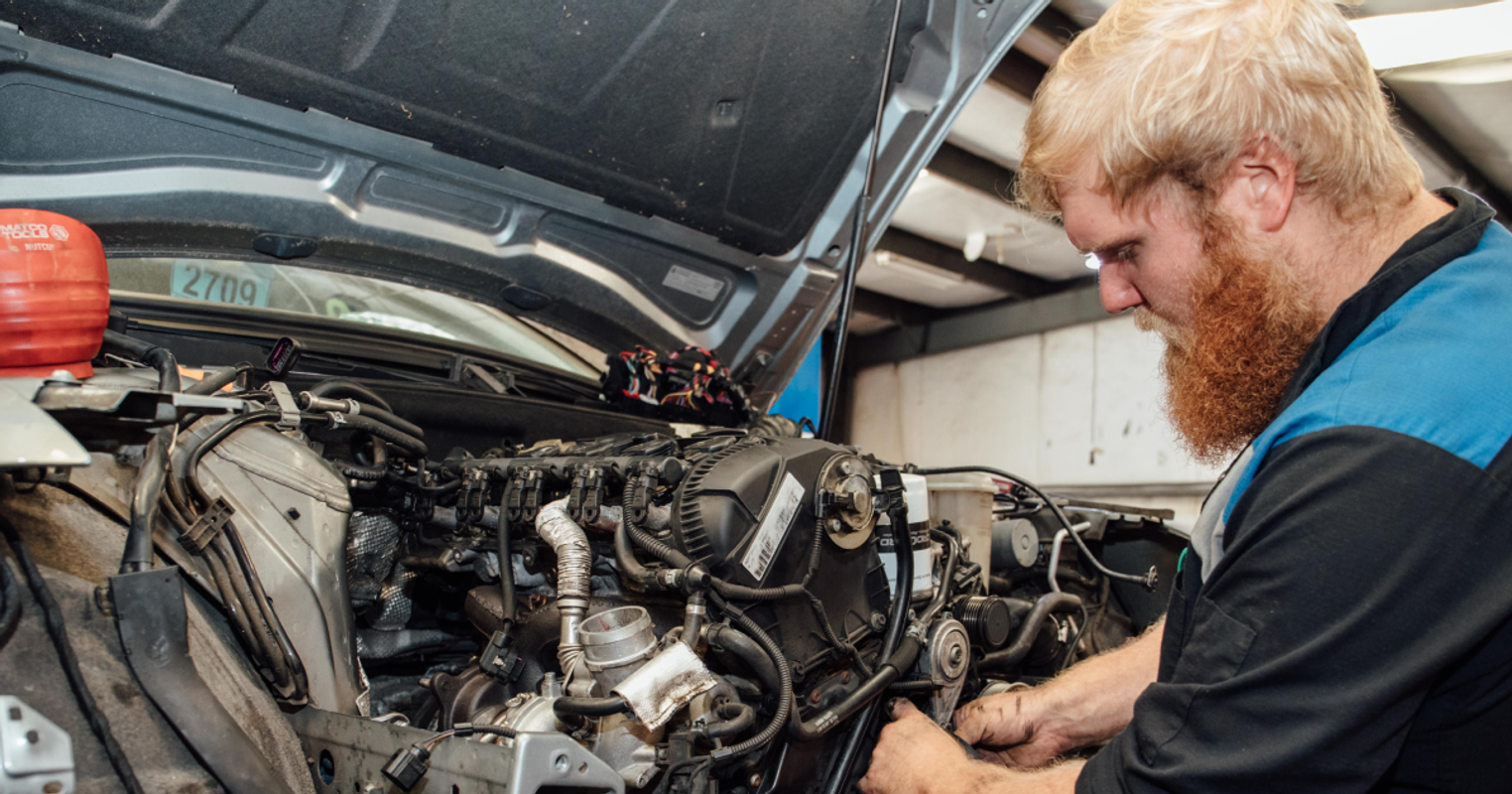
According to the Better Business Bureau, America is home to around 278,000 automotive repair shops. And while they aren’t evenly distributed across the country, odds remain high that there are plenty of options near you.
That freedom of choice means your fleet never has to settle for “good enough” from a service provider. Simply put, if you aren’t wowed by the shop (or shops) you’re entrusting your vehicles to, you owe it to yourself to explore alternatives.
Finding a fleet service provider that takes an active interest in your fleet’s success can be a game changer. By teaming up with a shop that acts more like a strategic partner than just a vendor, you can eliminate bogus charges, reduce vehicle downtime, improve your compliance and much more.
So, to inspire fleet managers to double-check that they’re working with the best choice available to them, here are four indicators that your fleet deserves a better service provider.
1. Your service provider keeps you in the dark
Effective communication is the bedrock of any successful business partnership, and with so many ways to get in touch nowadays, you’d think relaying information wouldn’t be an issue in today’s world. In reality, fleets are often frustrated by shops poorly describing vehicle issues, being slow to relay status updates and foisting them with surprise charges. If any of these headaches sound familiar, know that these problems are in no way inherent to third-party maintenance.
Every customer that walks in this door, we provide digital photography (as well as videos)… Everything that we try to do, we want it to be transparent. Jeff Mundy, Fleet Service Specialist at Adams Automotive
These days, many shops use photos and videos to achieve a greater level of transparency with their customers. Instead of making you take them at their word, these shops capture visual evidence of vehicle issues so there’s no ambiguity. And to prove the quality of their work, they also document installation of new parts to give you peace of mind.
Additionally, top-notch service providers are more than happy to accommodate your preferred means of communication. For example, many fleet management systems (including Fleetio) allow fleets and shops to manage work orders from within their platforms. This enables shops to provide status updates (without having to pick up a phone or write an email) and fleets to review repair orders at the line-item level.
Service providers that understand the value of transparency (and the convenience of eliminating unnecessary phone calls and emails) rightfully view FMS-enabled communication as a win-win for themselves and the fleets they serve.
2. Your service provider won’t commit to a service-level agreement
When your vehicles are the lifeblood of your organization, your service providers should take getting them back on the road as seriously as you do. But while plenty of shops talk a big game about understanding the urgency of their work, many balk at service-level agreements (SLAs) that hold them accountable.
Whether a shop disapproves of SLAs because they view them as overly formal or inconsiderate of factors beyond their control ultimately doesn’t matter—as a fleet, you have plenty of options. If one shop doesn’t accept SLAs, you can likely find several that are willing to commit to delivering high-quality service.
That being said, as a fleet, you don’t necessarily have to play hardball when hashing out SLAs with a new service provider. Be willing to hear them out on what they consider to be achievable response times and repair turnaround times, and leave the door open to adjusting standards after 30-, 60- and 90-day reviews. By being on the same page about expected performance at the beginning, you can provide a strong foundation for your partnership for years to come.
Find a partner in your maintenance provider
Your ultimate guide to evaluating, onboarding and managing fleet service providers.
Let's get after it
3. Your service provider isn’t knowledgeable of fleet regulations
Between fines and increased insurance premiums, the consequences of failing to stay compliant can severely impact a fleet’s bottom line. So, if given the option, why wouldn’t you want some additional pairs of eyes to make sure that your vehicles are on the up and up?
If their technicians are certified to perform government-mandated inspections, service providers can act as that double-check. Thanks to the training they undergo to become certified, these technicians are very likely to spot vehicle issues (that would be considered failing criteria) during routine tune-ups. This allows you to address defects well before your vehicles are scrutinized as part of an official inspection.
And while it’s true that technicians without formal inspection training can find more subtle vehicle issues too, the keen eye of a certified technician is usually more reliable. On top of that, when it’s time for your vehicles to be formally inspected, it’s simply more convenient to go to the service provider you already know than some random shop.
4. Your relationship with your service provider feels impersonal
Countless fleets stick with service providers purely out of habit or because they happen to be the closest shop. And while this approach probably works “good enough” for many, if you haven’t developed a friendly rapport with a shop after providing them with years of business, something might be off.
For instance, when we asked Michael Farr, Fleet Maintenance Manager at Wildfire Defense Systems, to describe what he looks for in a service provider, he relayed this anecdote:
…We hadn't been to one of our shops that we work with in a long time... The owner saw one of our trucks driving down the road, and so he called me. He's like, "Hey, I haven't seen any of your trucks in a while. How are things going? You know, I just saw one driving down the road. Just want to make sure everything's all good and how you guys are doing. Do you guys have any needs?"
That blindsided me because you don't get that type of response from most companies. They recognized us, and they wanted to make sure we were doing okay. That was really cool. And that’s the type of relationship we try to foster. Michael Farr, Fleet Maintenance Manager at Wildfire Defense Systems
While there’s nothing “wrong” with a business transacting with another in a purely transactional manner, it’s completely reasonable to expect (and value) some warmth from your strategic partners. Michael’s story highlights how fleets can easily recognize when shops actually care about their customers. There’s a palpable difference between dealing with a shop that treats your fleet as just another client and one that takes the time to get to know your staff and your organization’s goals.
Chaos to control — it can be done
How did one fleet go from a manual mess to instant access to fleet data, near-zero breakdowns and $15K–$20K saved each year? Check it out.
See their story

Fleet Content Specialist
Through interviews, blog posts and webinars, Alex covers the tactics and technologies exceptional fleet managers use to achieve results. By sharing their success stories, his work aims to inform and inspire fleet professionals of all stripes.
LinkedIn|View articles by Alex BorgReady to get started?
Join thousands of satisfied customers using Fleetio
Questions? Call us at 1-800-975-5304