Why Preventive Maintenance Programs Fail at Scale
Most teams spend their time debating maintenance intervals. Too frequent, not frequent enough, OEM recommendations versus real-world duty cycles. The program fails anyway because an asset never got enrolled, a trigger fired two weeks late or a reminder sat in a shared inbox until it stopped mattering. So how do you create a process that continues to work as you scale?
Apr 7, 2026
14 min read

Key takeaways from this guide
- Prioritize coverage over intervals: Gaps in coverage are the primary reason preventive maintenance programs fail, so you must ensure that every asset is enrolled, service triggers fire appropriately and every overdue item has a clear owner.
- Focus on data accuracy for timely triggers: Perfect maintenance interval means nothing if the usage data feeding your preventive maintenance program is weeks old, causing reminders to fire late.
- Implement accountability and ownership: For near-perfect on-time compliance, assign owners to every service reminder and enforce escalation rules so that every overdue item has a specific individual responsible.
- Mandate enrollment to eliminate invisible assets: Build onboarding workflows that make service program assignment mandatory, acting as a gate that blocks asset activation until a preventive maintenance schedule is assigned.
Preventive maintenance (PM) programs rarely fail because someone picked the wrong oil change interval. They fail because of gaps no one sees: assets that were never enrolled in a service program, odometer readings that haven't been updated in weeks, due alerts that ping a shared inbox instead of a specific person, etc. These structural visibility gaps matter more than the maintenance schedule itself.
Teams default to spreadsheets and windshield stickers because those methods feel controllable. When you're managing dozens (or hundreds) of assets with a small crew, adding another software system can feel like overhead you don't have bandwidth for. This is especially true when the current approach mostly works, most of the time.
You're likely here because "mostly works" stopped being good enough. Maybe a critical asset or piece of equipment failed last month that should have been serviced. Maybe your compliance numbers look fine on paper, but you know certain assets keep slipping through. Or maybe you're scaling and adding assets, locations and maintenance technicians. The informal system that was good enough at 50 assets starts to backfire at 200.
To help you minimize disruptions and reactive repairs, let's take a look at what preventive maintenance (PM) entails, the benefits of preventive maintenance and the hallmarks of a successful PM program.
What is preventive maintenance?
Preventive maintenance is scheduled, planned maintenance work performed before failure occurs. Common examples of preventive maintenance include servicing an asset at predetermined intervals (time, mileage, engine hours or cycles) to prevent the equipment failures that would otherwise happen if the equipment continued to run without servicing.
The concept is simple, but the execution is where things get complicated.
Most organizations understand the difference between preventive maintenance, reactive maintenance and condition-based maintenance. However, knowing what PM is doesn't tell you why some programs deliver results while others exist only on paper. Coverage explains the difference.
A PM program is a system that ensures coverage across three dimensions:
- Every asset that requires maintenance is enrolled in a service program
- Every service trigger fires at the right time based on accurate usage data
- Every due or overdue item has an owner responsible for completion
Miss any of these three elements, and the schedule becomes unreliable. Assets slip through because no one assigned them a service program. Triggers fire late because the odometer reading is three weeks stale. Overdue reminders sit in a shared inbox because no single person owns the follow-through.
This framing (coverage over intervals) runs through everything that follows.
How organizations approach preventive maintenance
There are several types of preventive maintenance, and PM strategies range from simple, time-based maintenance schedules to sensor-driven, predictive models. Each approach carries different data requirements that dictate where it fits best.
| Approach | Trigger Type | Data Requirements | Best Fit |
|---|---|---|---|
| Time-based | Calendar intervals (days, weeks, months) | Minimal schedule only | Assets with consistent usage patterns or regulatory inspection requirements |
| Usage-based | Miles, engine hours, cycles, fuel consumption | Accurate meter readings from telematics or manual entry | Fleets with variable utilization across assets |
| Condition-based | Real-time sensor thresholds (temperature, vibration, fluid quality) | Continuous monitoring infrastructure | High-value assets where sensor investment is justified |
| Predictive | Analytics-driven forecasting based on historical patterns | Rich maintenance history plus operational data | Organizations with mature data practices and sufficient scale |
In practice, the industry conversation has increasingly shifted toward AI-driven analytics and predictive maintenance, which requires complete coverage for success. But without strong foundation coverage in place, technical innovation only goes so far.
Even sophisticated predictive models need enrolled assets and current meter data. This foundation stays the same regardless of approach: complete asset enrollment, accurate usage data,and clear ownership of outcomes (as mentioned above).
All preventive maintenance plans should start with OEM manufacturer recommendations first and then customize as necessary to meet the specific demands of your operation. The manufacturer knows the engineering tolerances; your job is to adjust based on the duty cycle. A delivery van making 50 stops per day in stop-and-go traffic has different needs than one running highway routes.
How to build a PM program that works
Successful PM programs start with a complete asset inventory and service program assignment, not interval selection (the interval conversation comes later).
- First, ensure that every asset that requires maintenance is visible to maintenance operations. Begin by inventorying those existing assets. Remember, as your organization grows, you'll routinely add vehicles and equipment; if they're not in the system, they won't get serviced.
- From there, assign each asset to a service program with defined intervals. Service programs bundle reminders for similar assets, so all your diesel trucks get the same PM schedule, all your refrigerated units follow their specific requirements, and nothing falls through the cracks. This step is where most programs silently fail because assets get added to the fleet, but never enrolled in service programs, making them invisible to PM operations.
- Next, you establish how usage data will flow into the system. Odometer readings can come from telematics, driver inspections, or manual entry at the shop. Mixed sources create drift, so decide on a primary source and automate it where possible.
- Finally, designate owners for each asset or asset group. Maintenance teams need clear ownership so someone is accountable when a service reminder goes overdue. If alerts go to a shared inbox, they get snoozed indefinitely.
A computerized maintenance management system (CMMS) can streamline this entire process, making it easier to enforce enrollment, automate triggers and assign ownership at scale. Service program assignment is where coverage breaks down most often. Any asset without an assigned service program is a liability. It's in your fleet, accumulating miles and wear, but it's not on anyone's radar for scheduled service.
This is why it's important to build onboarding workflows that require service program assignment before an asset is marked "active." Make enrollment a gate that blocks activation until service programs are assigned. Once enrollment is locked down, the next element to assess is whether your triggers fire at the right time.
Dive deeper into maintenance
Take some cues from the best and brightest in fleet maintenance with our Guide for Managing Maintenance – filled with real tips from real fleet professionals.
Get your free copyWhy your maintenance interval isn't the problem
Most PM failures blamed on "wrong intervals" actually stem from inaccurate usage data. The interval was fine, but the trigger fired at the wrong time because the odometer reading feeding it was stale, manual or inconsistent.
Take a fleet running 5,000-mile oil changes, for example. If the telematics system syncs odometer readings daily, the service reminder fires when the vehicle actually hits 4,500 miles (assuming a 500-mile "due soon" threshold). If the odometer reading comes from a driver log updated weekly, the vehicle will already be at 5,300 miles before anyone notices it's overdue. Same interval, different outcome.
Under these conditions, automation matters more than precision. The perfect interval means nothing if the usage data feeding it is weeks old.
Before automated meter sync:
- Odometer readings entered manually at service completion
- Readings drift between shop visits
- Triggers fire late or are based on estimates
- "Due soon" becomes "already overdue" before anyone notices
After automated meter sync:
- Telematics push odometer and engine hour readings automatically
- Driver inspections capture current readings at shift start
- Triggers fire based on actual usage, not estimates
- Due soon thresholds become meaningful
Usage data from driver inspections and automatic odometer/engine-hour sync via telematics keep triggers accurate without manual entry. This reduces missed services, administrative work, and unplanned downtime and lowers overall maintenance costs. It also extends asset lifespan by ensuring no piece of equipment goes past due on critical services.
Solve any data accuracy problems first, then optimize your intervals, in that order.
What to measure and why
For an effective preventive maintenance program, on-time compliance with explicit ownership matters most. Completion volume alone masks deferrals and delays.
A fleet can show 95% task completion while routinely running services 2,000 miles past due. That 95% looks fine on paper, but the unplanned breakdown three months later doesn't show up in the completion metric.
| Metric | What It Shows | What It Misses |
|---|---|---|
| Tasks completed | Work is getting done | Whether work happened on schedule |
| On-time compliance rate | PM is happening within defined windows | Who's responsible when it doesn't |
| Planned vs. unplanned ratio | How much maintenance is proactive vs. reactive | Root cause of unplanned work |
| Mean time between failures | Asset reliability trends | Whether the PM program is the cause of improvement |
With maintenance data categorization, you can surface fleet-wide trends to see how much of your maintenance activities are planned/preventive compared to repairs that result in unplanned downtime. That ratio (planned versus unplanned) shows whether your PM program is working.
Overdue items that ping a shared inbox get snoozed, but items assigned to a specific person with escalation rules create accountability. When "someone will handle it" becomes "[Insert name here] is handling it," compliance rates improve.
On-time maintenance compliance improves significantly when every miss has a name attached to it. Use watchers or escalation rules so overdue items notify specific people (not roles, not distribution lists, but named individuals who can act or escalate).
Where PM programs break down
Three structural gaps undermine PM programs: assets never enrolled, triggers fed by stale data and reminders without owners. All three are preventable.
- Invisible assets represent the first gap. An asset without a service program assignment doesn't appear in maintenance operations. It doesn't show up on due lists or trigger reminders. The fix is to implement onboarding workflows that require service program assignment before an asset is marked active in your fleet management system, or your CMMS. Make enrollment mandatory, not optional.
- Stale triggers create the second gap. When usage data comes from manual entry or multiple conflicting sources, triggers fire at the wrong time. The interval is correct, but the system thinks the vehicle has 42,000 miles when it actually has 47,000. Automating meter sync via telematics integration solves this. Where telematics isn't available, require odometer capture during driver inspections so readings update at least daily.
- Unowned reminders form the third gap. Alerts that go to shared inboxes or generic roles get ignored because "the shop" isn't a person, and "fleet operations" can't click "complete." Assign watchers to every service reminder and configure escalation rules so overdue items notify supervisors or managers after a defined period. Every overdue item should have a name attached.
Beyond invisible assets, stale triggers and unowned reminders, secondary challenges can also derail programs. For example:
- Over-maintenance creates backlogs when too many preventive maintenance tasks or overly frequent intervals lead to shortcuts and pencil-whipping, so prioritize based on criticality and failure modes rather than treating every asset identically.
- Deferral governance matters because teams need the ability to postpone services when operational demands require it, but unmanaged deferrals accumulate risk. Define who can defer, under what conditions and what triggers escalation.
- Multi-location complexity requires service programs that follow the asset (not the site) with central visibility, enabling local execution.
Once you understand where programs break down, you can evaluate whether your technology prevents these gaps.
What PM technology should do
Sending reminders isn't enough. PM software should enforce coverage, automate data flow, and create accountability across all preventive maintenance work. A computerized maintenance management system built for fleet operations should streamline all of this. When evaluating technology against the three coverage requirements:
- Start with enrollment governance. A system that lets assets slip through enrollment creates gaps. The system should flag assets without service programs, support bulk assignment based on asset attributes (e.g., vehicle type, location, duty cycle), and prevent an asset from going 'active' without service program enrollment to protect asset functionality and coverage integrity.
- Data integrity comes next. The system should sync usage data automatically from telematics and allow driver inspections to capture odometer readings that feed service triggers. When conflicting readings come from multiple sources, the system needs clear rules for which source wins. Without this, triggers fire at the wrong time regardless of interval precision.
- Accountability mechanics complete the picture. You need the ability to assign watchers to specific service reminders, configure escalation rules for overdue items and track who owns each overdue item and when they were notified.
The driver-to-shop loop connects field discoveries to repairs. Drivers are the first line of defense in keeping up with asset maintenance, and when you train them on what to look for in inspections, they surface potential issues sooner. Failed Driver Vehicle Inspection Report (DVIR) items convert directly into work orders with photos and comments, shrinking the gap from issue discovery to repair. When a driver flags a failed item during an inspection, that finding should flow directly into a work order with photos and context. It shouldn't sit in a separate system.
Evaluate your PM technology by whether it closes the three coverage gaps and creates the accountability structures that make compliance realistic.
How effective PM works in fleet operations
Fleet environments amplify PM complexity because assets are distributed across locations, duty cycles can vary dramatically, and regulatory requirements add compliance layers that don't exist in fixed-facility maintenance. The coverage-first approach applies here too, regardless of which types of preventive maintenance or maintenance strategy your organization favors.
If you run different types of assets (sprinter vans, box trucks, refrigerated units) across multiple locations, service program templates applied by asset attributes ensure coverage without manual configuration for each asset. When you add a new Sprinter van at your Memphis location, it automatically inherits the service program for Sprinter vans in that region. No one needs to remember to enroll it. Manual assignment for each vehicle works when you have a smaller fleet, perhaps 20 vehicles. At 200, maintenance issues that impact your business slip through the gaps.
If your fleet mixes light-duty trucks using usage-based maintenance (tracked by miles) with heavy equipment using time-based maintenance (tracked by engine hours), your PM system needs to handle both trigger types with different data sources. Accurate meter data from multiple sources requires integration that normalizes readings into a single view. The system should fire triggers based on the appropriate meter for each asset type without manual calculation.
If you operate under DOT regulations with federal inspection requirements and specific documentation obligations, every inspection finding must be documented, assigned and resolved with a paper trail. The system should capture who reported the issue, who was assigned to fix it, when it was completed and who certified the repair.
Multi-location fleets, mixed-meter operations and compliance-driven carriers depend on complete coverage more than interval precision. Organizations that enroll every asset, automate every meter reading, and assign every overdue item get different outcomes than organizations that set perfect intervals but leave gaps in the structure.
Driving forward
The PM program that works is the one where nothing slips through.
Start with a coverage audit. Pull a list of every asset in your fleet and compare it against your service program enrollments. The assets that don't match need attention first. Assign them to programs today. Then work backward through your usage data sources and accountability structures.
Organizations that master these fundamentals build the foundation for condition-based and predictive maintenance. Those who skip them carry the same coverage gaps into their advanced analytics.
PM programs made easy
Never have to wonder when service is due ever again. Fleetio gets your whole maintenance operation in one place, reminds you when service is due and gives you access to a network of thousands of shops to get the job done.
Get a demo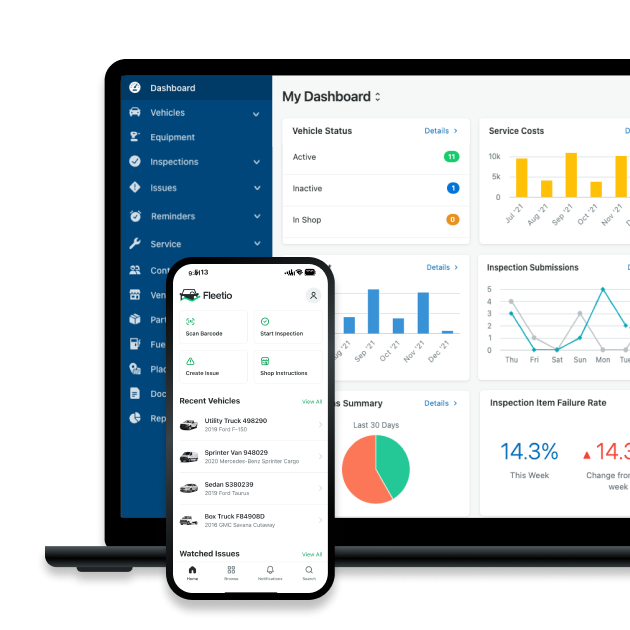

Senior Fleet Content Specialist
As a Senior Fleet Content Specialist at Fleetio, Peyton explores the voices and experiences that shape fleet operations. She focuses on how fleet professionals adopt technology, improve efficiency and lead their teams to bring clarity and context to the challenges happening across the industry.
View articles by Peyton Panik
Director of Fleet Content, Fleetio
Zach Searcy is the Director of Content at Fleetio with more than 5 years of experience in the automotive and fleet industries. His content creation days started in middle school when he and his friends began filming lightsaber battles to upload to a new website: 'YouTube.'
LinkedIn|View articles by Zach SearcyReady to get started?
Join thousands of satisfied customers using Fleetio
Questions? Call us at 1-800-975-5304