How to Build a DVIR Process Your Fleet Can Rely On
A DVIR is only as good as what happens after a driver submits it. Compliance breaks in the transfer between the driver who flagged the defect, the carrier who has to certify the repair and the next driver who signs before dispatch. Here is what federal rules require at each handoff, what a failure costs and how the March 2026 eDVIR rule changes the workflow.
Sep 8, 2026
11 min read
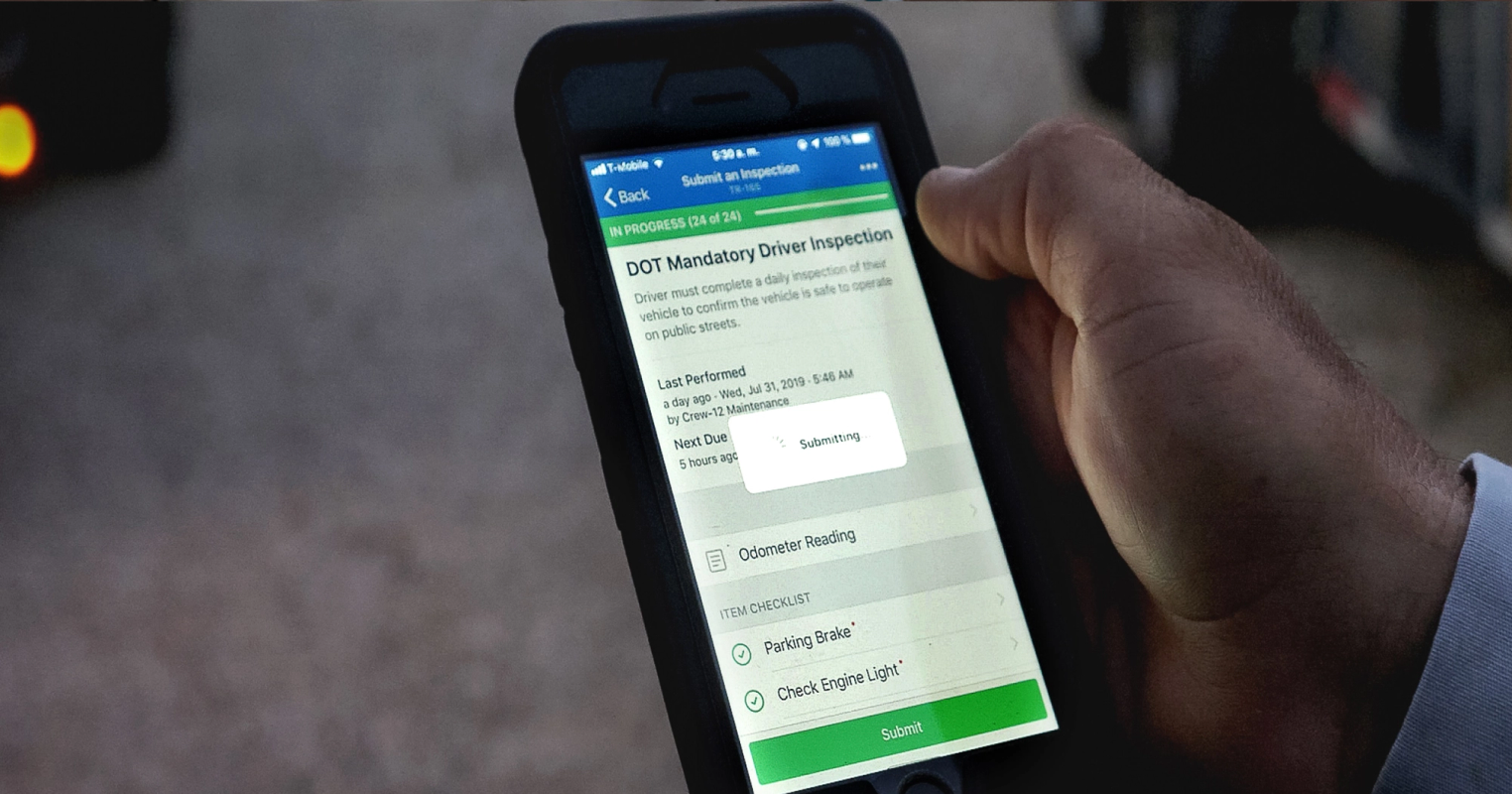
What you need to know
- Three broken handoffs cause nearly every DVIR violation. A driver fails to report a defect, the carrier fails to document the repair or the next driver dispatches without reviewing the prior report. The worst of the three, putting an asset on the road with a known defect, carries a federal penalty of up to $19,246 per violation.
- A no-defect DVIR is not required. Drivers do not have to file a report when no defect is found or reported to them. That holds for property-carrying and passenger-carrying CMVs alike, yet plenty of fleets still build workflows that demand the paperwork.
- The 2026 eDVIR rule removes the last reason to stay on paper. The FMCSA final rule published February 19, 2026 and effective March 23, 2026 states directly in 49 CFR 396.11 that DVIRs may be created and maintained in electronic format.
- The chain is what keeps defects in the yard. During the 2025 CVSA International Roadcheck, 18.1% of inspected commercial motor vehicles were placed out of service, with brake systems leading every other violation category.
A Driver Vehicle Inspection Report (DVIR) is the record required under 49 CFR 396.11 that documents whether a driver found defects on a commercial motor vehicle (CMV). It captures the condition of safety-critical components at the time of the inspection and creates a written record the carrier has to retain and act on.
Drivers are the first line of defense. They are the only people who touch an asset before it hits the road, which is why the DVIR exists as a record of what they saw.
That report is the first link in a chain of custody running from defect discovery to return to service. A driver identifies a problem and writes it down. The carrier certifies that the defect was repaired or determined not to need repair. The next driver reviews that certification before operating the asset. Every step is traceable, so a question months later about when a defect was found or how it was resolved already has a documented answer.
A defect caught in the yard is routine maintenance. A disciplined inspection-to-repair chain is what keeps it there.
Who actually has to file a DVIR (and who does not)
Most guides describe the DVIR as a daily filing requirement for every commercial motor vehicle. That description is incomplete, and the difference changes how a fleet should build its inspection workflow.
Under 49 CFR 396.11, the filing obligation depends on what the driver found:
- A driver who finds a defect or deficiency has to file a DVIR documenting the condition. That report starts the full compliance chain.
- A driver who finds no defect does not have to prepare a report. The regulation states that drivers are not required to prepare a report if no defect or deficiency is discovered by or reported to the driver. It applies to property-carrying and passenger-carrying drivers. The August 2020 FMCSA final rule dropped the no-defect DVIR requirement for drivers of passenger-carrying CMVs, and the 2026 eDVIR rule preamble declined to reinstate it. Fleets that keep collecting no-defect paperwork are generating administrative drag with no safety return.
One more distinction trips people up. The defect-reporting obligation in 396.11 is separate from the next-driver review and sign requirement in 396.13. FMCSA guidance confirms that 396.11 does not require a formal post-trip inspection procedure of the kind described in 396.15, which governs driveaway-towaway operations. It requires a written report when defects are found.
When a DVIR is filed, the regulation sets a minimum list of items the report has to cover.
- Service brakes, including trailer brake connections
- Parking brake
- Steering mechanism
- Lighting devices and reflectors
- Tires
- Horn
- Windshield wipers
- Rear vision mirrors
- Coupling devices
- Wheels and rims
- Emergency equipment
Fleets running specialized assets usually extend the list. Reefer units, lift gates and hydraulic systems belong on configurable inspection forms so a driver checks what matters on the asset in front of them.
Pro Tip
Details drive a better DVIR. "Brake feels soft" sends a technician hunting. "Trailer brakes lag on the hand valve, worse when loaded" gives the shop a starting point before the truck arrives.
The compliance chain only activates when a defect gets reported. The three handoffs below start the moment a driver files that report.
The three handoffs that make or break DVIR compliance
DVIR compliance comes down to three sequential documentation requirements. Most violations trace back to a gap in one of them.
Driver to carrier
When a driver identifies a defect, they document it and submit the report to the carrier. On paper that means a clipboard has to physically travel from the cab to the maintenance office. In a digital workflow the report is timestamped and routed the moment the driver hits submit. Delay is the exposure. A brake issue noted at the end of a long haul that sits in a door pocket overnight does not reach the fleet manager until morning, and the asset may already be on the dispatch board.
Carrier to repair record
The carrier's obligation picks up where the driver's ends. Under 49 CFR 396.11, the motor carrier has to certify that every reported defect was either repaired or determined not to require repair, and that certification has to exist as a written record the carrier can produce later. Missing documentation breaks this handoff even when the repair happened. A technician fixes the brakes and nobody records the sign-off. A fleet manager decides a cosmetic issue needs no repair and never writes down the determination. The chain breaks either way because the evidence does not exist.
Repair record to next driver
Before operating the asset, under 49 CFR 396.13, the next driver has to review the previous DVIR and sign an acknowledgment that required repairs were performed. Dispatch without that review carries the steepest federal penalty of the three, because it means a known defect reached the road. The asset leaves the yard because the second driver never saw what the first driver reported.
The 2025 CVSA International Roadcheck puts scale behind these failure modes. When 18.1% of inspected assets go out of service and brake systems lead the violation categories, a meaningful share of that exposure starts in a transfer where defect information did not move cleanly from one person to the next.
What each broken handoff costs at the federal level
Every handoff carries its own penalty exposure when it fails, and the federal schedule is specific about the number attached to each one.
| Broken handoff | Violation type | Maximum federal penalty |
|---|---|---|
| Driver to carrier, or carrier to repair record | Recordkeeping: a missing or incomplete DVIR, or an unsigned repair certification | Up to $1,584 per day the violation continues, capped at $15,846 |
| Repair record to next driver | Non-recordkeeping: dispatching with known unrepaired safety defects, or dispatching without the required next-driver review | Up to $19,246 per violation |
| Any of the three, once caught roadside | Out-of-service order under 49 CFR Part 386, Appendix A IV(a) | $2,364 per occurrence for the driver, plus the asset cannot move until every violation is corrected |
Recordkeeping violations accumulate quietly. A fleet running 50 assets on inconsistent DVIR practices can build real exposure before anyone notices the gap in the records.
An out-of-service order does damage well past the fine. Missed deliveries, emergency tow fees and the repair itself usually cost more than the penalty, and Compliance, Safety, Accountability (CSA) score damage lingers long after the violation is cleared.
Eikenhout manages more than 160 assets on configurable digital DVIR forms. As Curt Van Heuvelen, the company's Safety and Training Coordinator, puts it, "Non-compliance is not an option for us." When the inspection-to-repair chain runs cleanly every day, audits and roadside stops stop being events the fleet has to prepare for.
Turn a failed inspection item into a work order
See how Fleetio routes a driver's failed DVIR item straight into the shop queue with photos, comments and full service history already attached for the technician.
Learn more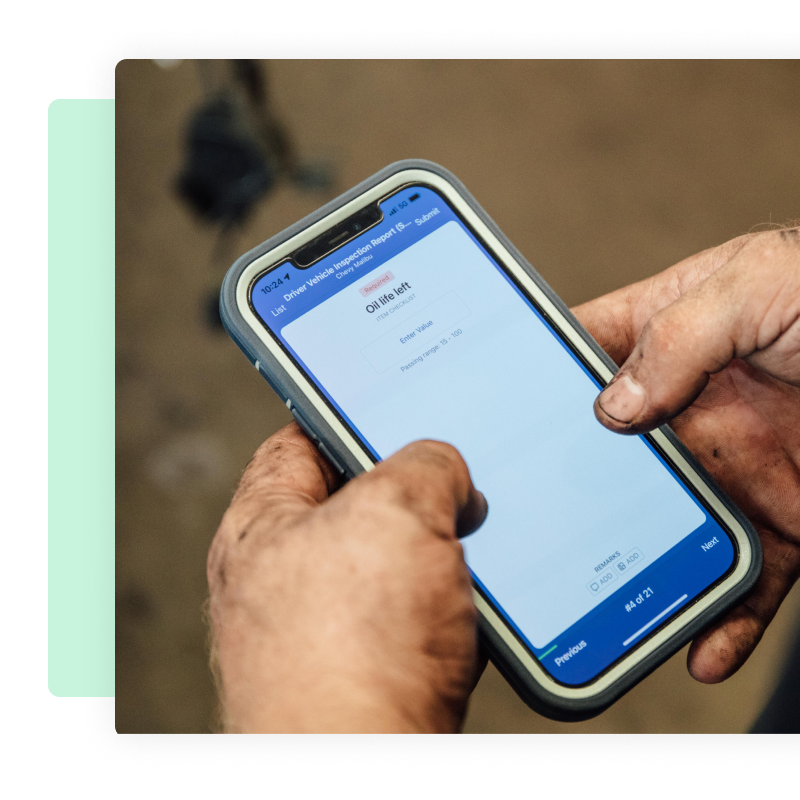
What the March 2026 eDVIR rule changes for your fleet
Electronic DVIRs were already permissible before March 23, 2026 under 49 CFR 390.32, but that authorization never appeared inside 396.11 itself. The ambiguity kept plenty of fleets and their legal teams on paper. If the DVIR rule did not say electronic format was acceptable, the safest read was the one with a clipboard and a filing cabinet.
The February 2026 final rule closed the gap. Updated language in 49 CFR 396.11 now states that the report required by paragraph (a) may be created and maintained in electronic format, in accordance with 49 CFR 390.32. The change came out of a public comment from the National Tank Truck Carriers and broader industry pressure for a clear answer.
FMCSA's accompanying language signals a preference for electronic, cost-saving methods, and the agency has indicated it intends to keep moving that way. For any fleet that has been weighing the switch, the compliance uncertainty around going digital is gone.
Paper is still permitted, and the three-handoff chain applies the same way regardless of format. What the eDVIR rule changes is the speed and traceability of each handoff. A paper form in a cab door creates lag between defect discovery and carrier action. A digital submission that routes to the fleet manager and generates a work order compresses that lag toward zero while producing a timestamped audit trail paper cannot reliably match.
Telematics integrations with Geotab, Samsara and other providers through the public API extend the same workflow to engine fault codes, so a defect a driver could not catch in a pre-trip still produces a documented repair record before the next dispatch. A&D Environmental pairs Geotab telematics with digital DVIRs to generate work orders automatically, which keeps the carrier-to-repair handoff intact even when the asset reports the problem instead of the driver.
How to build a DVIR process your fleet can rely on
When federal auditors reviewed Kayak Public Transit's records, Fleet Maintenance & Safety Manager Robert Johnson said they were "blown away" by the fleet data the agency could produce on request. Earning that reaction rather than a bare pass comes down to whether every handoff in the chain carries a timestamp, a signature and a linked repair trail.
| Compliance chain handoff | What auditors look for | Digital workflow capability |
|---|---|---|
| Driver to carrier (defect report) | Timestamped submission, driver signature and photo evidence of the defect | Mobile DVIRs with GPS-stamped submissions, photos and driver comments sent from the field |
| Carrier to repair record (certification) | A documented repair or no-repair determination with technician sign-off | Failed DVIR items generate issues automatically and, with automation rules, work orders with assignees and linked parts records |
| Repair record to next driver (review) | Next-driver signature before dispatch acknowledging the prior report | A pre-trip review workflow that requires sign-off on the previous DVIR before the asset returns to active status |
Fleets that outsource repairs need the same certified record from a vendor bay that an in-house work order produces. Line-item digital approvals through the Maintenance Shop Network preserve the carrier-to-repair handoff no matter who turns the wrench.
A few accountability mechanisms catch gaps before an auditor does. Mobile reminders prompt drivers when an inspection is due. GPS-stamped submissions and completion-time tracking surface the failure mode supervisors and auditors both watch for: pencil whipping, where an inspection gets signed off without anyone walking the asset.
Identical completion times and submissions that never leave the yard get flagged before they turn into a roadside finding. Center Point Fire District uses those GPS and timing checks so supervisors can confirm drivers physically moved around a vehicle instead of signing off from the cab.
Ozark Regional Transit saw the payoff in hours. After switching to digital DVIRs, the agency saved 8 to 16 hours a week on inspections and reporting and hit 100% on-time preventive maintenance compliance during its Federal Transit Administration triennial review, according to Maintenance Manager Bryan Martin. Those hours came back because the transfer between driver, maintenance and dispatch stopped requiring manual re-entry and phone calls to confirm what had been reported and repaired.
Retention matters as much at a roadside stop as it does in a formal audit. Every DVIR, repair record and driver sign-off should stay accessible for the life of the retention requirement and be retrievable in seconds. A driver who can pull up full DVIR history on a phone gives a Department of Transportation officer exactly what they asked for without a hunt through paperwork. For multilingual crews, Fleetio Go runs a full Spanish-language experience so language never becomes the reason a handoff goes undocumented.
Compliance lives in the handoff, not the form
Fleets that pass audits cleanly stop treating DVIR compliance as paperwork and start treating it as workflow. Every transfer logged. Every signature captured. Every defect routed to the person who has to act on it.
In Fleetio, a driver submits a failed inspection item from Fleetio Go and the platform turns it into a tracked issue and, with automation rules, a work order that links the defect to parts, labor, outsourced repair records and the asset's lifecycle costs in one system of record. The next driver cannot miss the prior report. Every step carries a timestamp and a signature, so the record is already organized when an auditor asks for it, and every repair cost is already tied to the asset it belongs to.
Close the gap between flagged and fixed
See how Fleetio moves a failed inspection through repair, with every step and cost tracked back to the asset.
Request a demo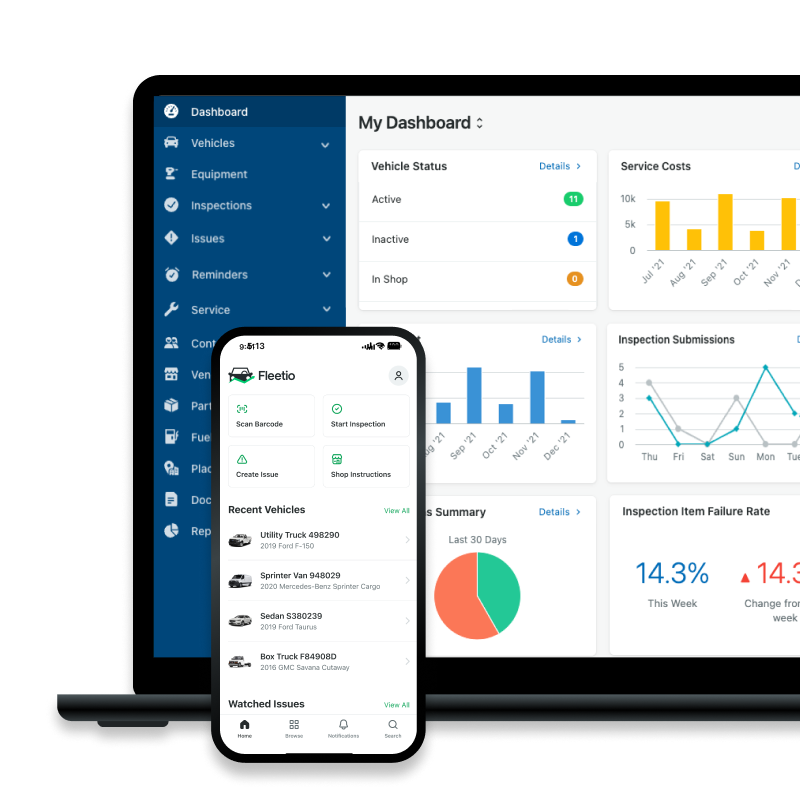

Senior Copywriter
Tyler Freeland is a Senior Copywriter at Fleetio. A former creative writer for Freightliner and Western Star, he now transforms complex (and sometimes common) fleet management topics into practical, engaging insights that fleet professionals can apply every day.
LinkedIn|View articles by Tyler FreelandReady to get started?
Join thousands of satisfied customers using Fleetio
Questions? Call us at 1-800-975-5304