Fleet Manager Guide: Role, Duties & Best Practices
Fleet management today is more complex (and more business-critical) than ever. Rising costs, tighter compliance, and more advanced assets have turned the fleet manager role into a strategic, data-driven discipline focused on uptime, cost control and keeping operations predictable.
Apr 4, 2025 | Updated: Dec 19, 2025
15 min read
Key takeaways from this guide
-
Fleet management has evolved into an operational leadership role: Today’s fleet managers are responsible for uptime, cost control, safety, and risk reduction — with fleet performance directly impacting revenue, service delivery, and business continuity.
-
Proactive systems outperform reactive firefighting: High-performing fleets rely on preventive maintenance, standardized inspections, and early issue detection to reduce unplanned downtime and avoid costly disruptions.
-
Visibility into costs, compliance, and performance is non-negotiable: Centralized data around TCO, downtime, utilization, and compliance enables fleet managers to defend budgets, guide lifecycle decisions, and stay audit-ready.
-
Technology is the backbone of modern fleet operations: Fleetio brings fleet maintenance, inspections, costs, fuel, and performance data into one system with automated workflows and real-time visibility, helping fleet managers operate proactively and scale with confidence.
Fleet management is moving fast. Costs are up, compliance is tighter, safety expectations are higher, and assets are more complex than they used to be. So the job isn’t just "keep vehicles on the road" anymore.
Modern fleet managers are operational leaders and data-driven decision makers. You’re protecting uptime, controlling spend, reducing risk, and trying to keep day-to-day operations predictable – even when one small issue can turn into an expensive disruption.
The problem is, a lot of job descriptions haven’t caught up. They read like task lists, but don’t explain how fleet management actually works today, or what separates reactive firefighting from high-performing fleet operations.
In this guide, we’ll break down what a fleet manager does, the responsibilities that matter most, the challenges you’ll run into, and the KPIs worth tracking. We’ll also cover best practices and how technology helps teams stay proactive.
What is a fleet manager?
The role of a fleet manager is to keep commercial vehicles and equipment ready to work: safe, compliant, available and cost-effective every day. In modern fleet operations, that really means three things: protect uptime, control operating costs, and reduce risk without allowing those daily workflows to get out of control.
And it’s not just "fleet stuff." Fleet performance shows up in the outcomes the business actually cares about: on-time delivery, crews rolling when they’re supposed to, services staying uninterrupted, revenue staying protected. When assets are down, inspections get missed, or costs spike out of nowhere, you feel it everywhere, not just in the fleet budget.
Doing the job well takes a mix of people, process and data. You’re coordinating maintenance and vehicle inspections, tracking fuel and repair spend, staying on top of compliance, and using performance data to make better calls. In practice, the fleet manager becomes the connector – aligning drivers, techs, vendors and leadership around one clear, shared view of fleet health.
If you’re looking for deeper dives into specific areas of fleet operations, our fleet management guide covers maintenance, compliance, costs, and performance in more detail.
What does a fleet manager do?
Fleet manager responsibilities change a lot depending on industry, fleet size and the mix of assets you’re managing. But the overarching goal stays pretty consistent for all fleet managers.
As fleets have gotten more complex, the job has shifted from reactive problem-solving to proactive, data-informed management. Instead of finding out about breakdowns, missed inspections, or cost overruns after the damage is done, today’s fleet managers use centralized, accurate data to spot issues earlier, standardize workflows, and cut down on surprises.
Here are some of the core responsibilities that define the role in modern operations.
Overseeing asset lifecycles from acquisition to disposal
Fleet managers influence the full lifecycle of an asset, from spec’ing it out to knowing when it’s time to move on. That includes recommending vehicles or equipment based on the work they’ll actually do, tracking aging and wear trends, and making the call when repairs stop making financial sense.
When you track utilization and total cost of ownership (TCO) over time, replacement timing gets a lot clearer. Strong lifecycle planning prevents overspending, reduces downtime tied to aging assets, and helps you make capital requests with real, defensible data.
Managing maintenance, inspections and downtime prevention
Whether you manage it in-house or work with a third-party maintenance provider, preventive maintenance is one of the most visible parts of the job. That includes building PM schedules, tracking work orders, and making sure services happen based on OEM guidance and regulatory requirements.
When you stay ahead of maintenance, you reduce unplanned downtime, avoid costly breakdowns, and keep assets work-ready. Inspection and repair history also helps you spot patterns early, before a "small thing" turns into a problem that derails the day.
Coordinating drivers, assignments and fleet utilization
Fleet managers help keep the right asset on the right job at the right time. That means supporting driver schedules and vehicle assignments, and making sure certain units aren’t getting run into the ground while others sit unused.
Communication matters a lot here. When issues are reported quickly and assignments are visible across teams, delays shrink and problems get solved faster.
Ensuring compliance, safety and regulatory readiness
Fleet compliance and safety aren’t occasional projects – they’re ongoing responsibilities. Fleet managers oversee DVIRs, inspection documentation, licensing and certification tracking, and adherence to required standards.
When records are missing or disorganized, audit risk goes up fast. Digital inspection trails and searchable documentation make it easier to stay audit-ready and respond quickly when questions come up.
Tracking fleet costs and supporting budget decisions
Fleet managers track spend across fuel, repairs, parts, labor, warranties, outsourced maintenance and admin costs. Without clear visibility, budgets become reactive and harder to defend.
TCO looks different across fleet types, but the point is the same: understand what it really costs to operate an asset over its useful life. Accurate cost data helps you justify budgets, evaluate tradeoffs, and make smarter repair-vs-replace decisions.
Using data and technology to guide daily operations
Modern fleet management runs on information, not guesswork. Dashboards, alerts, and integrated fleet data help you prioritize work, surface issues earlier, and measure performance consistently.
Technology supports better decisions, but it doesn’t replace the fleet manager’s judgment.
At the end of the day, nobody knows more about your fleet than you do, so use that to your advantage. Be confident and talk about your fleet with confidence. Bob Polka, Treeways
When this information lives in one place, you rely less on spreadsheets, manual updates and disconnected systems. And you spend less time chasing details – and more time improving uptime, controlling costs, and keeping operations predictable.
Steal the playbook straight from the pros
Learn from industry experts how to reduce costs, improve efficiency and tackle everyday fleet challenges. The Fleet Manager’s Manual gives the insights and tools you need to take your fleet to the next level.
Get your free copy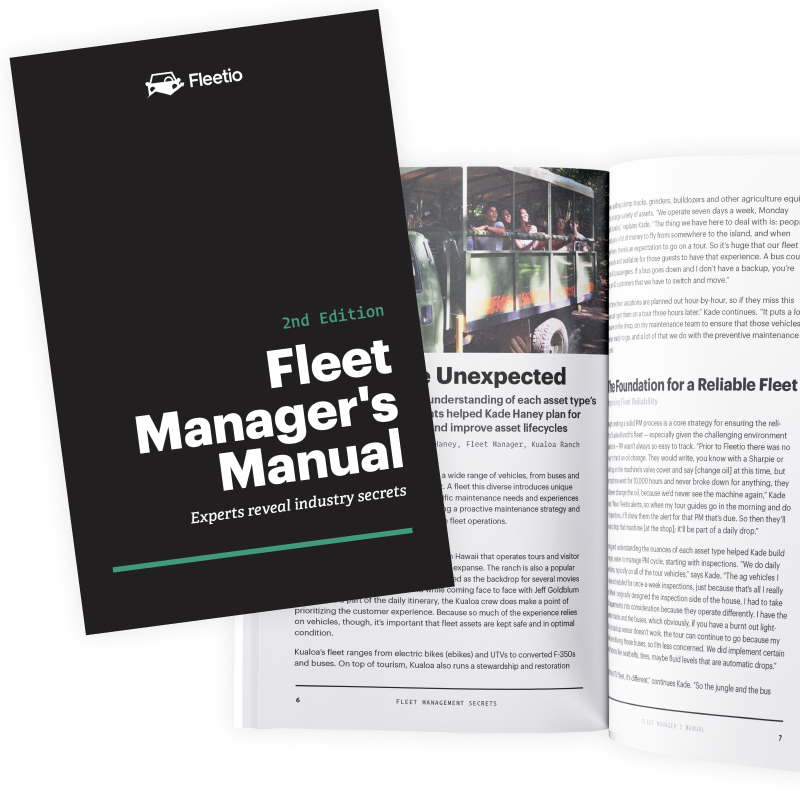
Key responsibilities of a fleet manager
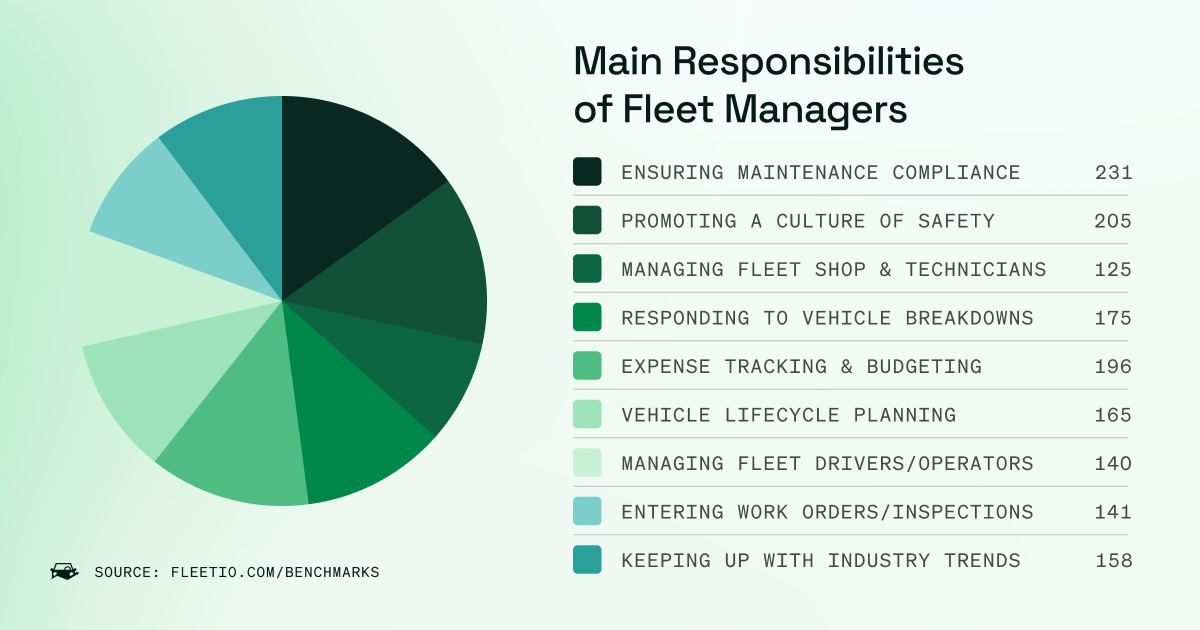
A fleet manager’s responsibilities are the foundation that keeps a company's fleet efficient, compliant and financially under control. They connect to the day-to-day tasks we just covered, but the real focus is building repeatable systems, not just checking boxes.
The best fleet managers blend technical know-how with leadership, communication, and comfort with data. The goal is consistency: maintenance that happens when it should, data you can trust, and clear ownership across the operation.
Building and maintaining a proactive maintenance program
Fleet managers set up preventive maintenance schedules that keep assets reliable and cut down on avoidable downtime. That means watching repair trends, adjusting PM intervals as equipment ages, and making sure work orders are completed and documented the same way every time.
A strong PM program is how fleets stop living in reactive mode: fewer surprises, lower long-term costs, and more assets ready when crews need them.
Running effective inspection and issue-resolution workflows
Daily inspections and DVIRs are how you catch problems early, but only if the workflow actually works for the field. Fleet managers build the process: simple reporting (often with photos), clear escalation, and tight documentation from driver to shop.
Inspection quality comes down to tools, training and follow-through. When drivers see issues get acknowledged and fixed quickly, reporting gets more consistent (and more honest).
Monitoring fuel usage, anomalies and energy costs
Fuel is one of the biggest, and most controllable, line items in a fleet budget. Fleet managers track fuel card data, flag anomalies or potential fraud, and look for patterns that point to inefficiency (idling, routing, usage spikes).
For EV fleets, this also includes charging behavior and energy costs. When fuel and energy data gets reviewed regularly, it usually surfaces savings that would’ve been invisible in the noise.
Managing vendors, shops and outsourced repairs
Fleet managers manage relationships with outside shops and service providers, approving work, questioning line items, negotiating rates, and making sure warranties are applied when they should be. Vendor performance matters because it directly impacts cost, quality and turnaround time.
It’s a balancing act: control spend without losing access to reliable partners who can get assets back in service quickly.
Tracking performance through KPIs and financial reporting
Fleet management KPIs help fleet managers understand what’s improving, what’s slipping and where to focus next. Common metrics include total cost of ownership (TCO), cost per mile (CPM), downtime, PM compliance and asset utilization.
The real unlock is tying those numbers back to outcomes leadership cares about: uptime, service continuity, risk reduction and protecting revenue.
Standardizing communication across drivers, technicians and leadership
When communication breaks down, you get repeat issues, missed inspections, and repairs that drag on longer than they should. Fleet managers are responsible for setting up consistent channels so everyone stays aligned on asset status and priorities.
Standardization takes clear expectations, clear ownership, and tools people will actually use. When info flows smoothly, issues get resolved faster and a lot of disruption gets avoided entirely.
Challenges fleet managers face today
No matter the industry, most fleet managers run into the same pressure points: keeping costs under control, staying compliant, closing communication gaps, and dealing with downtime that never shows up on your calendar. The details change by fleet size and asset mix, but the pattern is consistent and it’s getting harder to manage when everything lives in spreadsheets, inboxes and disconnected systems.
As fleets get more complex, one thing becomes obvious: email chains, manual updates and reactive workflows don’t scale.
Siloed data and a lack of real-time visibility
A lot of fleet teams still have information scattered across spreadsheets, emails, paper forms and phone calls. When data lives everywhere, it’s hard to know what’s current and even harder to act quickly with confidence.
Real-time visibility isn’t a "nice to have" anymore. If you can’t easily see mileage, inspection results, maintenance status, and costs, decisions slow down and small issues turn into bigger disruptions.
Reactive repairs and costly unplanned downtime
Unplanned downtime isn’t just a maintenance problem. It creates missed routes, unbillable crew hours, delayed service, and lost revenue – especially in customer-facing operations.
And it usually snowballs. When inspections get delayed or issues aren’t reported clearly, fleets get pushed into reactive repairs that cost more and disrupt the entire day.
Rising operating expenses and unclear TCO
Fleet spend goes way beyond the purchase price. Fuel, idling, parts waste, labor overruns, unnecessary approvals and admin overhead can quietly chew through budgets when it’s not tracked in one place.
Without a clear view of total cost of ownership (TCO), it’s hard to know where the money is actually going or which assets are turning into liabilities. That makes budget planning and lifecycle decisions a lot harder to defend.
Compliance complexity and documentation gaps
Compliance goes beyond just knowing the rules. It’s having clean, complete, searchable documentation when someone asks for it. Missing inspection records, outdated certifications or inconsistent processes increase audit risk and legal exposure fast.
When documentation lives in filing cabinets or disconnected systems, compliance turns into a scramble. Fleet managers need consistent records they can pull up quickly.
Manual processes that slow teams and increase errors
Manual entry and paper-based workflows create lag and introduce errors. The information you’re looking at often reflects what was true last week, not what’s happening right now, which makes it harder to spot issues early or prioritize work correctly.
As fleets grow, those inefficiencies stack up, pulling fleet managers deeper into admin work and further away from planning and improvement.
Scaling fleet operations across locations, vehicles and people
Growth adds complexity. New locations, more assets and changes like mergers or acquisitions tend to expose process gaps and inconsistent data.
Without standardized workflows and centralized information, scaling gets messy. What worked when the fleet was smaller breaks down fast once the operation gets bigger.
Set yourself up for success
Hit the ground running as a new fleet manager by setting purposeful, achievable goals over the next three months. Our 30-60-90 plan provides structure for fleet managers looking to get up to speed ASAP.
Download for free
Best practice tips for fleet managers in 2026 and beyond
High-performing fleets are defined by predictability, rather than heroics. Clear ownership. Clean data. Workflows that keep the operation steady even when things get messy.
The best practices below map directly to the challenges fleet managers are dealing with right now, and they reflect what modern fleets need to run well at scale: centralized information, consistent processes and proactive decision-making.
Shift from reactive troubleshooting to proactive planning
Reactive fleet management is expensive. It creates unplanned downtime, missed routes, frustrated crews and repair bills that didn’t need to happen.
The fix is a disciplined preventive maintenance cadence (based on OEM guidance), plus what your fleet metrics are telling you as assets age. Pair that with inspections that surface issues early, and you catch problems before they become failures.
Fleetio helps here by automating PM schedules, triggering work orders from failed vehicle inspections, and keeping repair history in one place so decisions are based on patterns, not guesswork.
Make data accuracy and visibility a non-negotiable standard
If the data is scattered or unreliable, everything slows down: cost control, compliance, lifecycle decisions, reporting to leadership. When you can’t trust the numbers, you end up operating on gut feel and last-minute updates.
Centralizing fleet data into a single system (and cutting manual entry wherever you can) creates consistency across reporting and KPIs. It also ensures leadership is looking at the same reality you’re managing day to day.
Fleetio brings fuel, telematics, inspections, work orders and cost data into one source of truth, so the information you’re using is complete, timely and accurate.
Automate routine workflows to free time for strategic work
Manual processes create drag. They add errors. They slow down issue resolution, especially across multiple locations. And over time, they turn the fleet manager into an admin.
Automating recurring tasks like PM reminders, inspection routing, work order creation, odometer updates and fuel imports reduces busywork and speeds up workflows.
Fleetio automations can kick off workflows instantly (like generating a work order from a failed DVIR) so you spend less time chasing tasks and more time improving fleet health.
Build a culture of safety, accountability and communication
A lot of "fleet problems" are really communication problems. Missed inspections, unresolved issues and compliance gaps usually come back to unclear expectations and broken handoffs between drivers, techs and managers.
Standardized inspection routines, clear driver safety expectations, and training around reporting protocols help create consistency. And when the communication channel is clear, issues get acknowledged and resolved faster.
Fleetio Go supports structured inspections, photo-based issue reporting, and real-time notifications to strengthen accountability between the field and the back office.
Use TCO and utilization data to guide lifecycle decisions
Repair-versus-replace gets expensive when you confirm decisions after the money’s already been spent. Without centralized cost data, it’s easy to keep assets in service longer than you should, and you end up paying for it in downtime and surprise repairs.
Track all costs tied to each asset (fuel, parts, labor, and downtime) then use TCO, utilization and performance trends to identify units that are becoming liabilities.
Fleetio dashboards surface true TCO and utilization in one view so lifecycle decisions are grounded in real data, not assumptions.
Prepare for emerging technologies and regulatory changes
Electrification, telematics, safety cameras, and shifting DOT/FMCSA requirements are going to keep changing. Fleets that wait to react usually end up with rushed rollouts and operational disruption.
The better approach is staying informed, evaluating readiness early, and making sure your systems can scale as the fleet evolves. Staying informed through industry publications, peer networks, and fleet management conferences helps fleets prepare for what’s coming next.
Fleetio’s integrations and compliance workflows give fleets a flexible foundation to support new hardware, energy models, and regulatory requirements over time.
Why fleet managers choose Fleetio
Modern fleet managers can’t reliably deliver uptime, cost control, compliance and data-driven decision-making with spreadsheets and disconnected systems. As fleets get more complex, centralized visibility and automation stop being "nice to have" – they become the baseline.
Fleetio gives fleet managers the structure, visibility and workflows to run proactively, reduce risk and clearly show fleet value across the business.
How Fleetio helps fleet managers succeed:
- Automated PM scheduling and DVIR-to-work-order workflows: fewer breakdowns, faster issue resolution and higher maintenance compliance
- Centralized TCO, CPM and spend analytics: clearer financial visibility and stronger repair-vs-replace decisions
- Fuel card and telematics integrations: real-time odometer updates, fraud alerts and more accurate cost tracking
- Digital inspections and audit-ready documentation: reduced compliance risk and speed up audit response
- Mobile app (Fleetio Go): better field-to-office communication and immediate visibility into asset condition
- Parts, labor and vendor management tools: tighter cost control, fewer unnecessary approvals and better warranty enforcement
To see how Fleetio supports modern fleet operations, you can start a free trial or book a demo.
The software trusted by thousands of fleet managers
Fleetio gives you the tools to control costs, optimize efficiency, and keep your vehicles running smoothly – all in one platform designed for fleet pros.
Meet Fleetio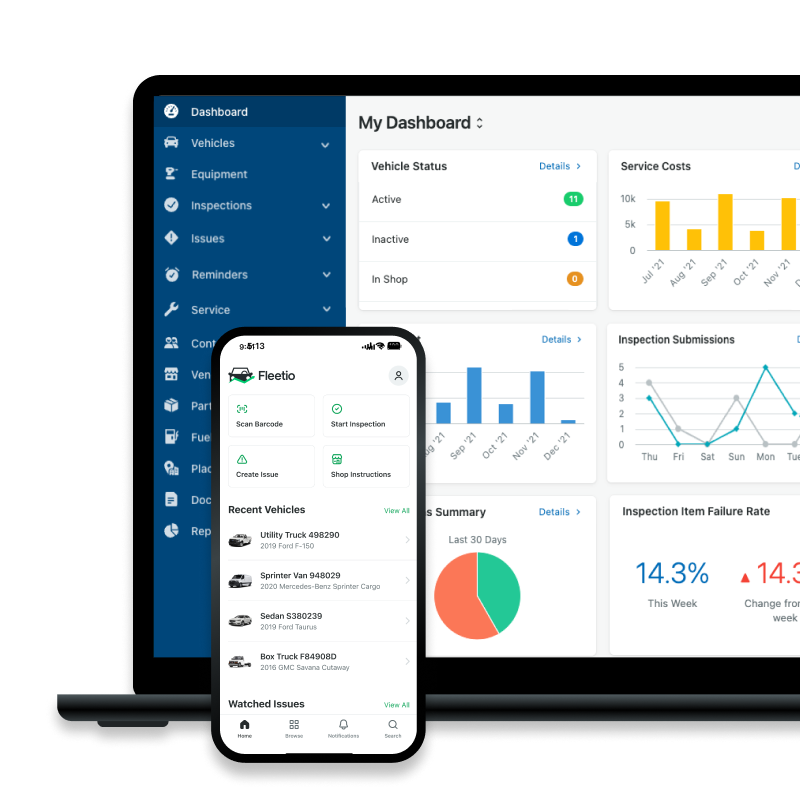
Fleet Management FAQs

Senior Fleet Content Specialist
As a Senior Fleet Content Specialist at Fleetio, Peyton explores the voices and experiences that shape fleet operations. She focuses on how fleet professionals adopt technology, improve efficiency and lead their teams to bring clarity and context to the challenges happening across the industry.
View articles by Peyton Panik
Director of Fleet Content, Fleetio
Zach Searcy is the Director of Content at Fleetio with more than 5 years of experience in the automotive and fleet industries. His content creation days started in middle school when he and his friends began filming lightsaber battles to upload to a new website: 'YouTube.'
LinkedIn|View articles by Zach SearcyReady to get started?
Join thousands of satisfied customers using Fleetio
Questions? Call us at 1-800-975-5304